
















©The Author(s) 2025.
World J Gastroenterol. Oct 28, 2025; 31(40): 111409
Published online Oct 28, 2025. doi: 10.3748/wjg.v31.i40.111409
Published online Oct 28, 2025. doi: 10.3748/wjg.v31.i40.111409
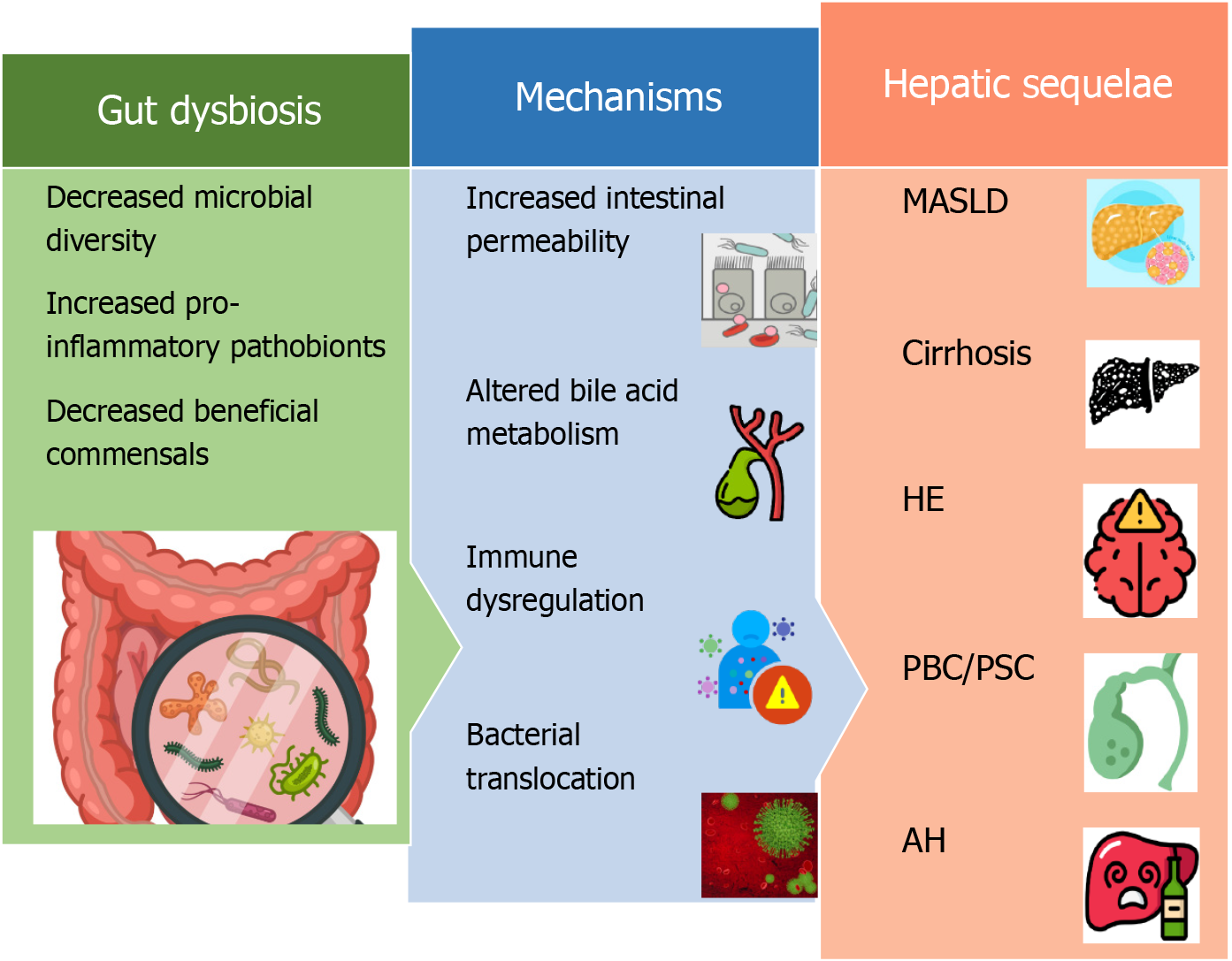
Figure 1 Gut dysbiosis-driven mechanisms contributing to hepatic sequelae.
Disruption of the gut microbiota (dysbiosis) is characterized by decreased microbial diversity, loss of beneficial commensals, and expansion of pro-inflammatory pathobionts. This dysbiosis contributes to liver disease through increased intestinal permeability, altered bile acid metabolism, immune dysregulation, and bacterial translocation. These pathophysiological mechanisms are implicated in the development and progression of various liver conditions, including metabolic dysfunction-associated steatotic liver disease, cirrhosis, hepatic encephalopathy, primary biliary cholangitis, primary sclerosing cholangitis, and alcoholic hepatitis. MASLD: Metabolic dysfunction-associated steatotic liver disease; HE: Hepatic encephalopathy; PBC: Primary biliary cholangitis; PSC: Primary sclerosing cholangitis; AH: Alcoholic hepatitis.
- Citation: Anis MA, Shahid Y, Majeed AA, Abid S. Microbiome and gut-liver interactions: From mechanisms to therapies. World J Gastroenterol 2025; 31(40): 111409
- URL: https://www.wjgnet.com/1007-9327/full/v31/i40/111409.htm
- DOI: https://dx.doi.org/10.3748/wjg.v31.i40.111409