
















©The Author(s) 2025.
World J Gastroenterol. Oct 21, 2025; 31(39): 110986
Published online Oct 21, 2025. doi: 10.3748/wjg.v31.i39.110986
Published online Oct 21, 2025. doi: 10.3748/wjg.v31.i39.110986
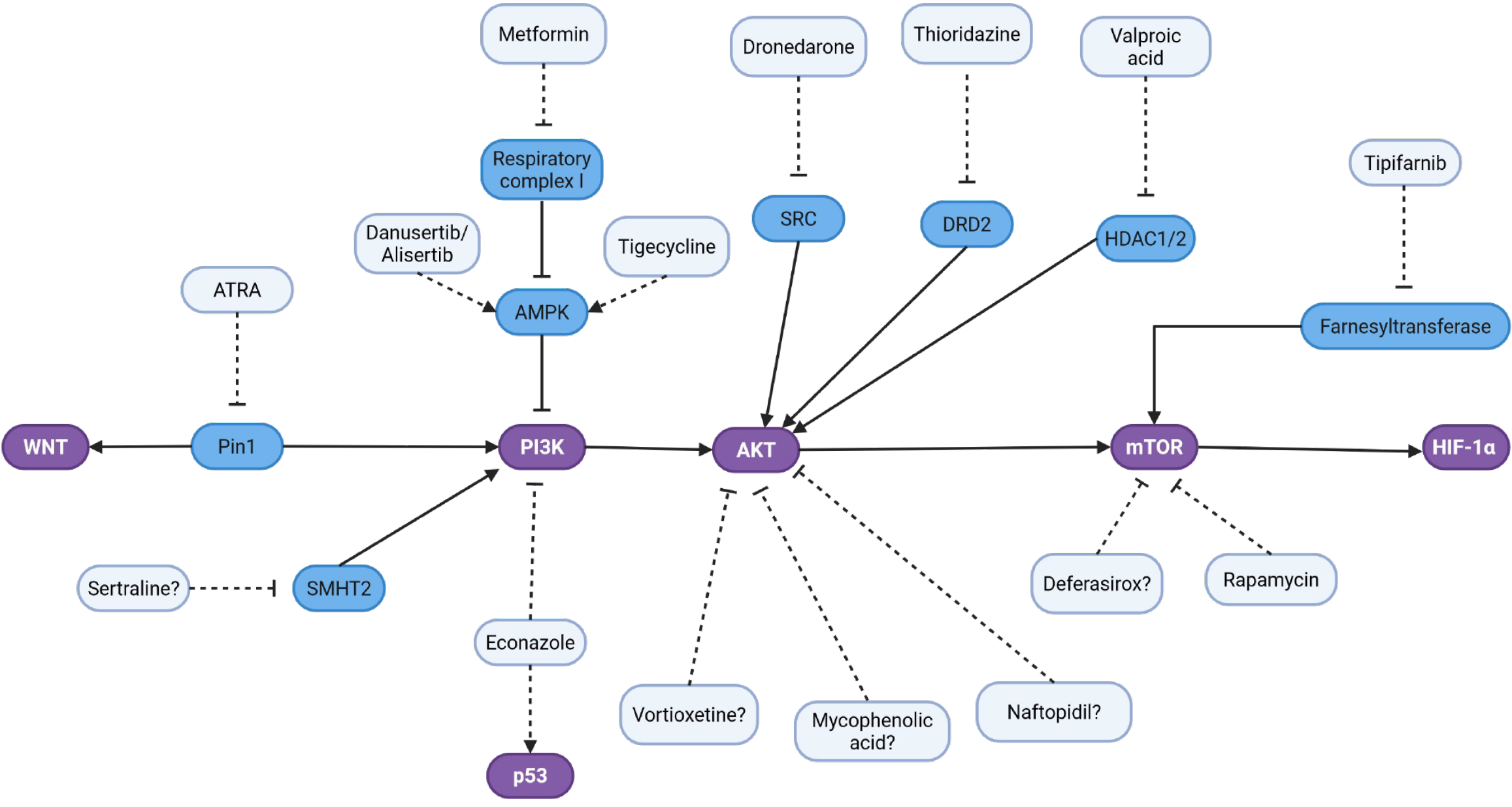
Figure 2 Mechanisms of action of repurposed drugs targeting the phosphoinositide 3-kinase, p53, and hypoxia-inducible factor-1α signaling pathways.
Purple form indicated main pathway proteins; light blue form indicated drugs; dark blue form indicated proteins involved in the mechanism of action of the drug; “?” symbol indicated target is not clear. ATRA: All-trans retinoic acid; Pin1: Peptidyl-prolyl cis-trans isomerase NIMA-interacting 1; AMPK: Adenosine 5’-monophosphate-activated protein kinase; SRC: Proto-oncogene tyrosine-protein kinase Src; DRD2: Dopamine receptor D2; HDAC1/2: Histone deacetylase 1/2; PI3K: Phosphoinositide 3-kinase; AKT: Protein kinase B; mTOR: Mammalian target of rapamycin; SMHT2: Serine hydroxymethyl transferase 2.
- Citation: Valero-Almingol A, Montori S, Felípez N, Santamaría E, Fernandez-Irigoyen J, Luzko I, Cuestas AA, Pardo C, Prat R, Moreira L, Albéniz E. Targetable pathways for drug repurposing in gastric cancer. World J Gastroenterol 2025; 31(39): 110986
- URL: https://www.wjgnet.com/1007-9327/full/v31/i39/110986.htm
- DOI: https://dx.doi.org/10.3748/wjg.v31.i39.110986