
















©The Author(s) 2025.
World J Gastroenterol. Oct 21, 2025; 31(39): 110971
Published online Oct 21, 2025. doi: 10.3748/wjg.v31.i39.110971
Published online Oct 21, 2025. doi: 10.3748/wjg.v31.i39.110971
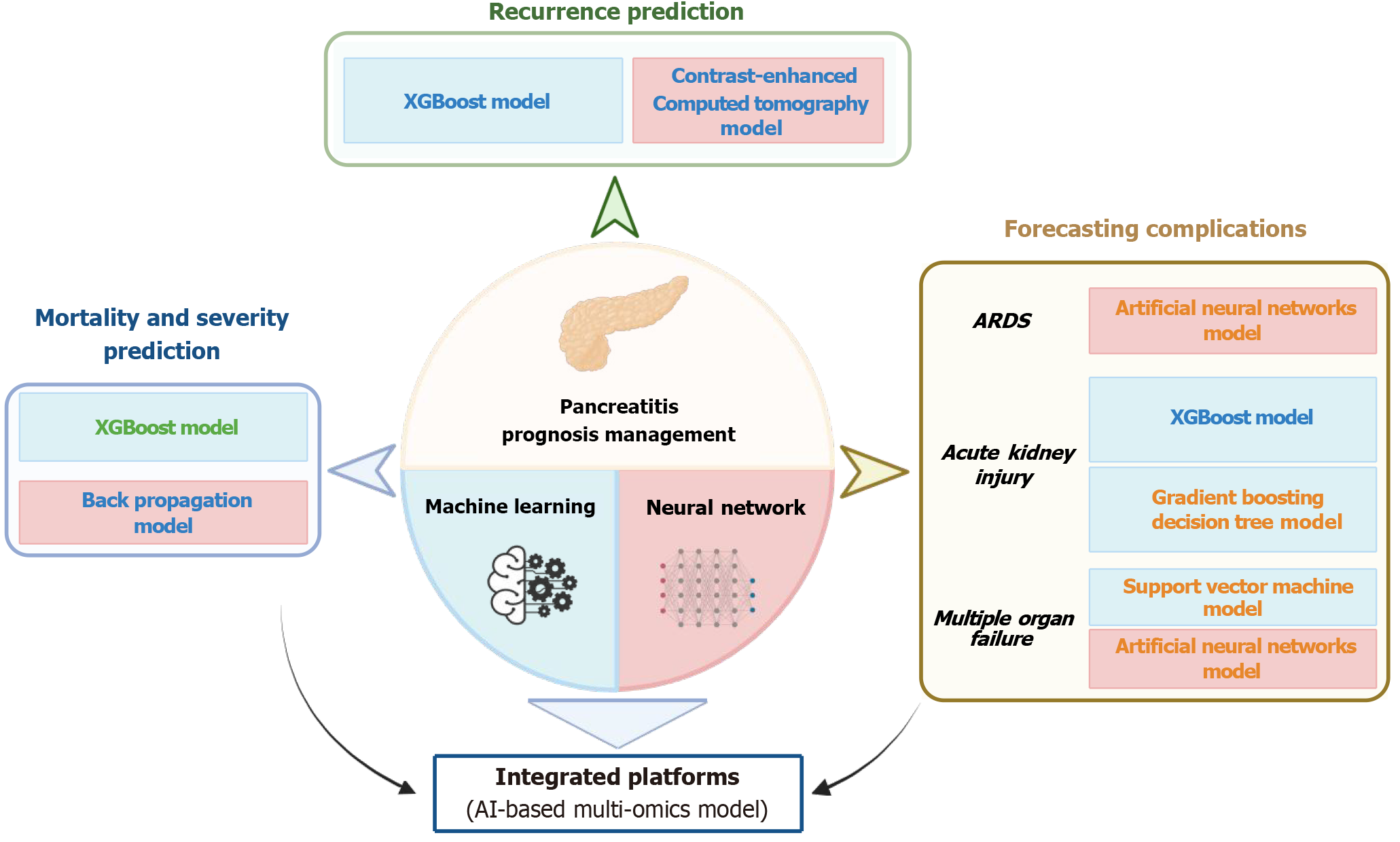
Figure 2 Representative artificial intelligence models for prognosis management in pancreatitis.
A range of machine learning and neural network-based algorithms have been applied to predict recurrence, assess disease severity and mortality risk, and forecast complications such as acute respiratory distress syndrome, acute kidney injury, and multiple organ failure. Notable models include XGBoost, gradient boosting decision tree, back propagation, support vector machine, and feed-forward neural networks. These models, particularly when integrated into multi-omics platforms, enable individualized prognostication and support precision management strategies in clinical practice. The implementation status of each model is indicated by color coding: Experimental (blue), validation phase (orange), or clinically deployed (green). ARDS: Acute respiratory distress syndrome; AI: Artificial intelligence.
- Citation: Zhang XY, Hu MD, Maimaitijiang D, Wang T, Wang L. Artificial intelligence in pancreatitis: A narrative review on advancing precision diagnosis, prognosis, and therapeutic strategies. World J Gastroenterol 2025; 31(39): 110971
- URL: https://www.wjgnet.com/1007-9327/full/v31/i39/110971.htm
- DOI: https://dx.doi.org/10.3748/wjg.v31.i39.110971