
















©The Author(s) 2025.
World J Gastroenterol. Oct 21, 2025; 31(39): 110971
Published online Oct 21, 2025. doi: 10.3748/wjg.v31.i39.110971
Published online Oct 21, 2025. doi: 10.3748/wjg.v31.i39.110971
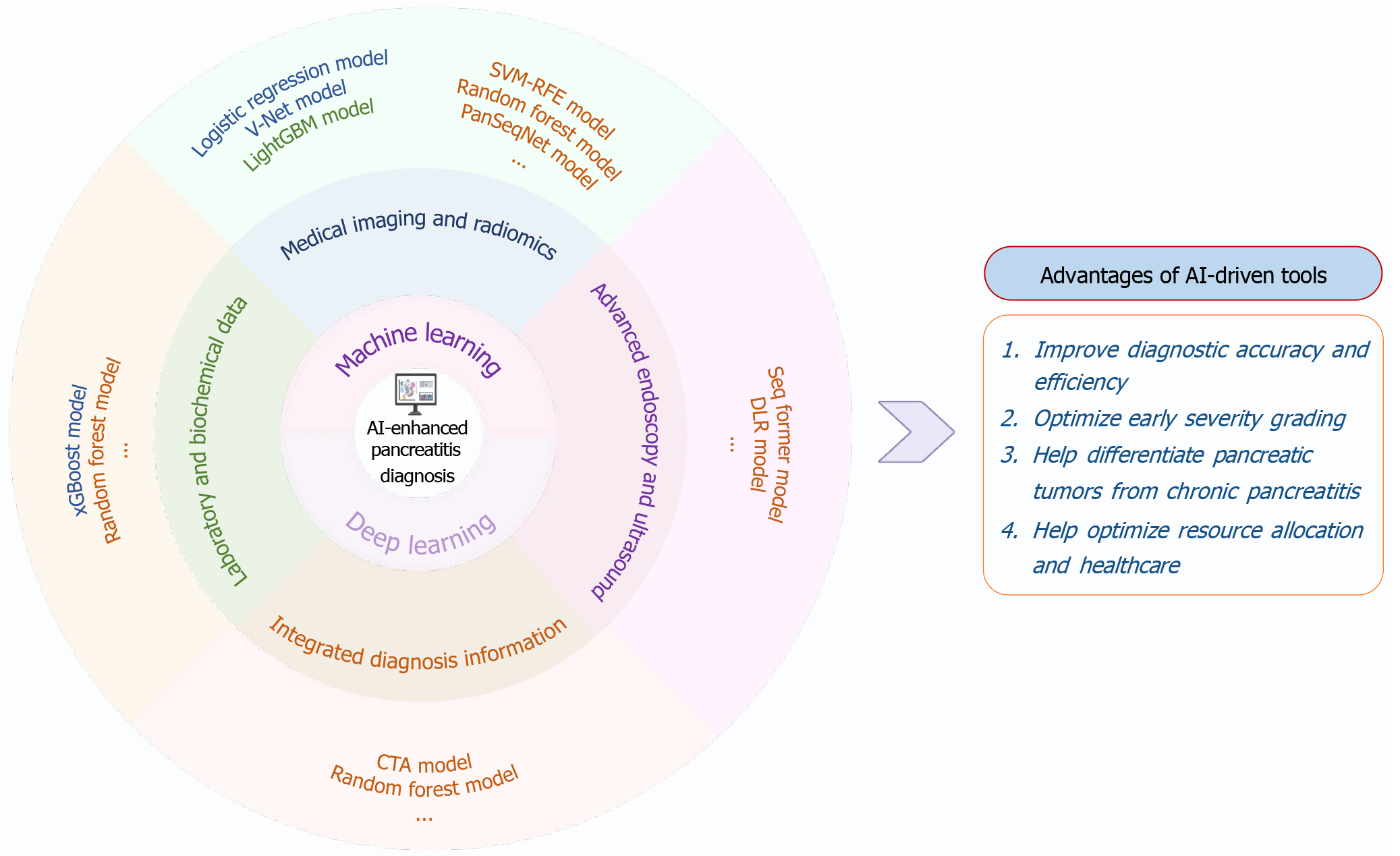
Figure 1 Schematic overview of high-accuracy artificial intelligence models for the precision diagnosis of pancreatitis and their clinical advantages.
Artificial intelligence-enhanced diagnostic tools, encompassing machine learning and deep learning algorithms, integrate multimodal data, ranging from laboratory and biochemical markers to radiologic imaging, endoscopic ultrasound, and computed tomography angiography. Representative models include random forest, XGBoost, SVM-RFE, LightGBM, V-Net, SegFormer, deep learning radiomics, PanSegNet, and others. These approaches have demonstrated utility in improving diagnostic accuracy and efficiency, enabling early severity stratification, differentiating pancreatic neoplasms from chronic pancreatitis, and informing more effective allocation of healthcare resources. The implementation status of each model is indicated by color coding: Experimental (blue), validation phase (orange), or clinically deployed (green). AI: Artificial intelligence; LightGBM: Light gradient boosting machine; CTA: Computed tomography angiography; SVM-RFE: Support vector machine-recursive feature elimination; DLR: Deep learning radiomics.
- Citation: Zhang XY, Hu MD, Maimaitijiang D, Wang T, Wang L. Artificial intelligence in pancreatitis: A narrative review on advancing precision diagnosis, prognosis, and therapeutic strategies. World J Gastroenterol 2025; 31(39): 110971
- URL: https://www.wjgnet.com/1007-9327/full/v31/i39/110971.htm
- DOI: https://dx.doi.org/10.3748/wjg.v31.i39.110971