
















©The Author(s) 2025.
World J Gastroenterol. Oct 21, 2025; 31(39): 110115
Published online Oct 21, 2025. doi: 10.3748/wjg.v31.i39.110115
Published online Oct 21, 2025. doi: 10.3748/wjg.v31.i39.110115
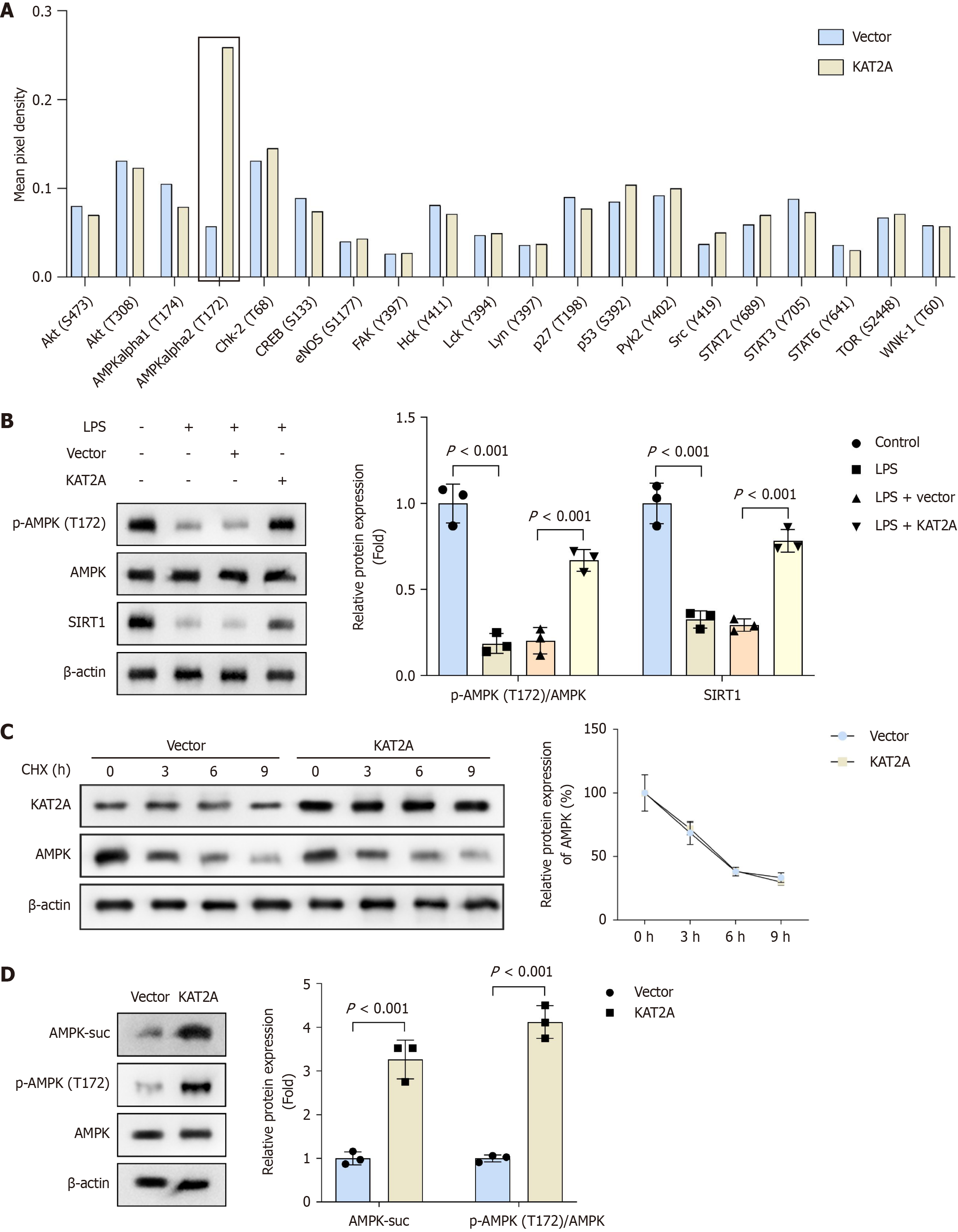
Figure 3 Lysine acetyltransferase 2A overexpression activated the adenosine monophosphate-activated protein kinase/silent information regulator 1 signaling pathway in gallbladder mucosal epithelial cells.
A: The screening results of changes in phospho-protein activation in vector and lysine acetyltransferase 2A overexpression groups were obtained using the proteome profiler phospho-kinase array (n = 3); B: The protein levels of phospho-adenosine monophosphate-activated protein kinase (T172), adenosine monophosphate-activated protein kinase, and sirtuin 1 in each group were measured by western blot (n = 3); C: The protein stablity of adenosine monophosphate-activated protein kinase in each group after KAT2A overexpression were measured by western blot (n = 3); D: The protein levels of phospho-adenosine monophosphate-activated protein kinase (T172), adenosine monophosphate-activated protein kinase, and adenosine monophosphate-activated protein kinase succinylation in each group were measured by western blot (n = 3). GMECs: Gallbladder mucosal epithelial cells; LPS: Lipopolysaccharide; CHX: Cycloheximide.
- Citation: Wang XX, Ma MZ, Zhu LC, Dai LF, Qin C, Shao S, Xu XW, Gao RX, Zhang ZH. Lysine acetyltransferase 2A-mediated succinylation of adenosine monophosphate-activated protein kinase suppresses gallstone formation by inhibiting inflammation and pyroptosis. World J Gastroenterol 2025; 31(39): 110115
- URL: https://www.wjgnet.com/1007-9327/full/v31/i39/110115.htm
- DOI: https://dx.doi.org/10.3748/wjg.v31.i39.110115