
















©The Author(s) 2025.
World J Gastroenterol. Oct 14, 2025; 31(38): 109528
Published online Oct 14, 2025. doi: 10.3748/wjg.v31.i38.109528
Published online Oct 14, 2025. doi: 10.3748/wjg.v31.i38.109528
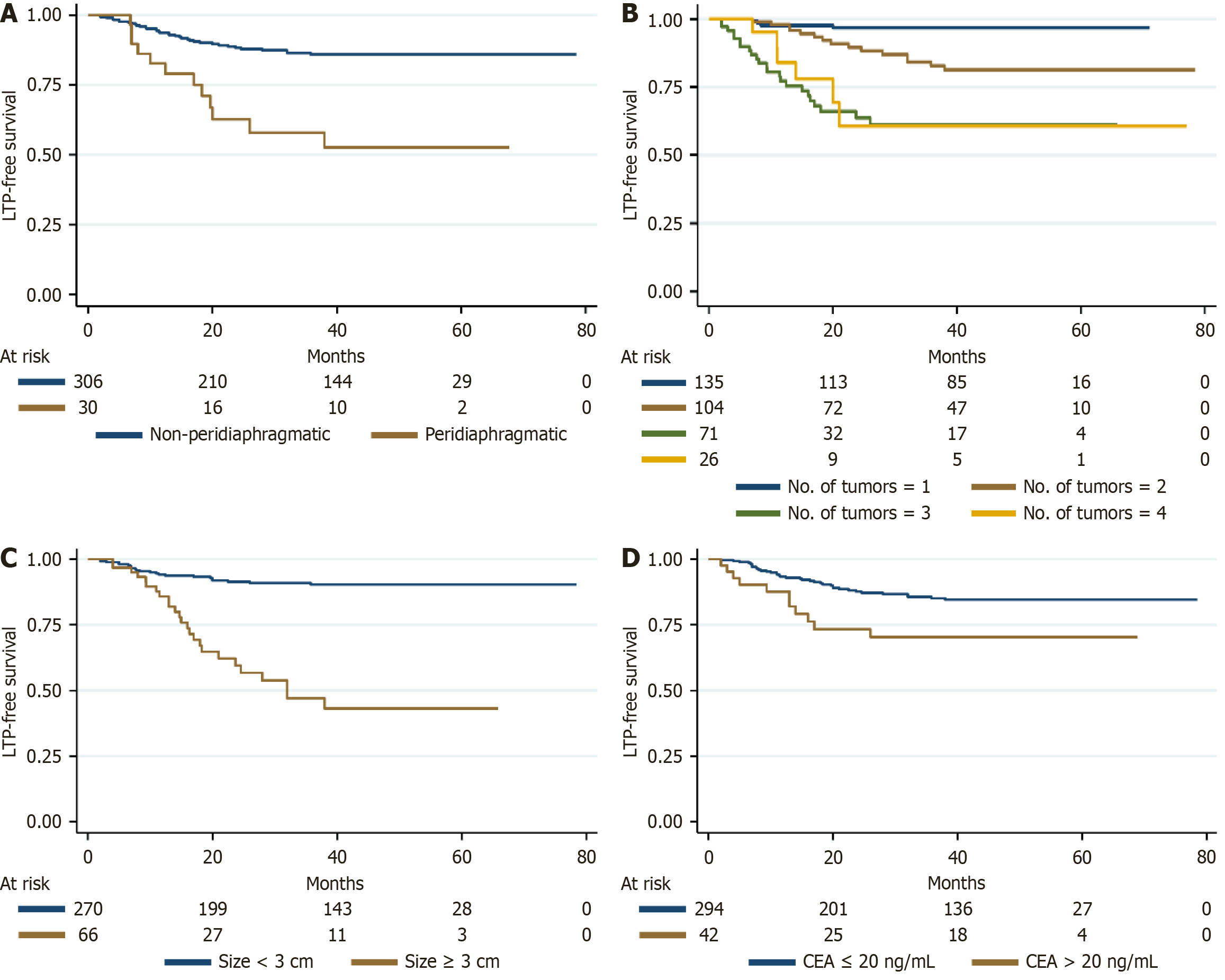
Figure 1 Kaplan-Meier survival curves for local tumor progression-free survival according to anatomical and biological risk factors.
A: Peridiaphragmatic lesion location was significantly associated with increased local progression risk, with a hazard ratio (HR) of 4.447, suggesting anatomical proximity to the diaphragm may compromise ablative efficacy; B: Tumor number was a strong predictor of local tumor progression-free survival (LTPFS). Compared with patients who had a single tumor, those with 2, 3, and 4 tumors showed markedly increased risk of local progression, with HRs of 4.419, 9.607, and 11.140, respectively; C: Tumor size ≥ 3 cm significantly predicted reduced LTPFS (HR = 3.367), indicating that larger lesions may be more challenging to fully ablate; D: Elevated pre-procedural carcinoembryonic antigen levels (> 20 ng/mL) independently correlated with shorter LTPFS (HR = 2.184), reflecting a potential marker of biologically aggressive disease. LTP: Local tumor progression; CEA: Carcinoembryonic antigen. A higher hazard ratio indicates greater risk of local recurrence following ablation.
- Citation: Hu XF, Dong XJ, Gu XY, Hu JH, Li XH, Zhao FH, Xia XW, Fan HJ, Xu SF. Extrapulmonary metastases impact survival outcomes of thermal ablation for colorectal lung oligometastases: A multicenter study. World J Gastroenterol 2025; 31(38): 109528
- URL: https://www.wjgnet.com/1007-9327/full/v31/i38/109528.htm
- DOI: https://dx.doi.org/10.3748/wjg.v31.i38.109528