
















©The Author(s) 2025.
World J Gastroenterol. Oct 7, 2025; 31(37): 110942
Published online Oct 7, 2025. doi: 10.3748/wjg.v31.i37.110942
Published online Oct 7, 2025. doi: 10.3748/wjg.v31.i37.110942
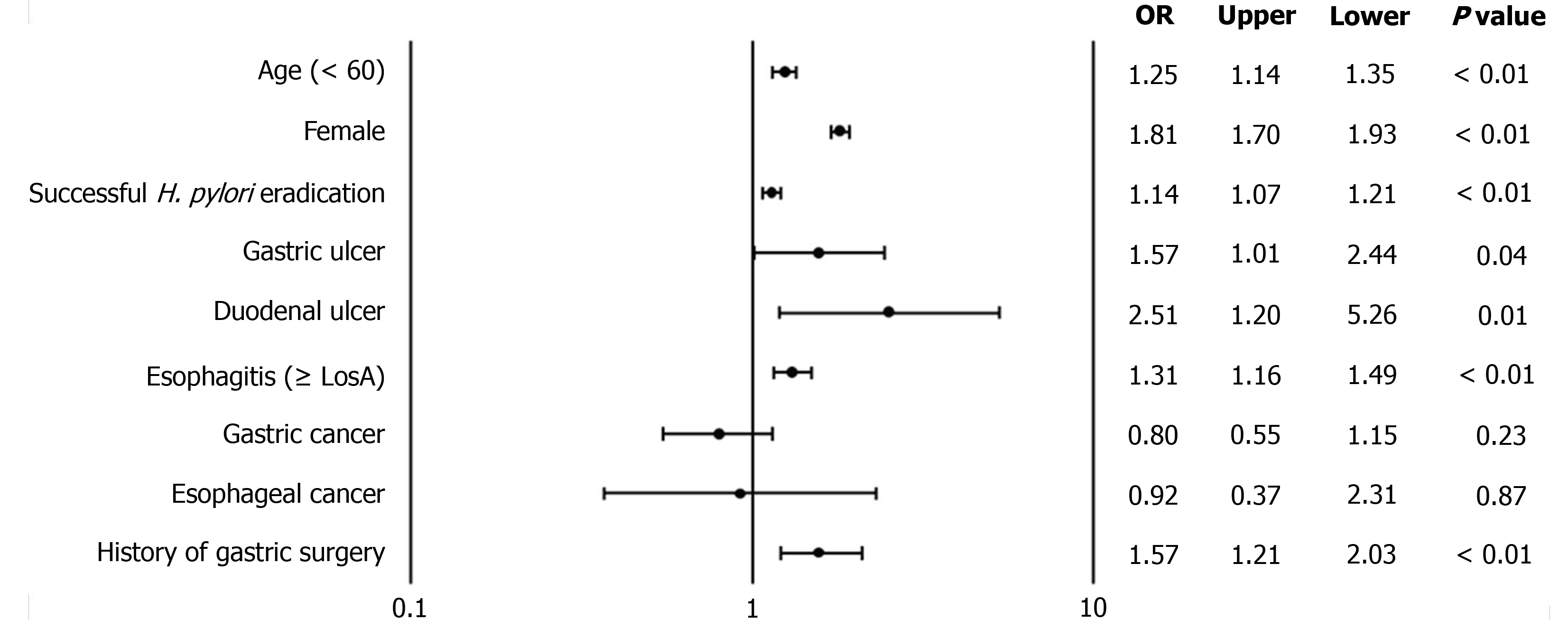
Figure 3 Multivariate logistic regression analysis of factors correlated with dyspepsia.
This analysis revealed that the following factors were independently correlated with dyspepsia: Age < 60 years [odds ratio (OR) = 1.25; 95% confidence interval (CI): 1.15-1.35], female sex (OR = 1.81; 95%CI: 1.70-1.93), successful Helicobacter pylori eradication (OR = 1.14; 95%CI: 1.07-1.21), gastric ulcer (OR = 1.57; 95%CI: 1.01-2.44), duodenal ulcer (OR = 2.51; 95%CI: 1.20-5.26), reflux esophagitis (OR = 1.31; 95%CI: 1.16-1.49), and history of gastric surgery (OR = 1.57; 95%CI: 1.21-2.03). Conversely, no notable correlations were found for gastric or esophageal cancer. H. pylori: Helicobacter pylori; Los A: Los Angeles classification grade A reflux esophagitis; OR: Odds ratio.
- Citation: Suzuki S, Kanno T, Koike T, Chiba T, Asanuma K, Kato K, Hatayama Y, Ogata Y, Saito M, Hatta W, Uno K, Imatani A, Masamune A. Epidemiology of dyspepsia and esophagogastroduodenoscopic findings in the era of Helicobacter pylori eradication. World J Gastroenterol 2025; 31(37): 110942
- URL: https://www.wjgnet.com/1007-9327/full/v31/i37/110942.htm
- DOI: https://dx.doi.org/10.3748/wjg.v31.i37.110942