
















©The Author(s) 2025.
World J Gastroenterol. Sep 21, 2025; 31(35): 109808
Published online Sep 21, 2025. doi: 10.3748/wjg.v31.i35.109808
Published online Sep 21, 2025. doi: 10.3748/wjg.v31.i35.109808
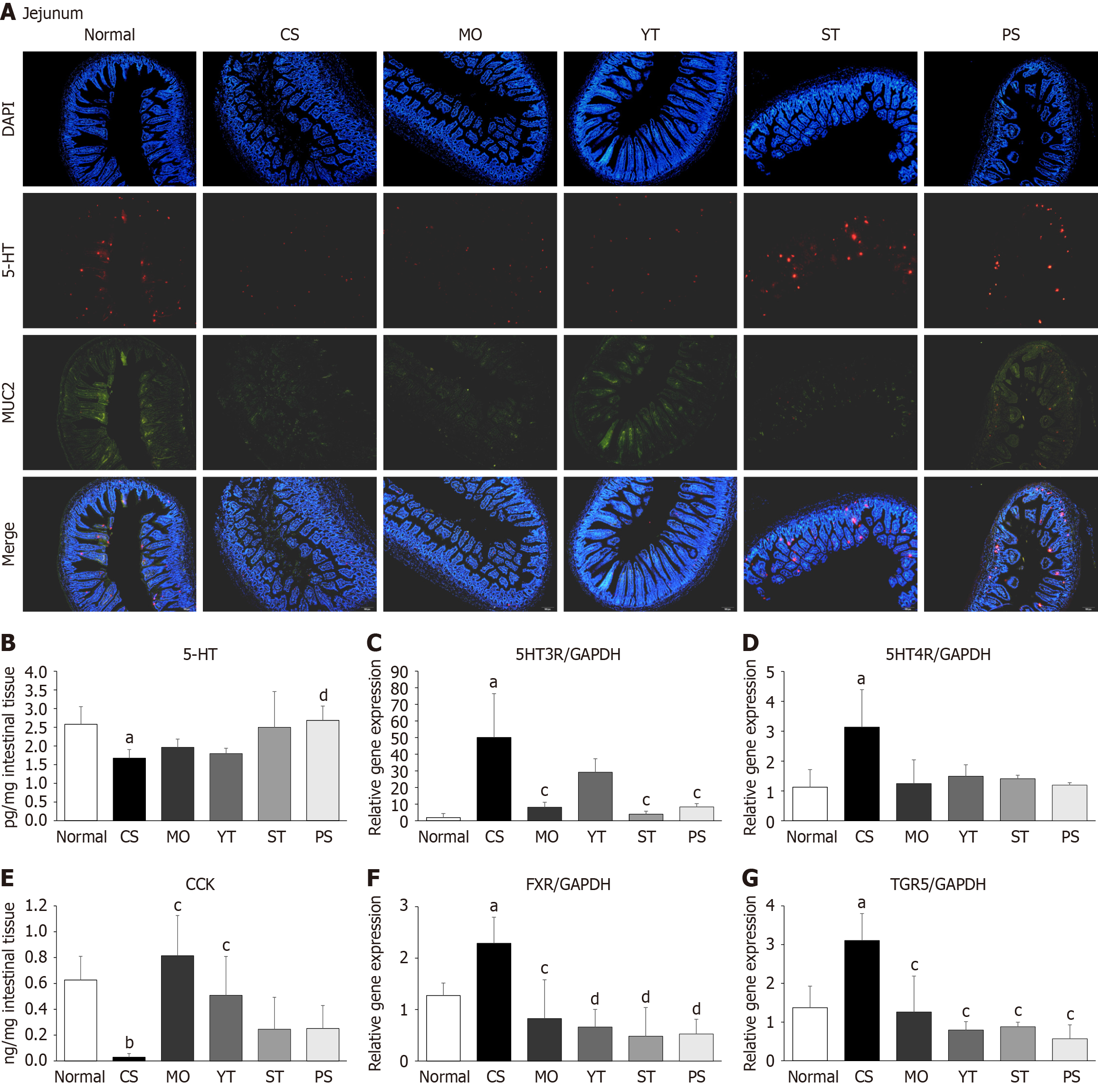
Figure 5 Changes in intestinal serotonin, cholecystokinin, and bile acid receptors.
A: Immunofluorescence staining of the jejunum for 5-hydroxytryptamine (5-HT) and MUC2; B: Comparison of 5-HT concentration in intestinal tissue; C and D: Comparison of gene expression levels of 5-HT receptors; E: Comparison of cholecystokinin concentration in intestinal tissue; F and G: Comparison of gene expression levels of bile acid receptors. aP < 0.05, compared with the normal group; bP < 0.01, compared with the normal group; cP < 0.05, compared with the normal group; dP < 0.01, compared with the cold stress group (n = 4 or 8). YT: Yijung-tang; ST: Shihosogan-tang; PS: Pyeongwi-san; CS: Cold stress; MO: Mosapride; 5-HT: 5-hydroxytryptamine; DAPI: 4’,6-diamidino-2-phenylindole; 5HT3R: 5-hydroxytryptamine type 3 receptor; 5HT4R: 5-hydroxytryptamine type 4 receptor; CCK: Cholecystokinin; FXR: Farnesoid X receptor; TGR5: Takeda G-protein-coupled receptor 5; GAPDH: Glyceraldehyde 3-phosphate dehydrogenase.
- Citation: Wang JH, Han SY, Wu L, Han U, Cho SK, Park CW, Chin YW, Lim MY, Kim H. Comparative evaluation of three traditional herbal formulas on gastrointestinal motility in a mouse model of cold stress-induced dyspepsia. World J Gastroenterol 2025; 31(35): 109808
- URL: https://www.wjgnet.com/1007-9327/full/v31/i35/109808.htm
- DOI: https://dx.doi.org/10.3748/wjg.v31.i35.109808