
















©The Author(s) 2025.
World J Gastroenterol. Sep 14, 2025; 31(34): 108617
Published online Sep 14, 2025. doi: 10.3748/wjg.v31.i34.108617
Published online Sep 14, 2025. doi: 10.3748/wjg.v31.i34.108617
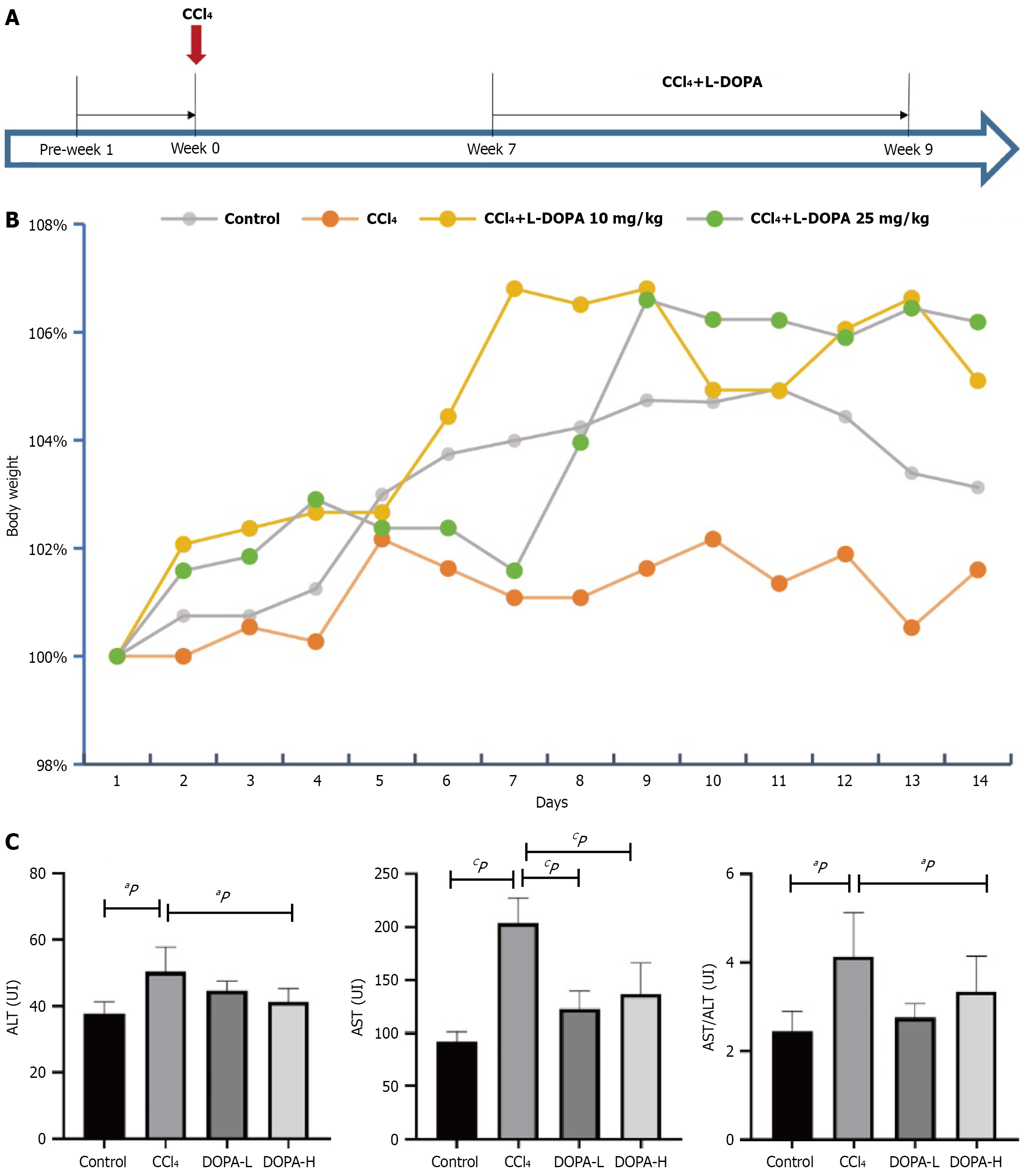
Figure 1 Evaluation of the anti-fibrosis effect of L-DOPA in carbon tetrachloride-induced liver fibrosis rat model.
A: The rats were divided into four groups. On day 0, 40% carbon tetrachloride (CCl4) was injected intraperitoneally once every three days. L-DOPA (10 mg/kg) was intraperitoneally injected daily from the 7th to the 9th week in the low-dose and the injection group, while L-DOPA (25 mg/kg) was intraperitoneally injected daily from the 7th to the 9th week in the high dose group. The intervention effect of L-DOPA on liver fibrosis throughout the entire process of fibrosis and inflammation was observed with normal saline as a control; B: Changes were visualized during the experiment, the body weight of the three groups of rats was measured and standardized to the initial weight at week 7; C: Tukey's multiple comparison tests were performed to detect the levels of aspartate aminotransferase (AST), alanine aminotransferase (ALT) and the ratio of AST to ALT in serum of rats in different groups. aP < 0.05; cP < 0.001; AST: Aspartate aminotransferase; ALT: Alanine aminotransferase; CCl4: Carbon tetrachloride.
- Citation: Wang HY, Qi MM, Zhang K, Zhu YZ, Zhang J. Dopamine receptor D1-mediated suppression of liver fibrosis via Hippo/Yes-associated protein 1 signaling in levodopa treatment. World J Gastroenterol 2025; 31(34): 108617
- URL: https://www.wjgnet.com/1007-9327/full/v31/i34/108617.htm
- DOI: https://dx.doi.org/10.3748/wjg.v31.i34.108617