
















©The Author(s) 2025.
World J Gastroenterol. Aug 14, 2025; 31(30): 109187
Published online Aug 14, 2025. doi: 10.3748/wjg.v31.i30.109187
Published online Aug 14, 2025. doi: 10.3748/wjg.v31.i30.109187
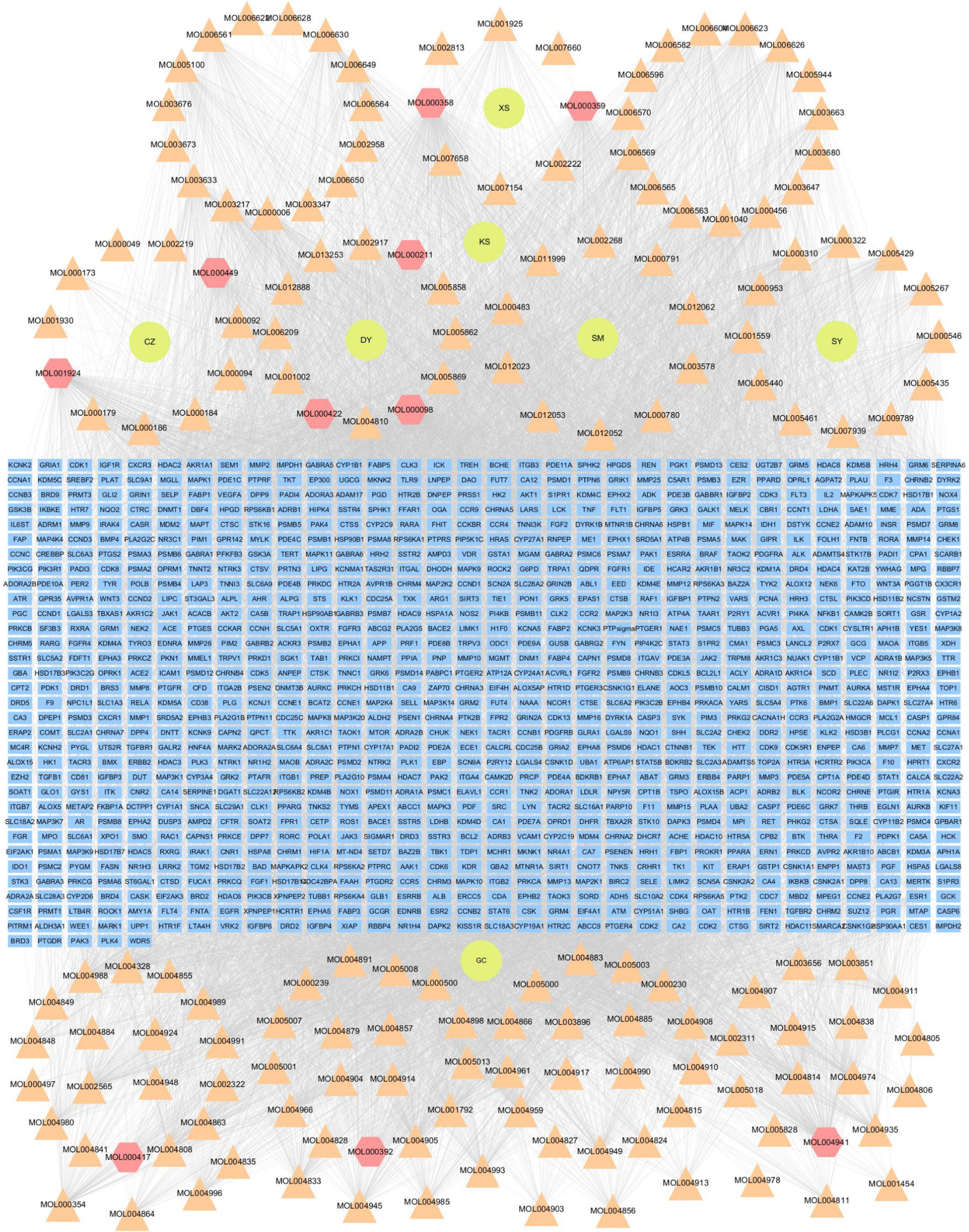
Figure 3 Herb-compound-target interaction network.
The yellow-green circle nodes symbolized the seven herbs of Xuanshen decoction; the triangular and hexagonal nodes symbolized the components; the hexagonal nodes symbolized the shared components of the herbs; the blue quadrilateral nodes denoted the target. MOL000422 and MOL000211 were the common compounds of Glycyrrhiza uralensis and Sanguisorba officinalis; MOL000392, MOL000417, and MOL004941 were the common compounds of Glycyrrhiza uralensis and Sophora flavescens; MOL001924 was the component of Glycyrrhiza uralensis and Cimicifuga heracleifolia; MOL000098 was the common component of Glycyrrhiza uralensis, Sanguisorba officinalis, Sophora flavescens; MOL000359 was the common component of Glycyrrhiza uralensis, Cimicifuga heracleifolia, and Scrophularia ningpoensis; MOL000449 was the common compound of Cimicifuga heracleifolia, Dioscorea polystachya, and Atractylodes lancea; MOL000358 was the common component of Glycyrrhiza uralensis, Sanguisorba officinalis, Dioscorea polystachya, and Scrophularia ningpoensis. XS: Scrophularia ningpoensis, KS: Sophora flavescens; CZ: Atractylodes lancea; DY: Sanguisorba officinalis; SM: Cimicifuga heracleifolia; SY: Dioscorea polystachya; GC: Glycyrrhiza uralensis; XSD: Xuanshen decoction.
- Citation: Zeng XL, Zhu LJ, Zhang Y, Yang XD, Zhu YJ. Unveiling Xuanshen decoction: A novel approach to combat slow transit constipation. World J Gastroenterol 2025; 31(30): 109187
- URL: https://www.wjgnet.com/1007-9327/full/v31/i30/109187.htm
- DOI: https://dx.doi.org/10.3748/wjg.v31.i30.109187