
















©2009 The WJG Press and Baishideng.
World J Gastroenterol. Dec 7, 2009; 15(45): 5674-5684
Published online Dec 7, 2009. doi: 10.3748/wjg.15.5674
Published online Dec 7, 2009. doi: 10.3748/wjg.15.5674
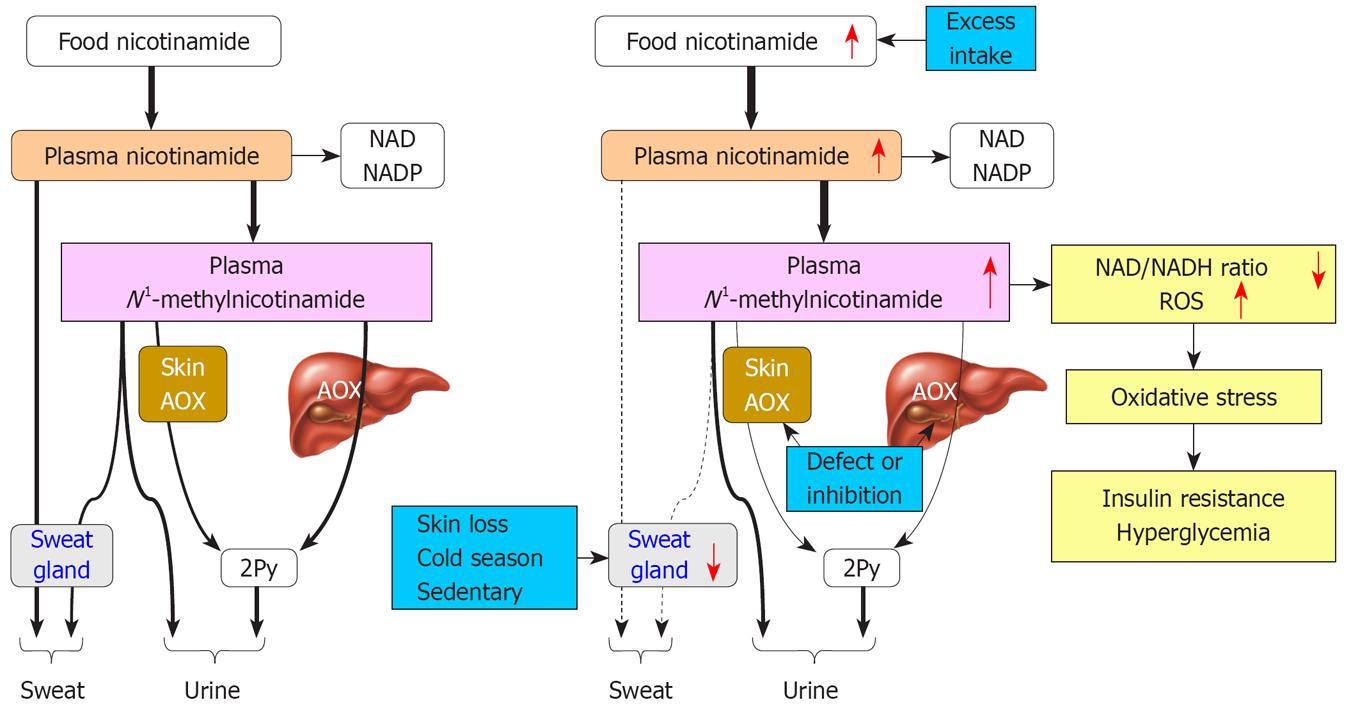
Figure 7 Proposed model of the role of nicotinamide overload in the development of type 2 diabetes.
Normally, if nicotinamide intake is slightly more than the body needs, excess nicotinamide will be detoxified rapidly and eliminated mainly via the N1-methylnicotinamide to 2Py pathway, which involves liver and skin functions (left). Frequent excess nicotinamide intake, low N1-methylnicotinamide detoxification, or sweat gland inactivity induces a substantial rise in plasma N1-methylnicotinamide concentrations and residence time after each meal, and consequently induces oxidative stress and insulin resistance (right). The change trends are indicated by red arrows or line thickness.
- Citation: Zhou SS, Li D, Sun WP, Guo M, Lun YZ, Zhou YM, Xiao FC, Jing LX, Sun SX, Zhang LB, Luo N, Bian FN, Zou W, Dong LB, Zhao ZG, Li SF, Gong XJ, Yu ZG, Sun CB, Zheng CL, Jiang DJ, Li ZN. Nicotinamide overload may play a role in the development of type 2 diabetes. World J Gastroenterol 2009; 15(45): 5674-5684
- URL: https://www.wjgnet.com/1007-9327/full/v15/i45/5674.htm
- DOI: https://dx.doi.org/10.3748/wjg.15.5674