
















Copyright: ©Author(s) 2026.
Artif Intell Gastrointest Endosc. Sep 8, 2026; 7(2): 118493
Published online Sep 8, 2026. doi: 10.37126/aige.118493
Published online Sep 8, 2026. doi: 10.37126/aige.118493
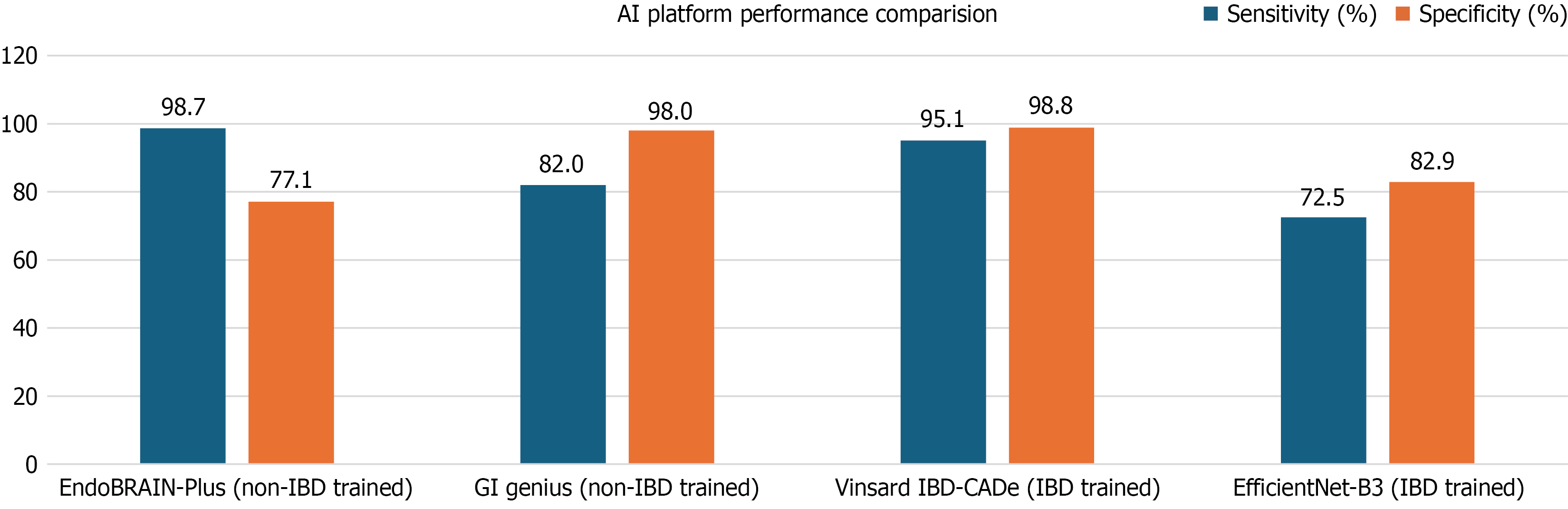
Figure 1 Comparison of artificial intelligence sensitivity for neoplasia detection across commercial non-inflammatory bowel disease systems and inflammatory bowel disease-specific models.
Illustrative only, methodological heterogeneity limits direct benchmarking. AI: Artificial intelligence; IBD: Inflammatory bowel disease; CADe: Computer-aided detection.
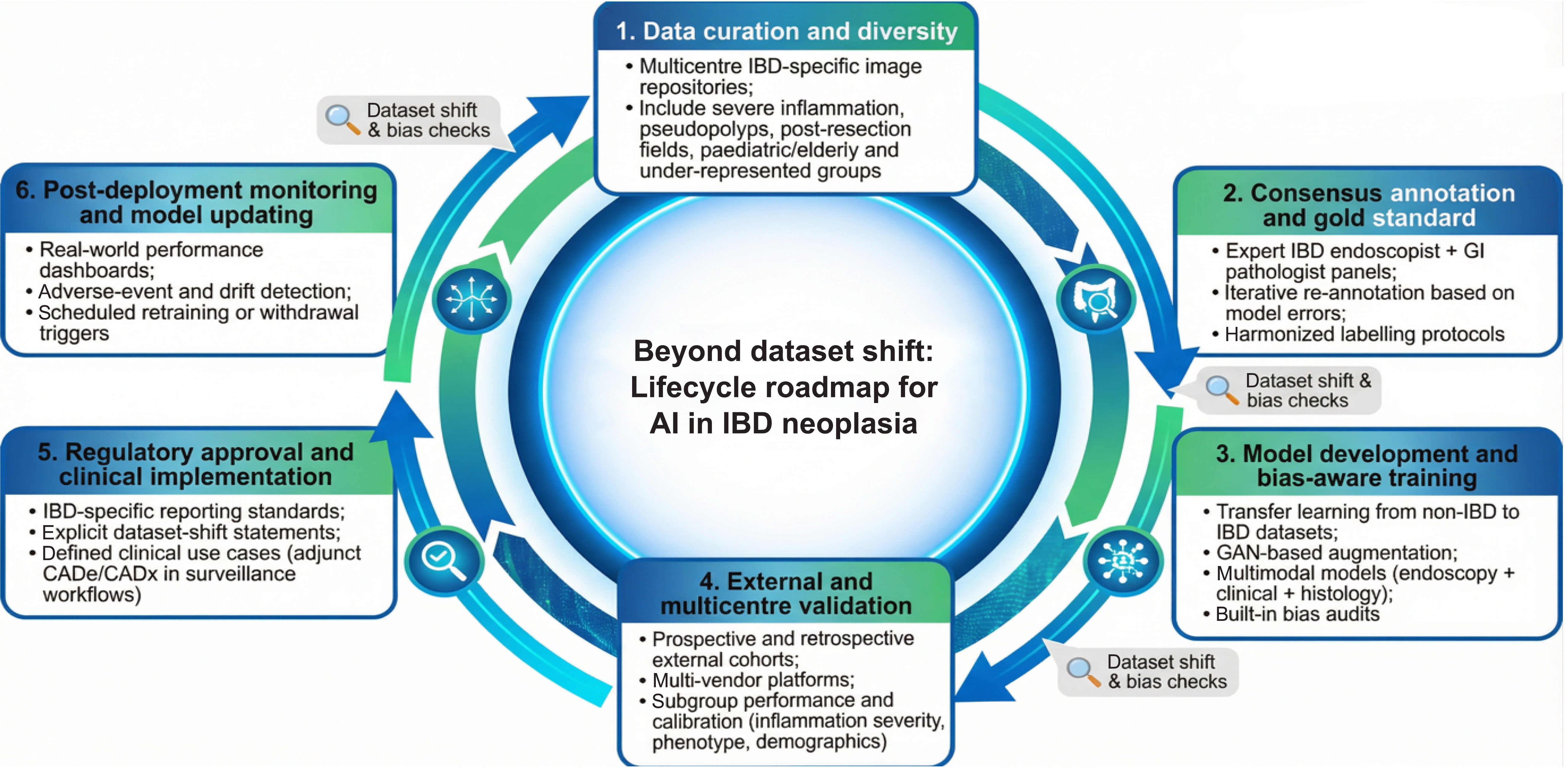
Figure 2 The circular life-cycle roadmap for artificial intelligence development in inflammatory bowel disease dysplasia surveillance.
The six stages are connected with clockwise arrows demonstrating the cyclical and iterative process of developing reliable artificial intelligence. Bias checks are illustrated at the three transitions between stages (2– > 3, 3– > 4, and 6– > 1) to demonstrate where systematic auditing must be performed to assure model reliability and fairness. AI: Artificial intelligence; IBD: Inflammatory bowel disease; GAN: Generative adversarial network; CADe: Computer-aided detection; CADx: Computer-aided diagnosis; GI: Gastrointestinal.
- Citation: Bhandari R, Gartlan J, Oppong P, Chhabra P. Artificial intelligence for inflammatory bowel disease dysplasia detection: Current evidence and future directions. Artif Intell Gastrointest Endosc 2026; 7(2): 118493
- URL: https://www.wjgnet.com/2689-7164/full/v7/i2/118493.htm
- DOI: https://dx.doi.org/10.37126/aige.118493