
















Copyright: ©Author(s) 2026.
Artif Intell Gastroenterol. Nov 8, 2026; 7(3): 127488
Published online Nov 8, 2026. doi: 10.35712/aig.127488
Published online Nov 8, 2026. doi: 10.35712/aig.127488
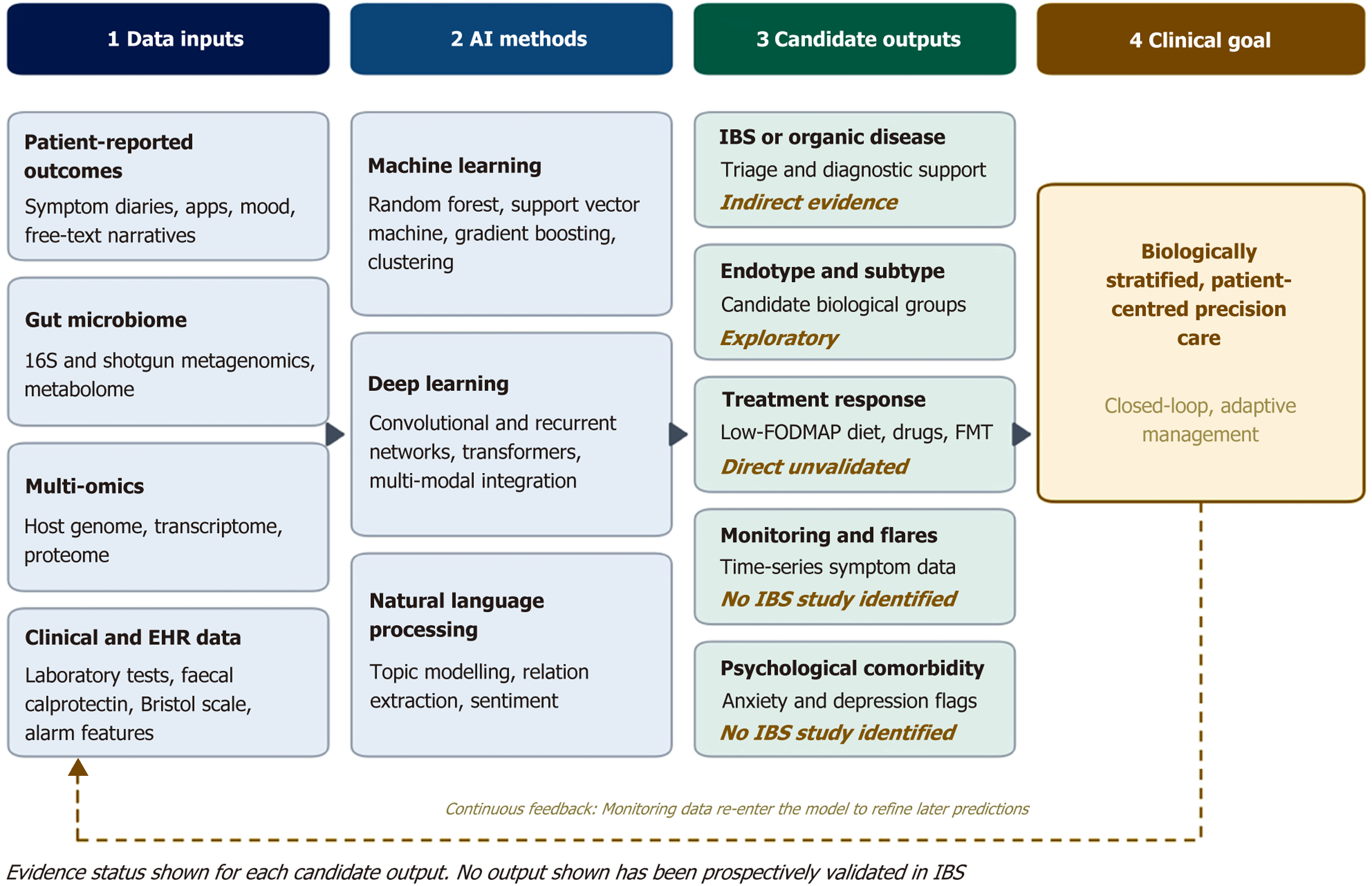
Figure 1 Data-to-decision framework for the application of artificial intelligence in irritable bowel syndrome and related functional gastrointestinal disorders.
Diverse data sources - patient-reported outcomes, clinical and laboratory features, microbiome profiles, and multi-omics data - are integrated and analyzed with machine-learning, deep-learning, and natural language processing methods to support diagnostic refinement, biological subtyping, and personalized treatment selection. This figure is a conceptual framework summarizing potential applications; none of the depicted capabilities is validated for routine clinical use in irritable bowel syndrome. AI: Artificial intelligence; IBS: Irritable bowel syndrome; EHR: Electronic health record.
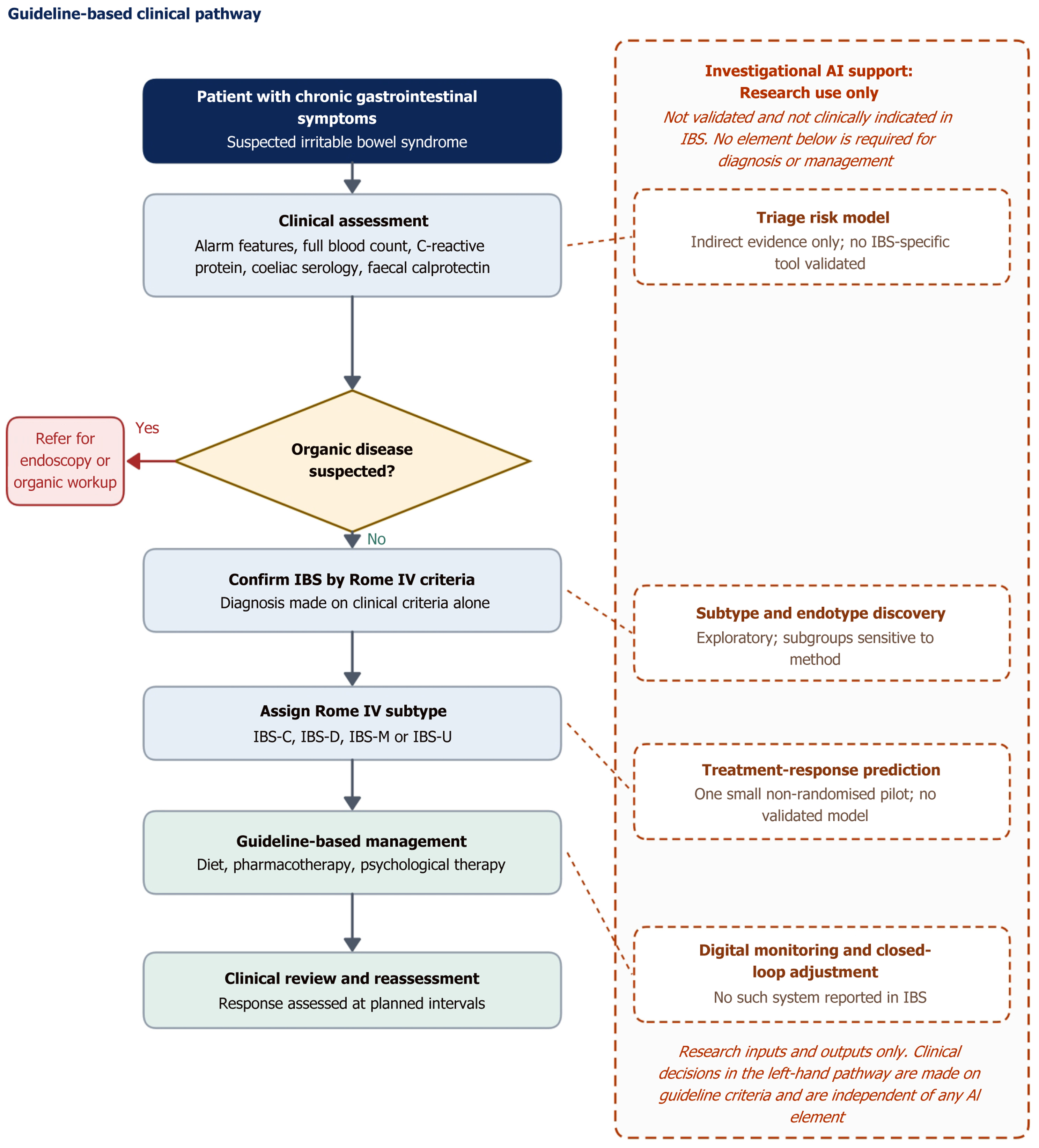
Figure 2 Proposed artificial intelligence-assisted clinical pathway for irritable bowel syndrome, extending from initial triage and diagnostic classification through personalized, multi-modal management (dietary, pharmacological, and psychological interventions) to closed-loop symptom monitoring and adaptive adjustment of therapy.
This pathway is hypothetical and is presented as a research framework, not as a validated or guideline-endorsed clinical algorithm. No artificial intelligence classifier is currently validated for routine IBS diagnosis, endoscopy triage, endotype classification or treatment selection, and none of the steps shown should replace standard clinical assessment, alarm-feature evaluation or guideline-based investigation. AI: Artificial intelligence; IBS: Irritable bowel syndrome; IBS-C: Irritable bowel syndrome with predominant constipation; IBS-D: Irritable bowel syndrome with predominant diarrhea; IBS-M: Irritable bowel syndrome with mixed bowel habits; IBS-U: Irritable bowel syndrome with unclassified.
- Citation: Issa IA, Issa T. Role of artificial intelligence in irritable bowel syndrome: A narrative review. Artif Intell Gastroenterol 2026; 7(3): 127488
- URL: https://www.wjgnet.com/2644-3236/full/v7/i3/127488.htm
- DOI: https://dx.doi.org/10.35712/aig.127488