
















Copyright: ©Author(s) 2026.
Artif Intell Med Imaging. Sep 8, 2026; 7(1): 116377
Published online Sep 8, 2026. doi: 10.35711/aimi.v7.i1.116377
Published online Sep 8, 2026. doi: 10.35711/aimi.v7.i1.116377
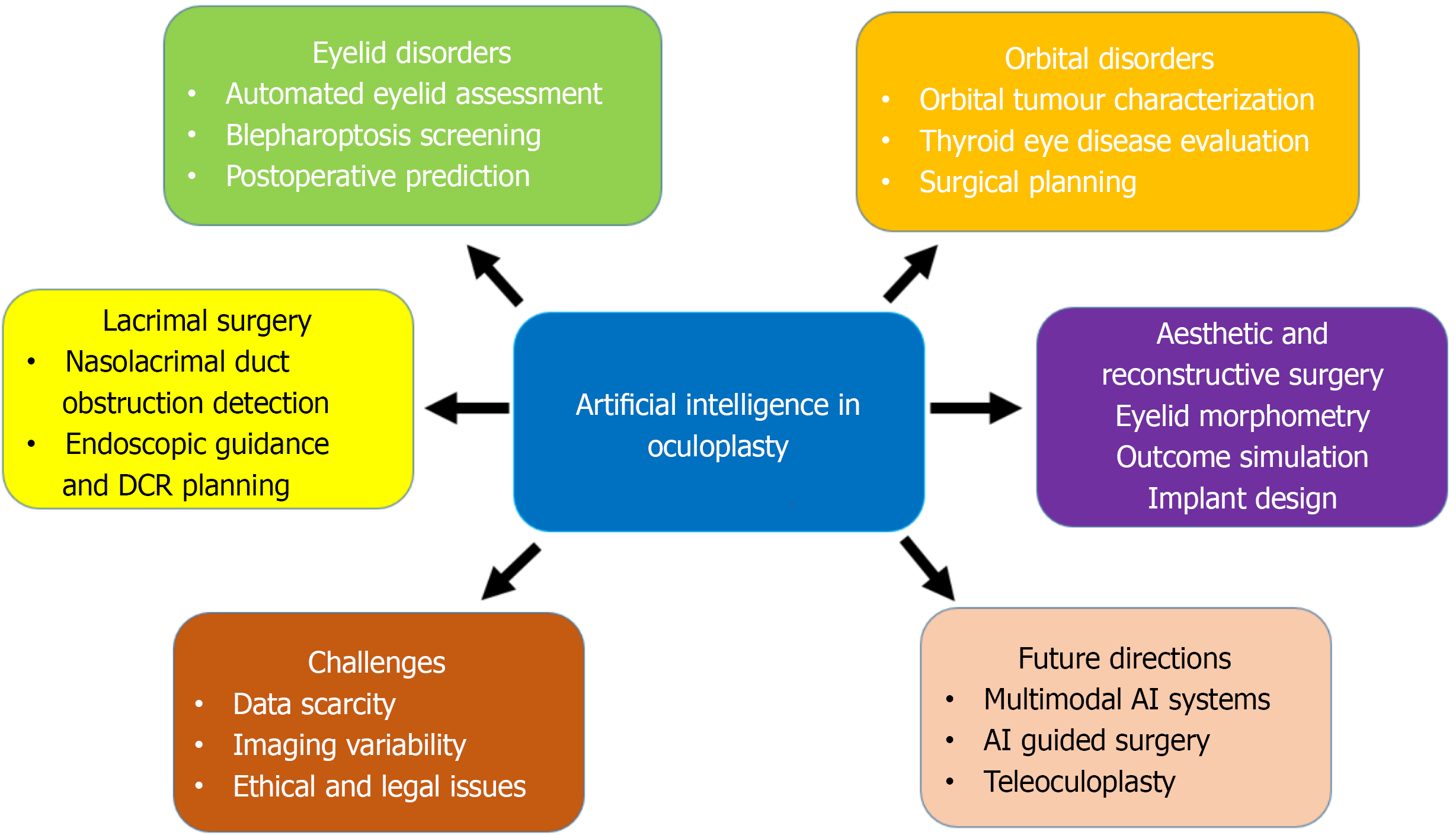
Figure 1 Conceptual summary of artificial intelligence applications in oculoplasty.
The diagram illustrates how artificial intelligence (AI) integrates across four key domains – eyelid, orbital, lacrimal, and reconstructive surgery – each contributing to diagnostic precision, surgical planning, and outcome prediction. A central AI core connects these domains through a workflow of data input: (1) AI analysis; (2) Surgical planning; and (3) Outcome prediction. Surrounding elements highlight current challenges (data scarcity, ethical and medico-legal concerns, and clinical integration) and emerging trends shaping the field’s future (multimodal AI, robotic navigation, and tele-oculoplasty). AI: Artificial intelligence; DCR: Dacryocystorhinostomy.
- Citation: Panda BB, Koppalu Lingaraju T, Mishra P, Nayak B. Artificial intelligence in oculoplasty: Current applications and future perspectives. Artif Intell Med Imaging 2026; 7(1): 116377
- URL: https://www.wjgnet.com/2644-3260/full/v7/i1/116377.htm
- DOI: https://dx.doi.org/10.35711/aimi.v7.i1.116377