
















Copyright: ©Author(s) 2026.
Artif Intell Gastroenterol. Nov 8, 2026; 7(3): 124278
Published online Nov 8, 2026. doi: 10.35712/aig.124278
Published online Nov 8, 2026. doi: 10.35712/aig.124278
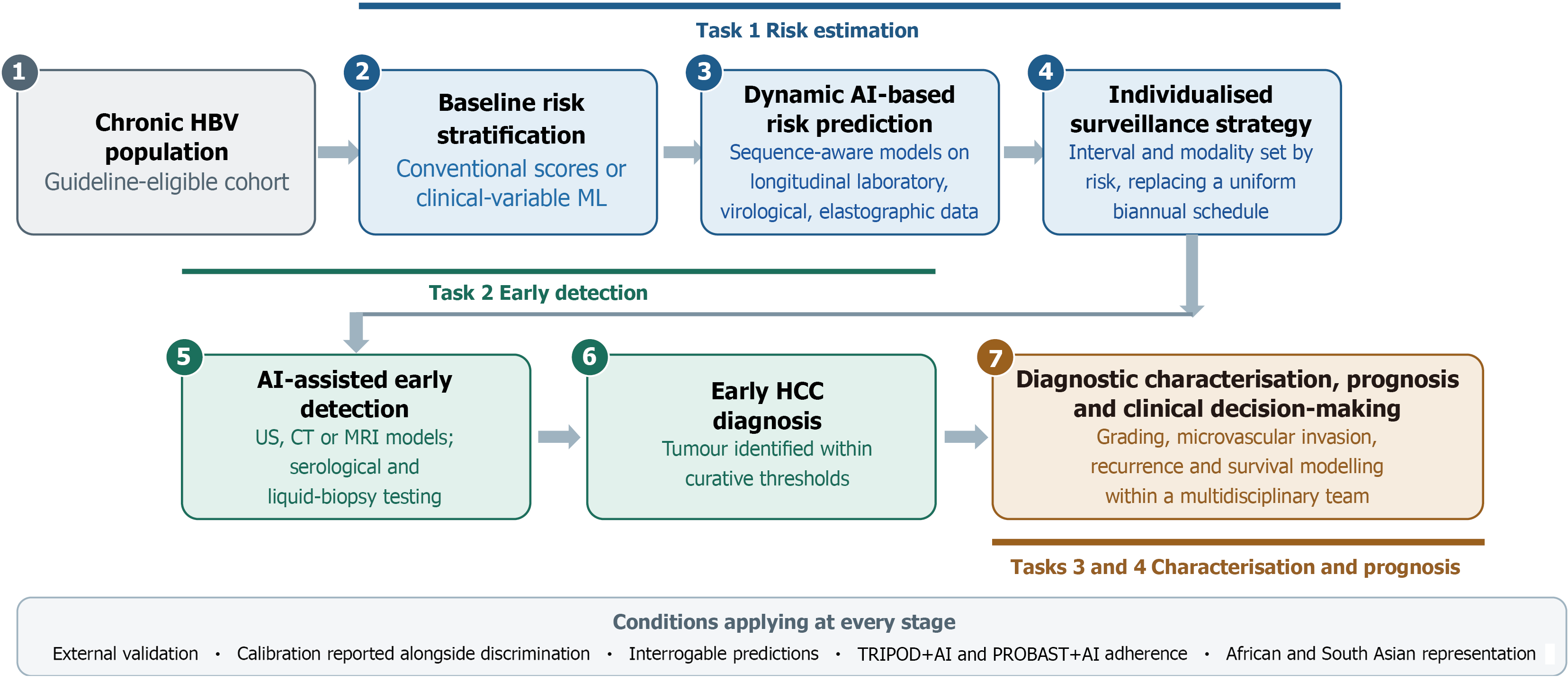
Figure 1 Proposed integration of artificial intelligence into the hepatitis B-related hepatocellular carcinoma care pathway.
A chronic hepatitis B population undergoes baseline risk stratification using conventional scores or clinical-variable machine learning. Longitudinal laboratory, virological and elastographic data permit dynamic risk estimation, which determines an individualised surveillance strategy in place of a uniform biannual schedule. Detection is performed by artificial intelligence-assisted ultrasonography, cross-sectional imaging, or serological and liquid-biopsy testing. A tumour so identified proceeds to diagnostic characterisation and prognostic assessment, and the output informs multidisciplinary clinical decision-making. The lower band lists the methodological conditions that apply to every stage. The figure represents a framework for investigation and not a description of validated practice. HBV: Hepatitis B virus; ML: Machine learning; US: Ultrasonography; CT: Computed tomography; MRI: Magnetic resonance imaging; HCC: Hepatocellular carcinoma; AI: Artificial intelligence.
- Citation: Kashiv P, Balwani MR, Saxena K, Tolani P, Pasari A, Kute VB. Artificial intelligence-driven risk estimation, early detection, diagnostic characterisation and prognosis in hepatitis b-related hepatocellular carcinoma. Artif Intell Gastroenterol 2026; 7(3): 124278
- URL: https://www.wjgnet.com/2644-3236/full/v7/i3/124278.htm
- DOI: https://dx.doi.org/10.35712/aig.124278