
















Copyright: ©Author(s) 2026.
Artif Intell Gastroenterol. Nov 8, 2026; 7(3): 123890
Published online Nov 8, 2026. doi: 10.35712/aig.123890
Published online Nov 8, 2026. doi: 10.35712/aig.123890
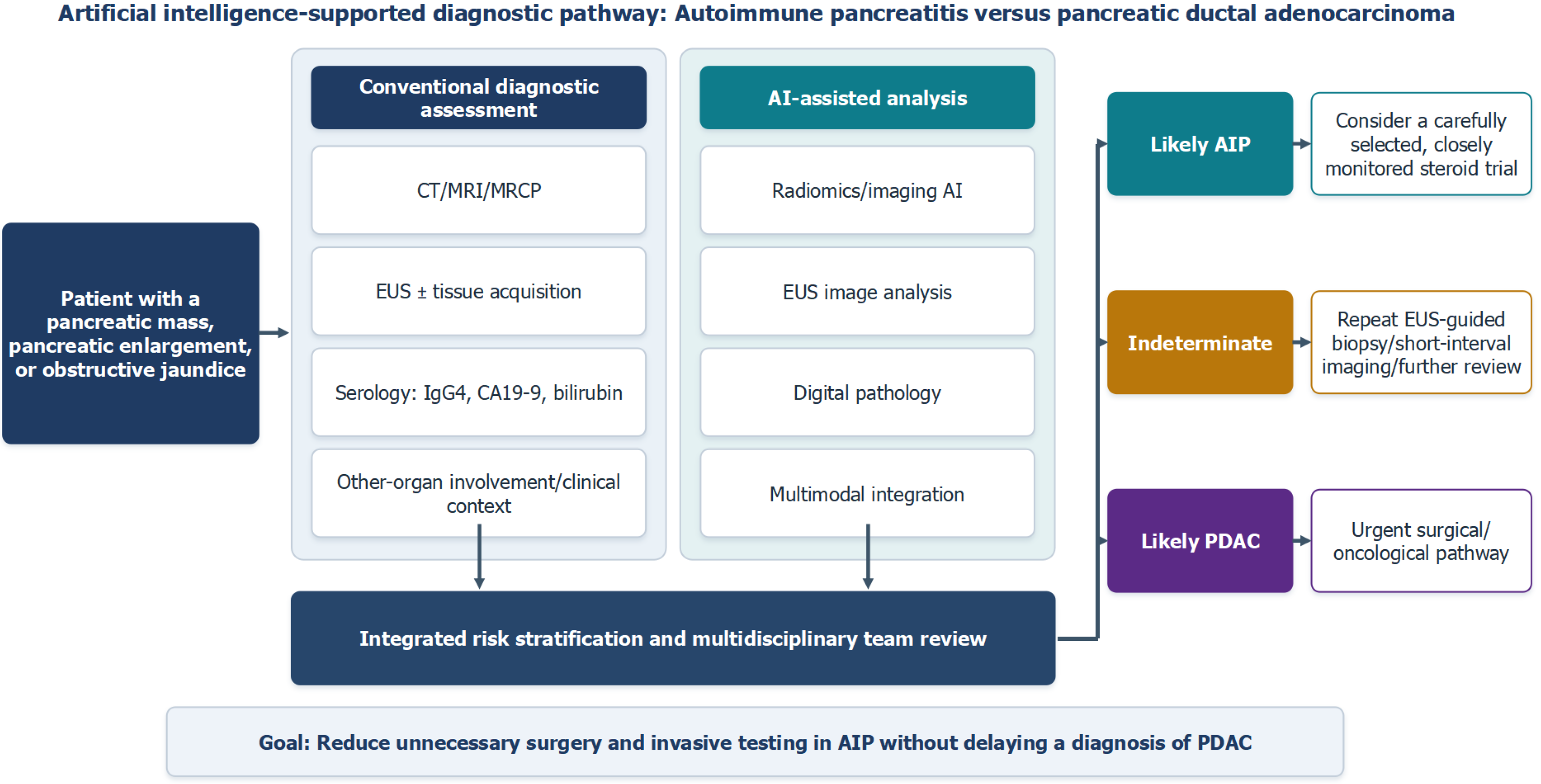
Figure 1 Proposed artificial intelligence-supported diagnostic pathway for differentiating autoimmune pancreatitis from pancreatic ductal adenocarcinoma.
A patient presenting with a pancreatic mass, pancreatic enlargement, or obstructive jaundice undergoes conventional diagnostic assessment (computed tomography/magnetic resonance imaging/magnetic resonance cholangiopancreatography, endoscopic ultrasound with or without tissue acquisition, serology, and evaluation for other-organ involvement) in parallel with artificial intelligence-assisted analysis (radiomics/imaging analysis, endoscopic ultrasound image analysis, digital pathology, and multimodal integration). Both streams inform integrated risk stratification within a multidisciplinary team, which categorizes the patient as likely autoimmune pancreatitis (consider a carefully selected, closely monitored steroid trial), indeterminate (repeat endoscopic ultrasound-guided biopsy, short-interval imaging, or further review), or likely pancreatic ductal adenocarcinoma (urgent surgical or oncological pathway). The overarching goal is to reduce unnecessary surgery and invasive testing in autoimmune pancreatitis without delaying the diagnosis of pancreatic ductal adenocarcinoma. AIP: Autoimmune pancreatitis; CA19-9: Carbohydrate antigen 19-9; CT: Computed tomography; MRI: Magnetic resonance imaging; EUS: Endoscopic ultrasound; IgG4: Immuno
- Citation: Salman A, Elewa A, Marwan A. Artificial intelligence in autoimmune pancreatitis: Differentiating immunoglobulin G4-related pancreatitis from pancreatic ductal adenocarcinoma. Artif Intell Gastroenterol 2026; 7(3): 123890
- URL: https://www.wjgnet.com/2644-3236/full/v7/i3/123890.htm
- DOI: https://dx.doi.org/10.35712/aig.123890