
















Copyright: ©Author(s) 2026.
Artif Intell Gastroenterol. Aug 8, 2026; 7(2): 118884
Published online Aug 8, 2026. doi: 10.35712/aig.v7.i2.118884
Published online Aug 8, 2026. doi: 10.35712/aig.v7.i2.118884
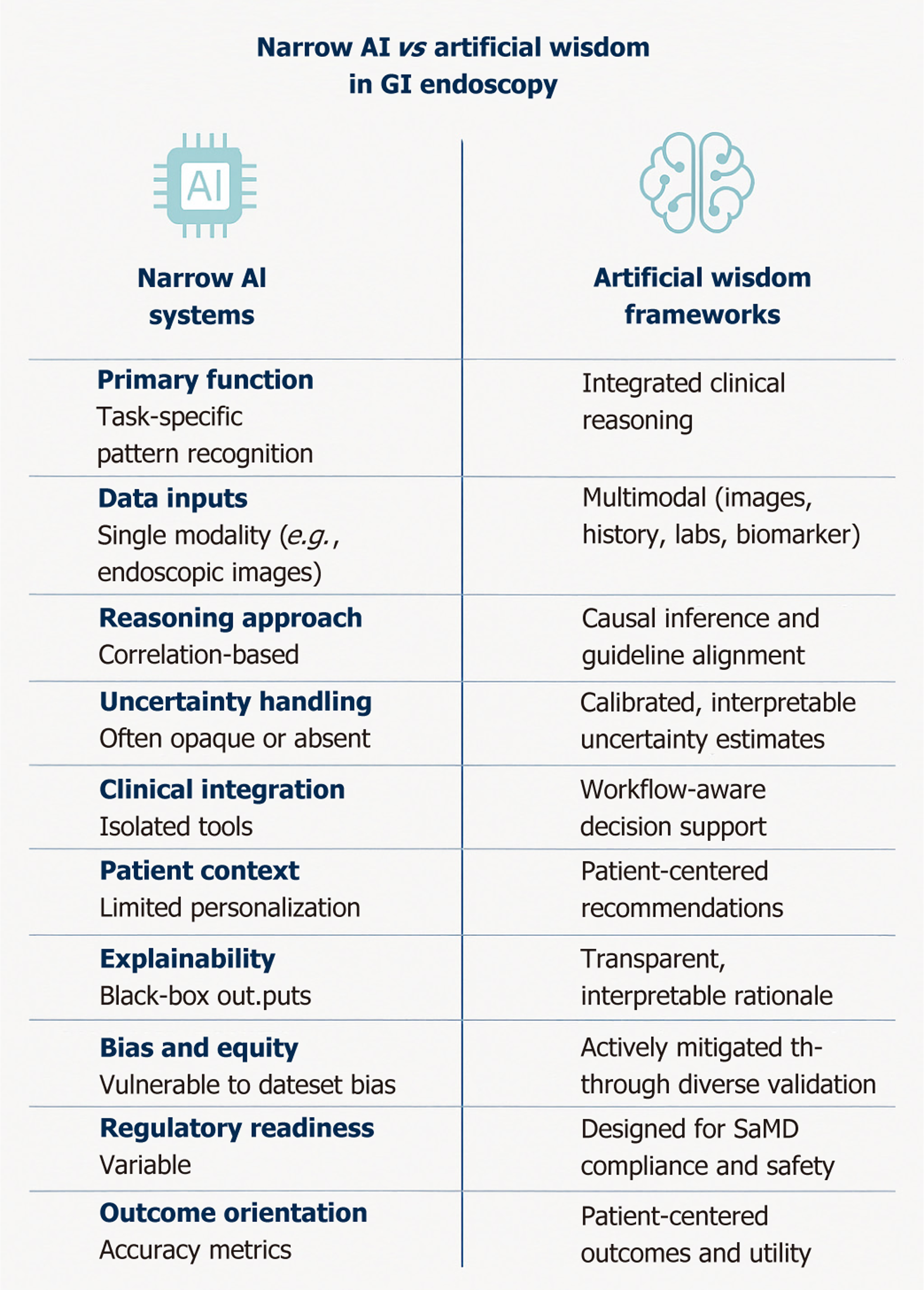
Figure 1 Comparison of narrow artificial intelligence systems and artificial wisdom frameworks in gastrointestinal endoscopy.
This table outlines key differences across ten dimensions relevant to clinical application. Narrow artificial intelligence (AI) systems are characterized by task-specific pattern recognition, single-modality data input, and opaque reasoning, often lacking integration with clinical workflows or patient context. In contrast, Artificial Wisdom frameworks emphasize multimodal data synthesis, causal reasoning aligned with clinical guidelines, calibrated uncertainty, and patient-centered decision support. They also prioritize transparency, equity, regulatory compliance, and outcome utility, reflecting a more holistic and clinically integrated approach to AI in gastr
- Citation: Issa IA, Issa T. Artificial wisdom in gastrointestinal diagnostics: A new frontier in translational reasoning. Artif Intell Gastroenterol 2026; 7(2): 118884
- URL: https://www.wjgnet.com/2644-3236/full/v7/i2/118884.htm
- DOI: https://dx.doi.org/10.35712/aig.v7.i2.118884