
















Copyright: ©Author(s) 2026.
Artif Intell Cancer. Sep 8, 2026; 7(1): 116460
Published online Sep 8, 2026. doi: 10.35713/aic.v7.i1.116460
Published online Sep 8, 2026. doi: 10.35713/aic.v7.i1.116460
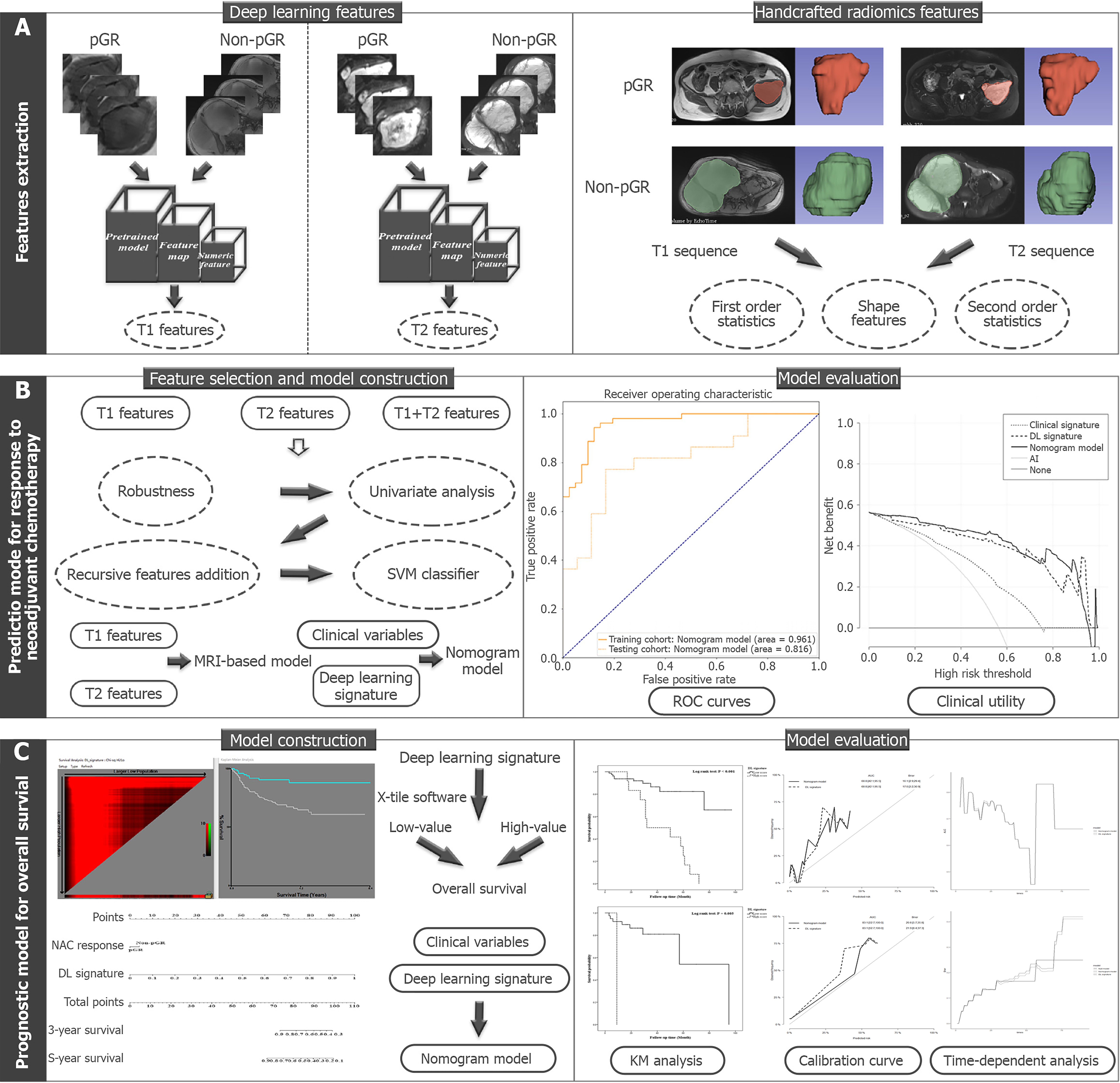
Figure 1 A general flowchart of data analysis in prediction of response to neoadjuvant chemotherapy and survival outcome for adolescents and young adults with osteosarcoma.
A: Features extraction: Imaging-derived features on T1- and T2- magnetic resonance imaging sequences were extracted by the deep learning (DL) analysis and handcrafted radiomics analysis, respectively; B: Prediction model construction and evaluation for response to neoadjuvant chemotherapy: The prediction models in identification of response to neoadjuvant chemotherapy were approached by machine learning methods via feature selection and model construction. The integrated nomogram model integrating clinical predictors and the DL-based signature was constructed to improve prediction performance. All prediction models were evaluated by prediction performance via receiver operating characteristic curves and calibration plots; C: The prognostic models construction and evaluation for overall survival: The DL-based signature from treatment prediction was dichotomized by the optimal cut-off points in association with overall survival with X-tile software. The integrated prognostic nomogram was constructed on prognostic clinical variables and the DL-based signature, and evaluated by Kaplan-Meier analysis, calibration curves, and time-dependent receiver operating characteristic analysis and Brier score. pGR: Pathological good response; SVM: Support vector machine; MRI: Magnetic resonance imaging; ROC: Receiver operating characteristic; DL: Deep learning; NAC: Neoadjuvant chemotherapy; AUC: Area under the receiver operating characteristics curve; KM: Kaplan-Meier.
- Citation: Yang YH. Magnetic resonance imaging-based deep learning model for prediction of the neoadjuvant chemotherapy response and survival prognosis in adolescents with osteosarcoma. Artif Intell Cancer 2026; 7(1): 116460
- URL: https://www.wjgnet.com/2644-3228/full/v7/i1/116460.htm
- DOI: https://dx.doi.org/10.35713/aic.v7.i1.116460