
















©The Author(s) 2021.
World J Clin Cases. Dec 26, 2021; 9(36): 11122-11147
Published online Dec 26, 2021. doi: 10.12998/wjcc.v9.i36.11122
Published online Dec 26, 2021. doi: 10.12998/wjcc.v9.i36.11122
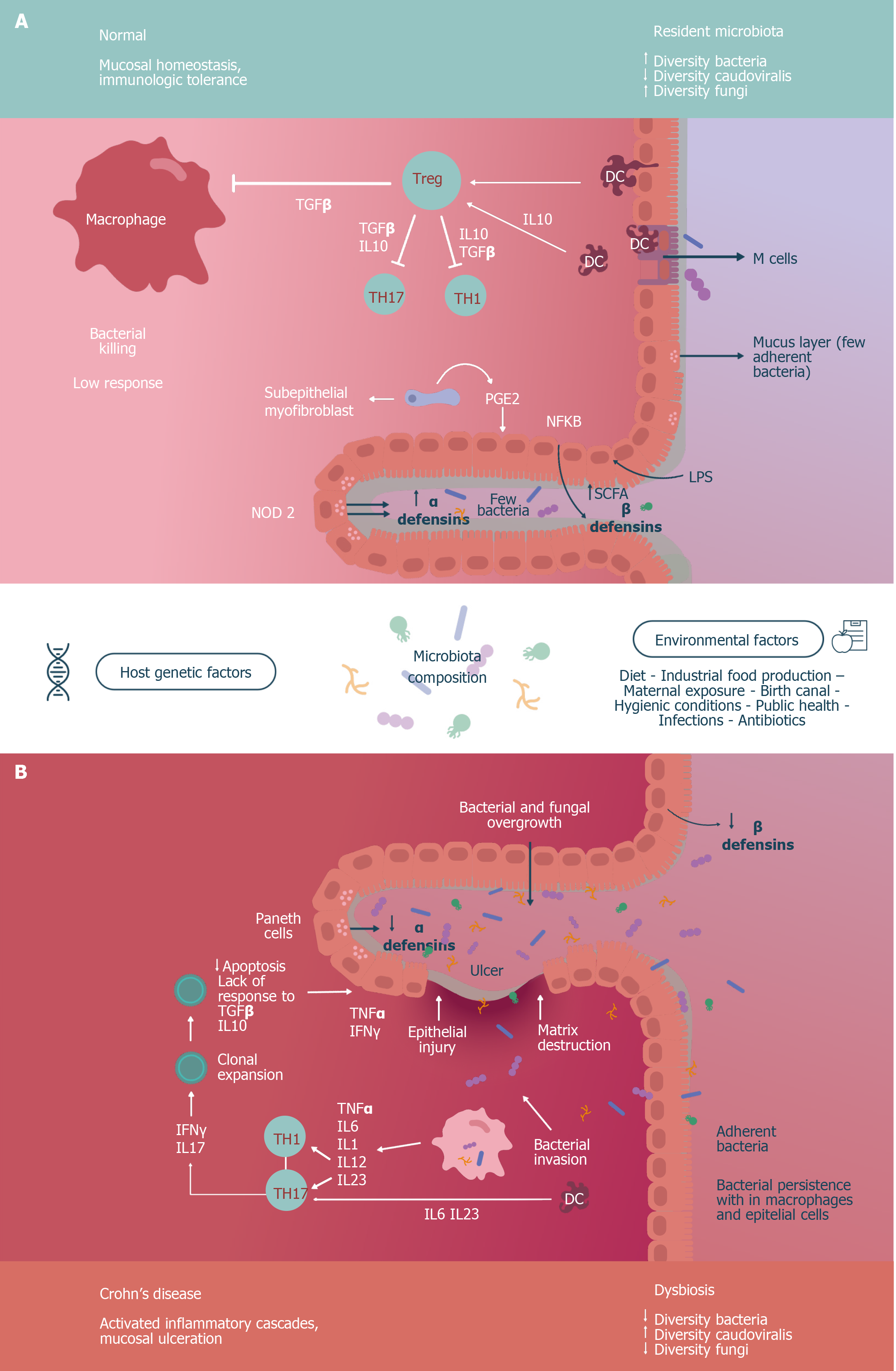
Figure 1 Commensal microbiota modulates the response of the immune system in the intestinal mucosa and participates in the metabolism of the epithelium.
A: In the case of immune regulation, dendritic cells (DCs), activated in M cells, modulate regulatory T lymphocytes (Tregs) through anti-inflammatory signals (such as interleukin [IL]-10), which in turn inhibit other anti-inflammatory signals (such as IL-10 and transforming growth factor-beta [TGFβ]) of T helper cells 1-17 and macrophages. In the case of epithelial metabolism, the synthesis of short chain fatty acids (SCFAs), the secretion of prostaglandins (PGEs, such as PGE2) and the activity of nuclear factor-kappa B (NF-kB) contributes to an adequate secretion of defensins α and β, to the appropriate functioning of the mucus layer and even the microbiome state in homeostasis; B: The persistence of bacteria adhering to a deteriorated mucus film, the decrease in defensins and the invasion of the epithelium produces the activation of DCs and macrophages, that in turn activate the T helper (Th) cells, Th1 and Th17, by proinflammatory signals (IL-1, IL-6, IL-12, and IL-23), thereby promoting a low apoptosis, clonal expansion with loss of response to anti-inflammatory signals, and contributing to tissue damage mediated by interferon gamma (INFγ) and tumor necrosis factor alpha (TNFα). This figure is based upon data published in Reference 11.
- Citation: Ceballos D, Hernández-Camba A, Ramos L. Diet and microbiome in the beginning of the sequence of gut inflammation. World J Clin Cases 2021; 9(36): 11122-11147
- URL: https://www.wjgnet.com/2307-8960/full/v9/i36/11122.htm
- DOI: https://dx.doi.org/10.12998/wjcc.v9.i36.11122