
















©Author(s) (or their employer(s)) 2026.
World J Clin Cases. Mar 6, 2026; 14(7): 118719
Published online Mar 6, 2026. doi: 10.12998/wjcc.v14.i7.118719
Published online Mar 6, 2026. doi: 10.12998/wjcc.v14.i7.118719
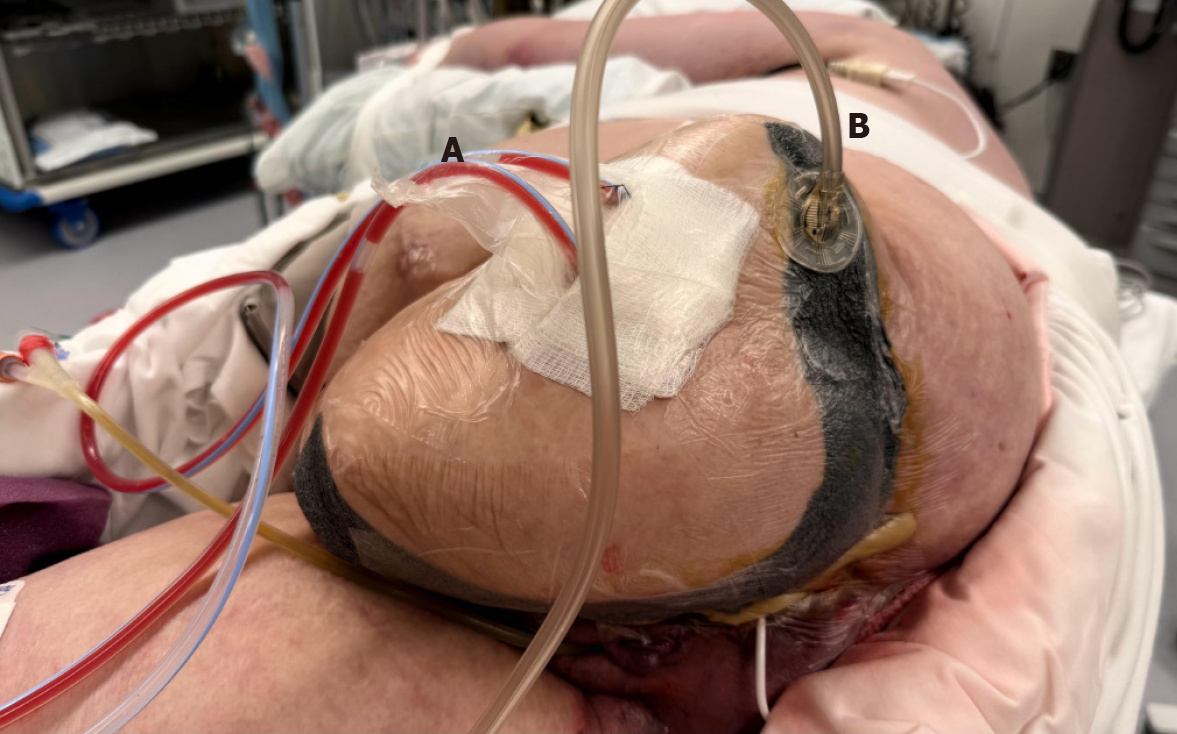
Figure 2 Clinical example of direct peritoneal resuscitation during open abdomen management.
Two 19-mm silicone peritoneal drains (A) are positioned for continuous intraperitoneal infusion of peritoneal dialysis solution. One drain is placed at the root of the mesentery, while the second ascends along the right paracolic gutter and follows the subhepatic curvature beneath the liver, in proximity to the gallbladder. A negative pressure wound therapy system (B) is applied to the open abdomen to facilitate effluent removal and prevent intra-abdominal fluid accumulation. Peritoneal dialysis solution is administered as a continuous infusion according to institutional protocol.
- Citation: Ribeiro Junior MAF, Dib Possiedi R, Stefani Pacheco L, de Cesaro Schpchacki N, Nafeesa Hashim S, Monteiro Tavares Pereira B. Direct peritoneal resuscitation in sepsis and intra-abdominal infection: A scoping review. World J Clin Cases 2026; 14(7): 118719
- URL: https://www.wjgnet.com/2307-8960/full/v14/i7/118719.htm
- DOI: https://dx.doi.org/10.12998/wjcc.v14.i7.118719