
















Copyright: ©Author(s) 2026.
World J Clin Cases. Aug 6, 2026; 14(22): 120669
Published online Aug 6, 2026. doi: 10.12998/wjcc.120669
Published online Aug 6, 2026. doi: 10.12998/wjcc.120669
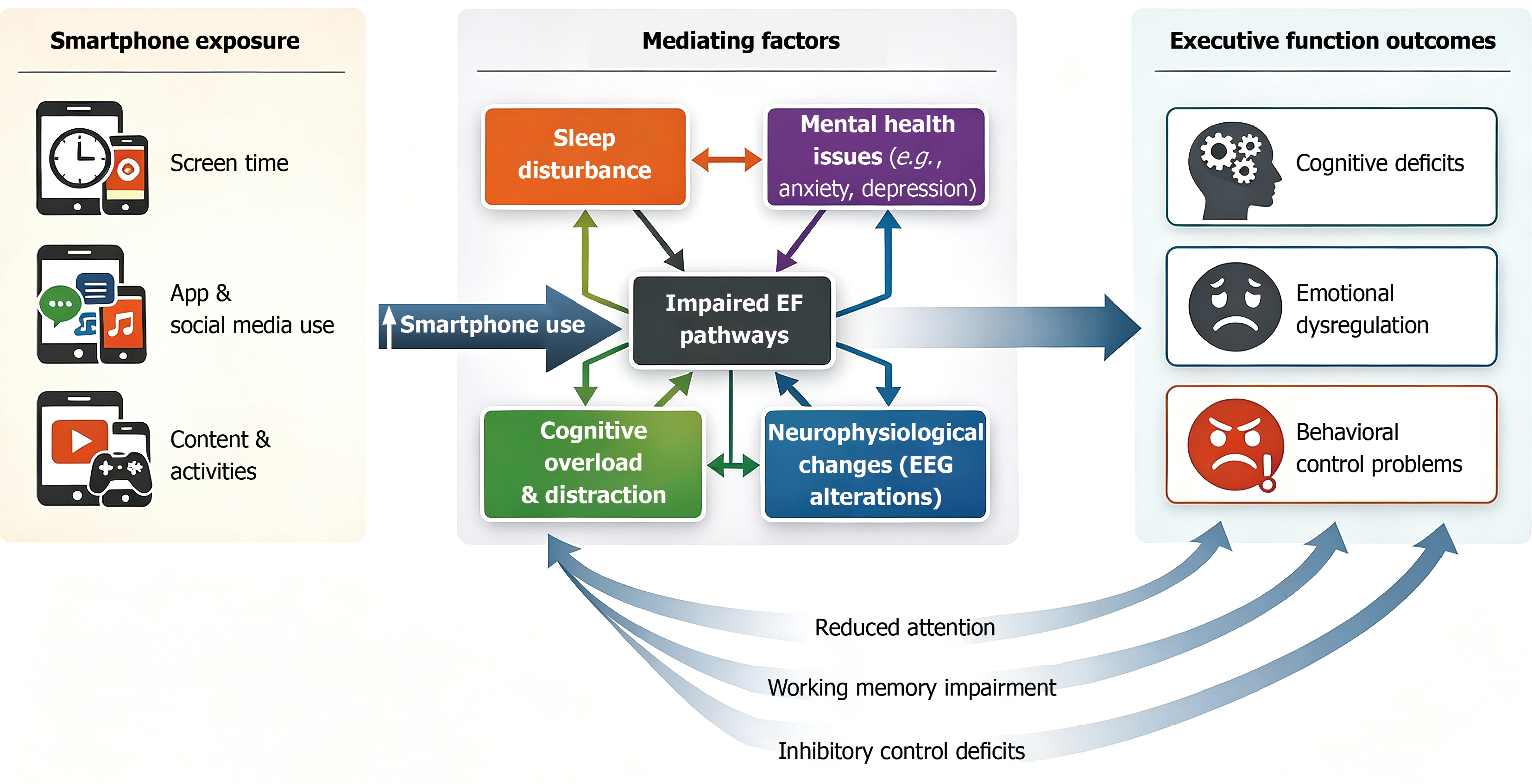
Figure 2 Conceptual framework linking smartphone exposure to executive function outcomes in children and adolescents.
This schematic illustrates the proposed pathways linking smartphone exposure to impairments in executive function (EF) among children and adolescents. Smartphone exposure (left panel), encompassing total screen time, app and social media engagement, and content type, contributes to a set of interacting mediating factors (center panel). These include sleep disturbance, mental health symptoms (e.g., anxiety and depression), cognitive overload and distraction, and neurophysiological changes (e.g., electroencephalography alterations). Arrows indicate bidirectional and reinforcing relationships among mediators, reflecting the dynamic and interdependent nature of these processes. Collectively, these mediators converge on impaired EF pathways, which in turn lead to adverse executive outcomes (right panel), including cognitive deficits, emotional dysregulation, and behavioral control problems. The lower arcs highlight specific EF domains most consistently affected-reduced attention, working memory impairment, and deficits in inhibitory control. The model emphasizes that the impact of smartphone use on executive functioning is indirect and mediated through multiple behavioral and neurobiological mechanisms rather than a single causal pathway. EF: Executive function; EEG: Electroencephalography.
- Citation: Al-Beltagi M, Saeed NK, Bediwy AS, Elbeltagi YM, Bediwy HA, Elbeltagi R. Smartphone use health outcomes in children and adolescents: A systematic review of behavioral, developmental, and environmental risk pathways. World J Clin Cases 2026; 14(22): 120669
- URL: https://www.wjgnet.com/2307-8960/full/v14/i22/120669.htm
- DOI: https://dx.doi.org/10.12998/wjcc.120669