















©The Author(s) 2025.
World J Clin Cases. Nov 16, 2025; 13(32): 104208
Published online Nov 16, 2025. doi: 10.12998/wjcc.v13.i32.104208
Published online Nov 16, 2025. doi: 10.12998/wjcc.v13.i32.104208
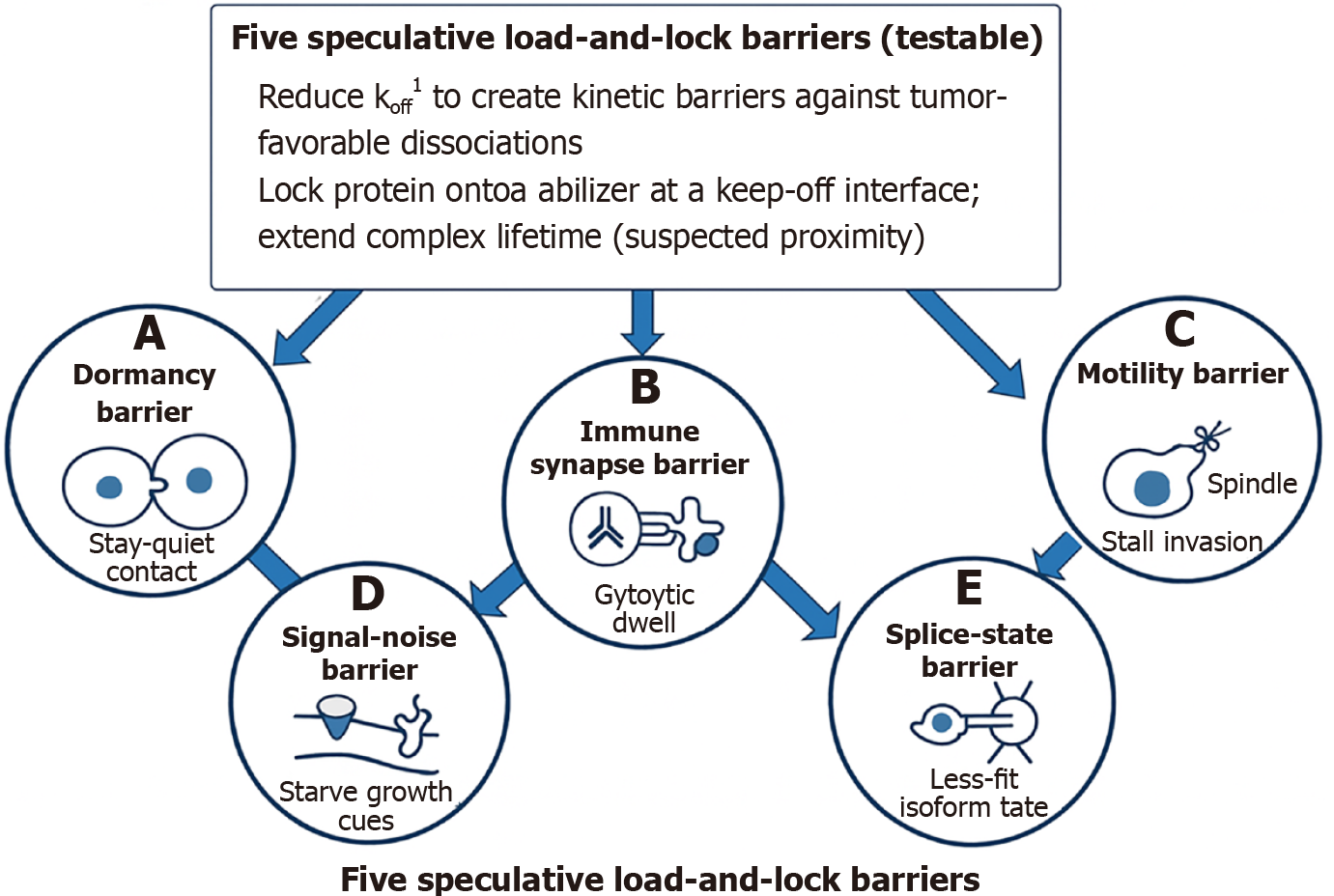
Figure 5 Conceptual diagram of five speculative load-and-lock barriers (testable).
This illustration summarizes a unifying load-and-lock strategy designed to kinetically trap tumor-promoting cellular states by reducing the dissociation rate (koff) of critical molecular interactions. At the center, the strategy emphasizes stabilizing complexes at key interfaces to extend residence time and block rapid transitions. A-E: Radiating from this core are five mechanistically distinct barriers: Dormancy barrier: Locks “stay-quiet” tumor-niche contacts to maintain subclone quiescence and prevent reactivation (A); immune synapse barrier: Locks cytotoxic T cell-tumor synapsed well while blocking immune checkpoint rebinding to enhance killing (B); motility barrier: Locks mitotic motors like KIF18A to stall cell cycle progression and metastatic invasion (C); signal-noise barrier: Locks latent growth inhibitors and decoys ligands to reduce signaling noise and plasticity (D); splice-state barrier: Locks spliceosomal assemblies to bias tumors toward less-fit isoform states (E). Each barrier is represented with a simplified icon and linked to the central load-and-lock concept, illustrating how kinetic stabilization across diverse molecular axes can synergistically constrain tumor evolution. 1koff is the “escape rate” of a molecular handshake. Reducing it means tightening the grip, increasing residence time, and functionally locking tumor biology into less dangerous states. In molecular binding kinetics, koff (the dissociation rate constant) describes how quickly a bound complex falls apart. Mathematically, it has units of per second and represents the probability per unit time that a complex (e.g., protein-ligand, receptor-drug, or synapse contact) will dissociate back into its separate components. A lower koff = slower unbinding - the interaction is more stable, with longer residence time (the duration the complex stays intact). This is distinct from kon (association rate constant), which describes how quickly binding occurs. The load-and-lock strategy is essentially about slowing koff across different molecular systems. By making complexes last longer (kinetically trapping them), you extend functional effects: (1) Dormancy niches hold tumor cells in quiescence; (2) T cell-tumor synapses persist longer, boosting killing; (3) Motor proteins like KIF18A remain stuck, blocking mitosis; (4) Growth inhibitors stay bound, muting noise; and (5) Spliceosomes stay locked in certain states, biasing isoform output.
- Citation: Lee HM, Li SC. Rethinking p16, p53, and HPV in HNCSCC through lessons from glioblastoma subclonal evolution toward patient-centric N-of-1 single-cell RNA sequencing paradigm. World J Clin Cases 2025; 13(32): 104208
- URL: https://www.wjgnet.com/2307-8960/full/v13/i32/104208.htm
- DOI: https://dx.doi.org/10.12998/wjcc.v13.i32.104208