
















©The Author(s) 2025.
World J Clin Cases. Nov 16, 2025; 13(32): 104208
Published online Nov 16, 2025. doi: 10.12998/wjcc.v13.i32.104208
Published online Nov 16, 2025. doi: 10.12998/wjcc.v13.i32.104208
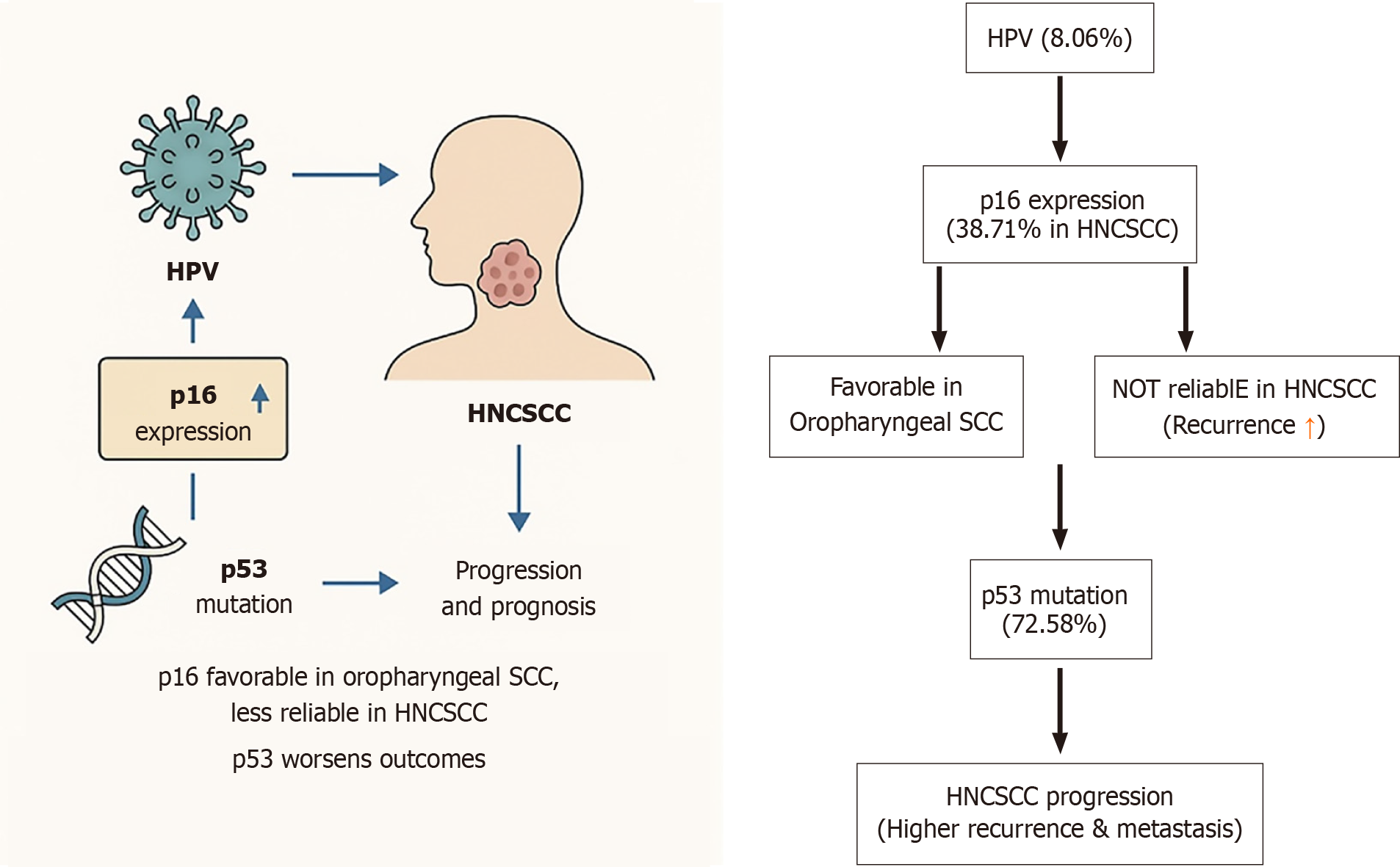
Figure 1 This diagram illustrates the relationship between human papillomavirus, p16 expression, p53 mutation, and their roles in head and neck squamous cell carcinoma progression and prognosis.
Human papillomavirus infection, p16 expression, and p53 mutations are interconnected factors influencing head and neck squamous cell carcinoma (HNCSCC) development, progression, and prognosis. While p16 is favorable in oropharyngeal squamous cell carcinoma, it is less reliable in HNCSCC, especially when combined with p53 mutations, which worsen outcomes. These biomarkers are essential for understanding and managing HNCSCC. HPV: Human papillomavirus; HNCSCC: Head and neck squamous cell carcinoma; SCC: Squamous cell carcinoma.
- Citation: Lee HM, Li SC. Rethinking p16, p53, and HPV in HNCSCC through lessons from glioblastoma subclonal evolution toward patient-centric N-of-1 single-cell RNA sequencing paradigm. World J Clin Cases 2025; 13(32): 104208
- URL: https://www.wjgnet.com/2307-8960/full/v13/i32/104208.htm
- DOI: https://dx.doi.org/10.12998/wjcc.v13.i32.104208