
















©The Author(s) 2025.
World J Clin Cases. Oct 16, 2025; 13(29): 110948
Published online Oct 16, 2025. doi: 10.12998/wjcc.v13.i29.110948
Published online Oct 16, 2025. doi: 10.12998/wjcc.v13.i29.110948
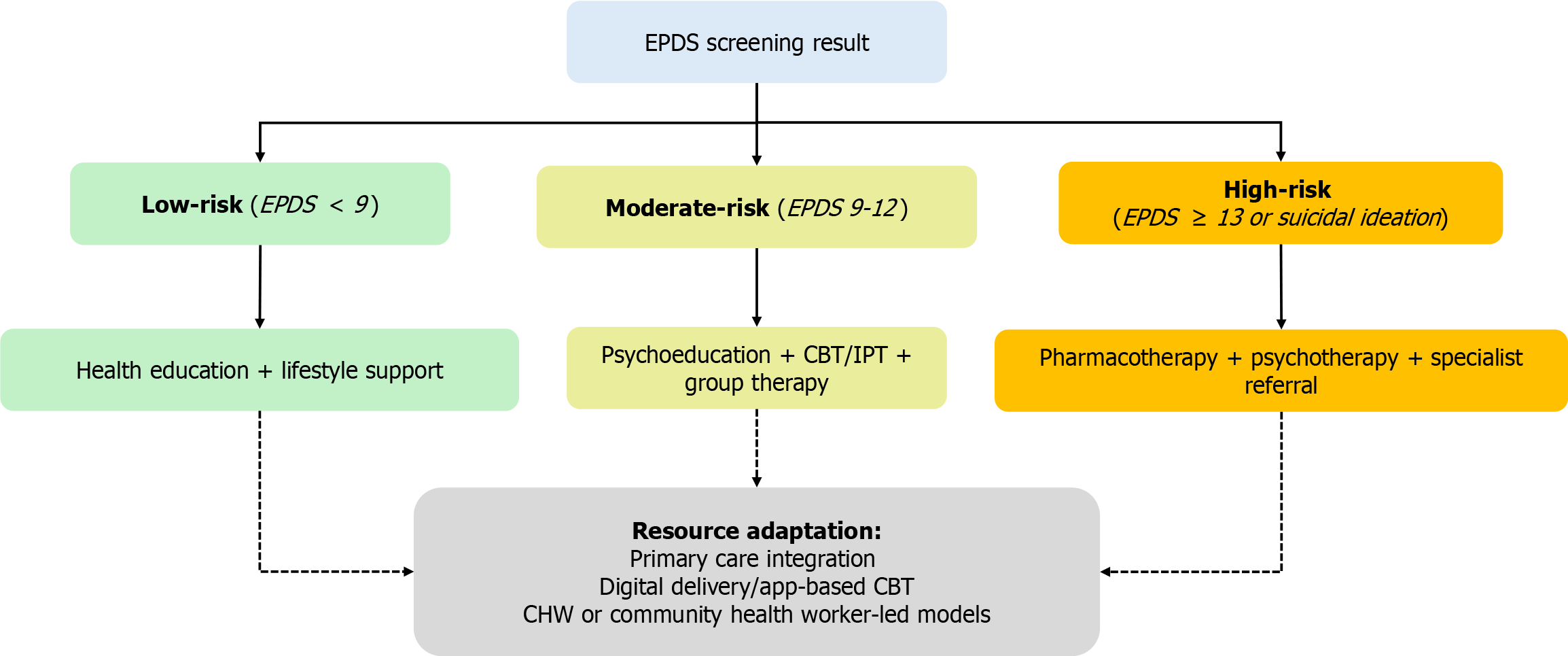
Figure 4 Stepped-care intervention framework for postpartum depression based on Edinburgh Postnatal Depression Scale risk stratification.
This figure presents a stepped-care intervention framework for postpartum depression, guided by risk levels determined through the Edinburgh Postnatal Depression Scale (EPDS). Individuals with low EPDS scores are recommended for basic interventions such as psychoeducation, lifestyle counseling, and informal social support. Those with moderate scores are directed toward more structured treatments including cognitive behavioral therapy, interpersonal therapy, or peer-led programs. For individuals with high EPDS scores, the framework emphasizes timely specialist referral, pharmacological treatment, and integrated psychiatric care. The bottom panel illustrates a range of adaptable delivery modalities applicable across all intervention tiers. These include digital platforms for scalable outreach, integration into primary care systems for streamlined access, and community-health-worker-led models that are especially suitable for low-resource or rural settings. CBT: Cognitive behavioral therapy; EPDS: Edinburgh Postnatal Depression Scale; IPT: Interpersonal therapy; CHW: Community health worker.
- Citation: Ji QQ, Wang MY. Epidemiology, pathophysiology, and interventions for postpartum depression: Systematic review. World J Clin Cases 2025; 13(29): 110948
- URL: https://www.wjgnet.com/2307-8960/full/v13/i29/110948.htm
- DOI: https://dx.doi.org/10.12998/wjcc.v13.i29.110948