
















Copyright: ©Author(s) 2026.
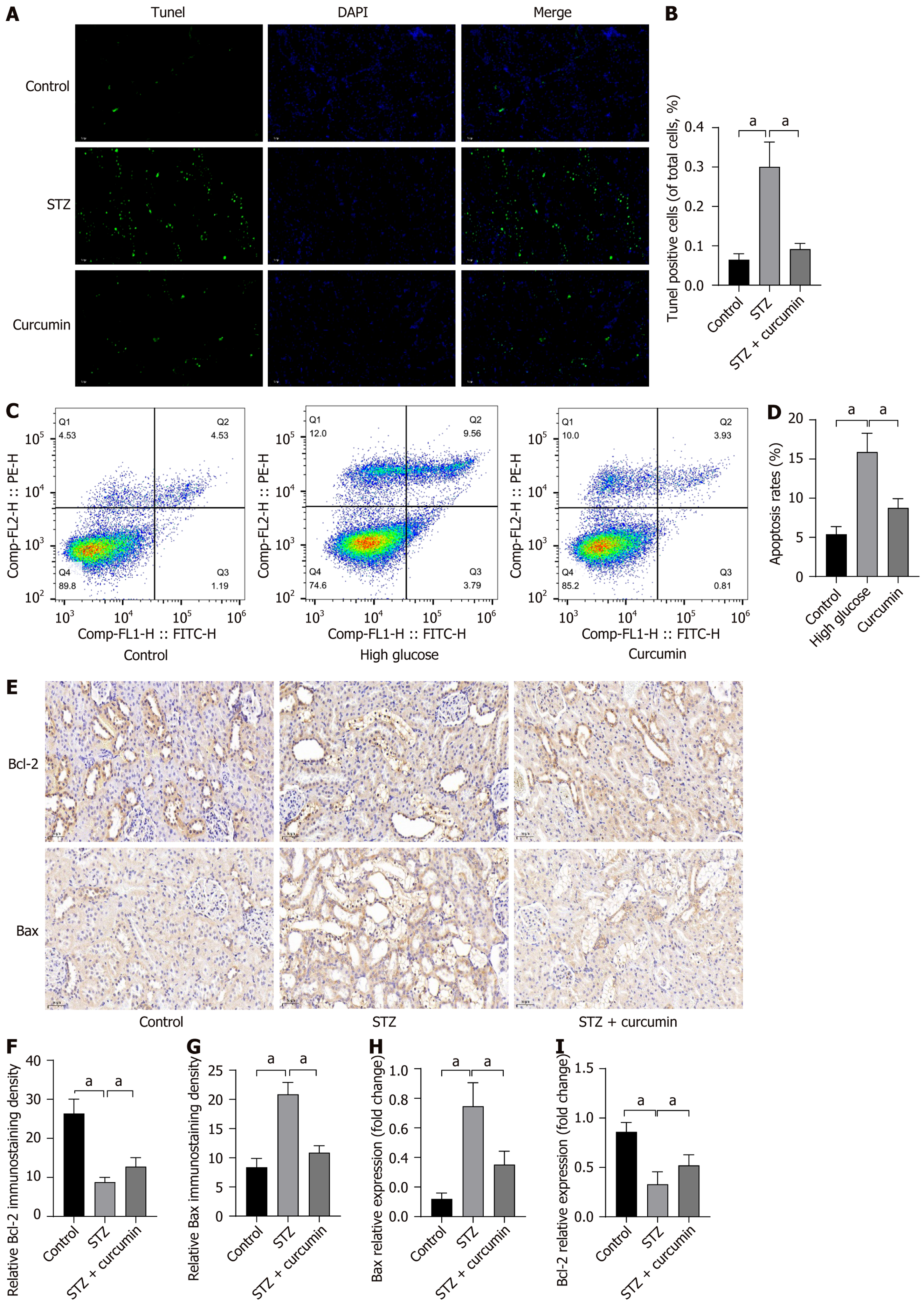
Figure 2 Curcumin reduces renal tubular epithelial cell apoptosis under hyperglycemic conditions.
A and B: Representative images and quantitative analysis of TUNEL staining in rat kidney tissue. The apoptosis index was calculated as the ratio of TUNEL-positive cells to total cells in 10 non-overlapping fields per sample (200 × magnification). Compared with the control group, TUNEL-positive cells increased in the streptozocin (STZ) group (aP < 0.05); curcumin treatment significantly reduced TUNEL-positive cells (aP < 0.05); C and D: Flow cytometric analysis of apoptosis in renal tubular epithelial cells cultured under high-glucose conditions, showing significant differences between groups; E-G: Immunohistochemical staining of Bcl-2 and Bax in kidney tissues. Ten fields were selected per tissue section at 200 × magnification to determine relative expression levels. The results show increased expression of Bax and decreased Bcl-2 in the STZ group (aP < 0.05); curcumin further elevated Bcl-2 and reduced Bax expression (aP < 0.05); H and I: Quantitative polymerase chain reaction analysis of Bcl-2 and Bax mRNA expression in renal tubular epithelial cells. High glucose upregulated Bax and downregulated Bcl-2 mRNA (aP < 0.05); curcumin treatment further elevated Bcl-2 and suppressed Bax expression (aP < 0.05). STZ: Streptozocin.
- Citation: Li Y, Wang LL, Yu XZ, Xie S, Li PF, Huang Y, Bao PL. Curcumin attenuates high glucose-induced apoptosis in renal tubular epithelial cells by enhancing the Nrf2/heme oxygenase-1 antioxidant pathway. World J Nephrol 2026; 15(3): 119984
- URL: https://www.wjgnet.com/2220-6124/full/v15/i3/119984.htm
- DOI: https://dx.doi.org/10.5527/wjn.119984