
















Copyright: ©Author(s) 2026.
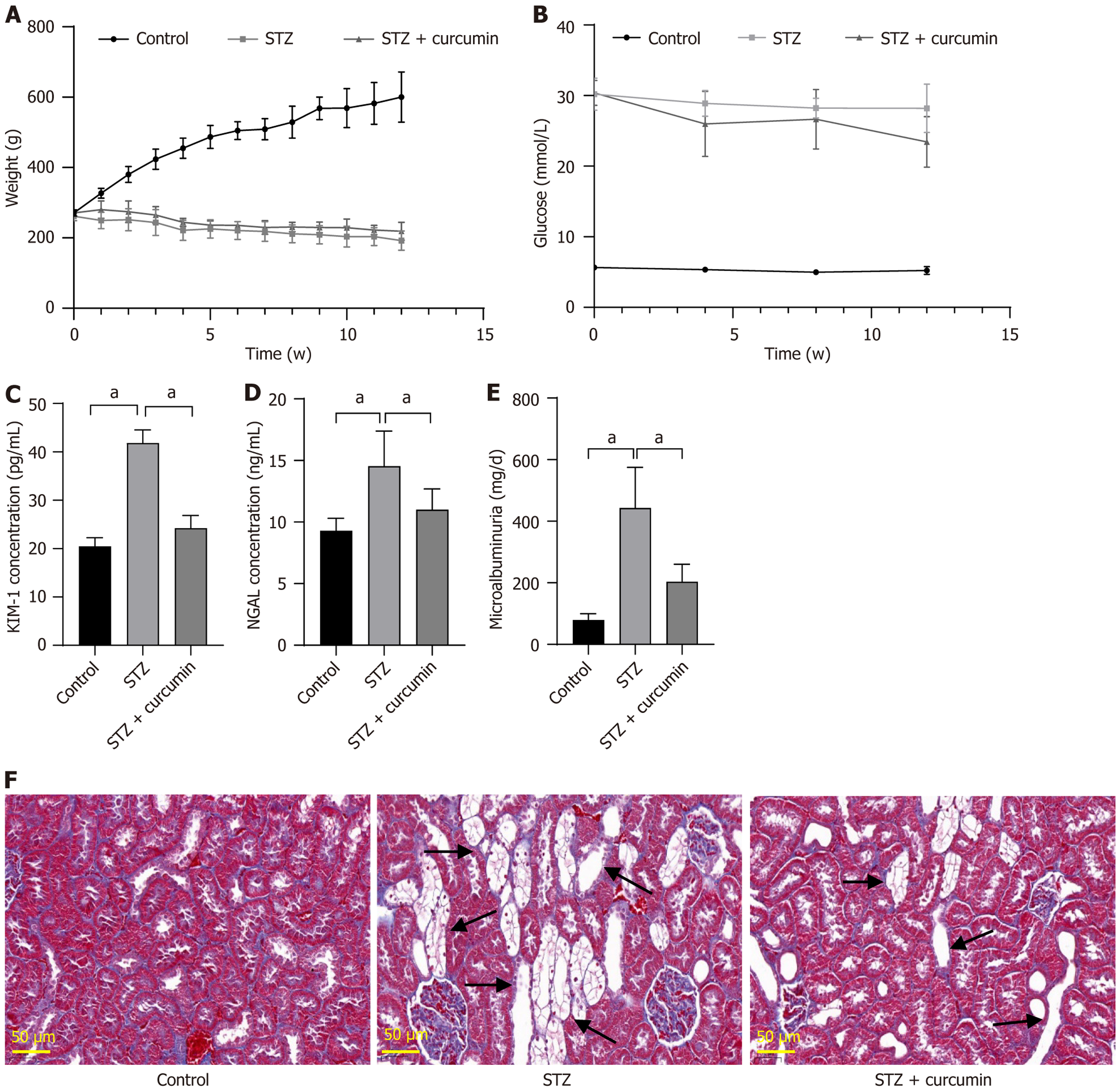
Figure 1 Effects of curcumin on general evaluations of diabetic injuries in rats.
A: Changes in body weight over time. The body weight of the control group (black line) steadily increased throughout the observation period, reflecting normal growth. In contrast, the disease model group (gray line) displayed significantly reduced weight gain compared to the control group, which is indicative of disease-associated weight loss or stunting (P < 0.05). The curcumin-treated group (light gray line) showed improved weight gain relative to the model group (P < 0.05), suggesting that curcumin mitigates weight loss associated with the disease; B: Blood glucose levels over time. The control group maintained stable blood glucose levels, while the model group exhibited significantly elevated glucose levels (P < 0.01), indicating a disease-induced hyperglycemic state. Treatment with curcumin reduced glucose levels significantly compared to the model group (P < 0.05), although they remained higher than those of the control group, suggesting a partial therapeutic effect of curcumin on glucose regulation; C: Kidney injury molecule-1 (KIM-1) concentration (pg/mL). KIM-1, a biomarker of kidney injury, was significantly increased in the model group (aP < 0.05) compared to the control group, indicating renal damage. Curcumin treatment significantly reduced KIM-1 levels compared to the model group (aP < 0.05), implying a protective effect on kidney tissue; D: Neutrophil gelatinase-associated lipocalin (NGAL) concentration (ng/mL). NGAL, another biomarker of kidney injury, was significantly elevated in the model group (aP < 0.05) relative to the control group. Curcumin administration reduced NGAL levels compared to the model group (aP < 0.05), suggesting an ameliorative effect on kidney injury; E: Microalbuminuria levels (mg/day). Microalbuminuria, a marker of renal dysfunction, was substantially higher in the model group (aP < 0.05) than in the control group. Curcumin treatment significantly decreased microalbuminuria levels compared to the model group (aP < 0.05), indicating a protective or restorative effect on renal function; F: Renal histopathology change. Masson staining revealed tubular dilation and deformation, brush border loss, and interstitial inflammatory infiltration in both the streptozocin (STZ) and curcumin groups. However, compared to the STZ group, curcumin-treated rats showed milder tubular damage and reduced inflammatory infiltration. No significant interstitial fibrosis was observed in any group. KIM-1: Kidney injury molecule-1; NGAL: Neutrophil gelatinase-associated lipocalin; STZ: Streptozocin.
- Citation: Li Y, Wang LL, Yu XZ, Xie S, Li PF, Huang Y, Bao PL. Curcumin attenuates high glucose-induced apoptosis in renal tubular epithelial cells by enhancing the Nrf2/heme oxygenase-1 antioxidant pathway. World J Nephrol 2026; 15(3): 119984
- URL: https://www.wjgnet.com/2220-6124/full/v15/i3/119984.htm
- DOI: https://dx.doi.org/10.5527/wjn.119984