
















Copyright: ©Author(s) 2026.
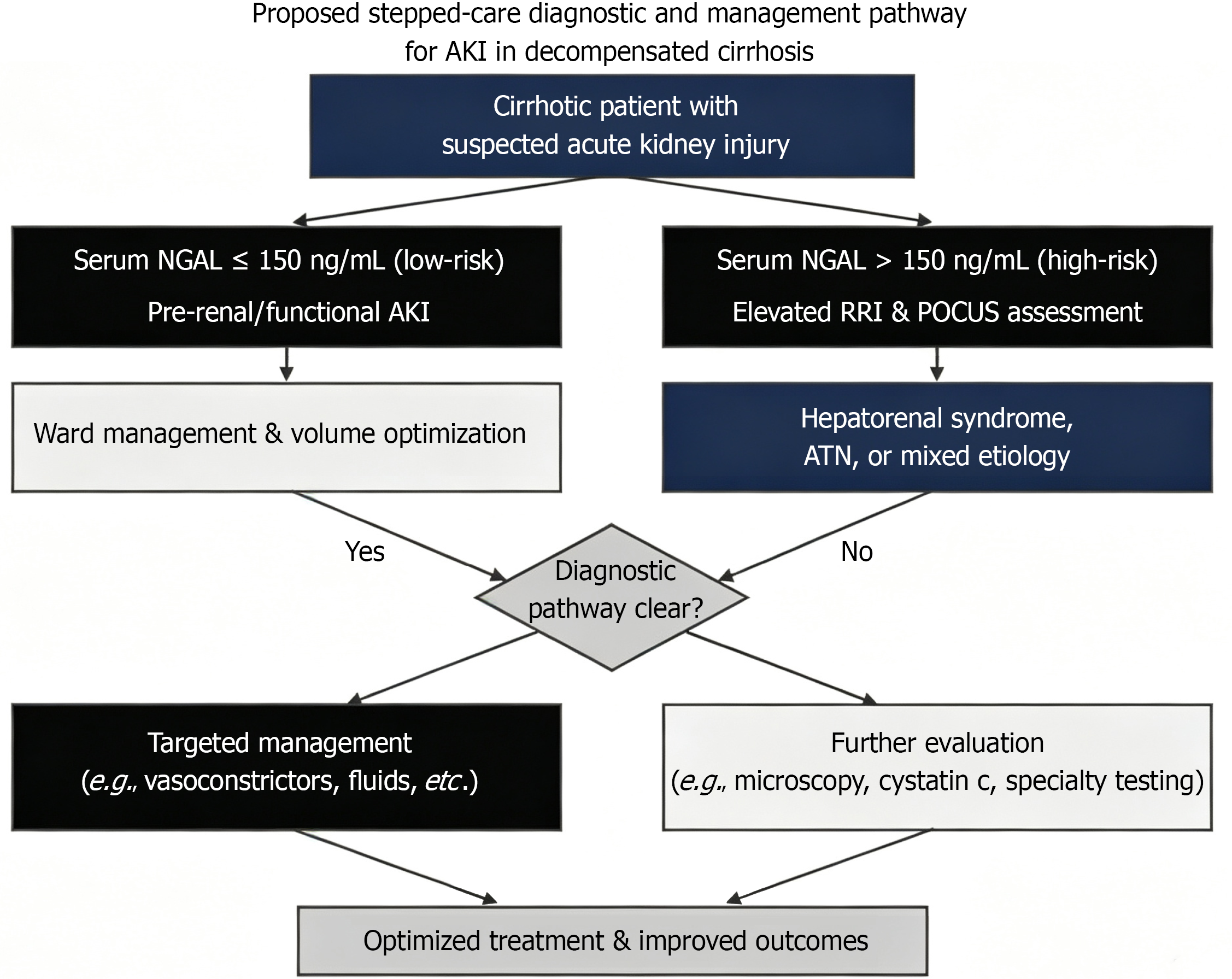
Figure 6 Proposed stepped-care clinical pathway for diagnosis and triage of acute kidney injury in decompensated cirrhosis.
This algorithm synthesizes key findings into a practical, resource-conscious framework for clinical implementation. Step 1: Serum neutrophil gelatinase-associated lipocalin (NGAL) measurement at initial clinical suspicion provides rapid triage, distinguishing low-risk (NGAL < 150 ng/mL) from high-risk (NGAL ≥ 150 ng/mL) acute kidney injury. Step 2: For high-risk patients, targeted bedside ultrasonography assesses renal resistive index (RRI) and volume status (inferior vena cava collapsibility, lung B-lines). An RRI ≥ 0.74 supports a diagnosis of hepatorenal syndrome and prompts consideration for intensive care unit admission and vasopressor therapy. An RRI < 0.74 suggests acute tubular necrosis or mixed injury, guiding conservative or renal-protective management. Step 3: Additional confirmatory tests (e.g., urinary microscopy, cystatin C) are reserved for cases with ambiguous initial findings. This sequential approach aims to replace delayed creatinine-based diagnosis with early, etiology-directed management, optimizing intensive care unit resource use and therapeutic decision-making. AKI: Acute kidney injury; ATN: Acute tubular necrosis; ICU: Intensive care unit; NGAL: Neutrophil gelatinase-associated lipocalin; POCUS: Point-of-care ultrasound; RRI: Renal resistive index.
- Citation: Othman AAA, Mohamed MM, Eladl MM, Elsayed FMA. Integrated biomarkers and renal Doppler for early acute kidney injury diagnosis in hepatitis C virus cirrhosis. World J Nephrol 2026; 15(3): 119581
- URL: https://www.wjgnet.com/2220-6124/full/v15/i3/119581.htm
- DOI: https://dx.doi.org/10.5527/wjn.119581