
















©The Author(s) 2025.
World J Nephrol. Sep 25, 2025; 14(3): 107571
Published online Sep 25, 2025. doi: 10.5527/wjn.v14.i3.107571
Published online Sep 25, 2025. doi: 10.5527/wjn.v14.i3.107571
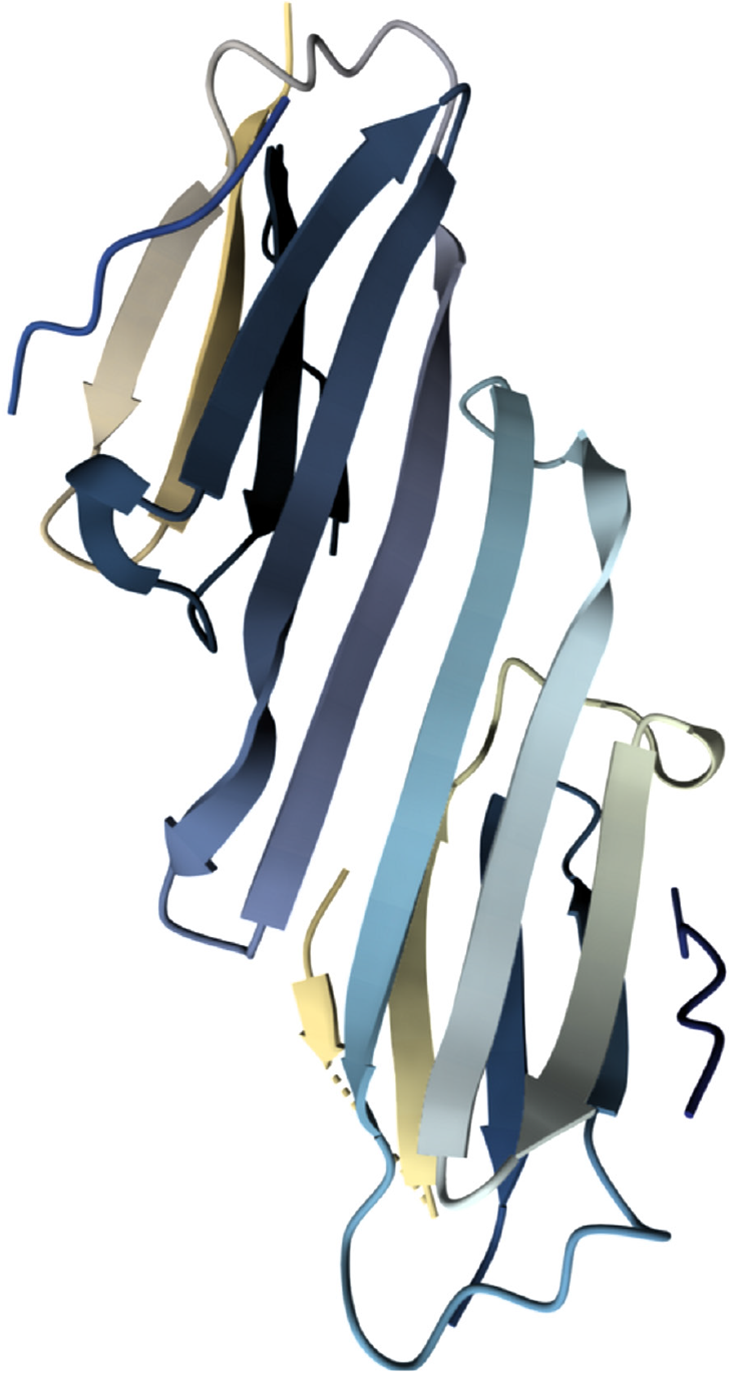
Figure 1 Molecular structure of heat shock protein 27[62].
Heat shock protein 27 (HSP27) possesses three key structural regions: A less structured N-terminal domain with motifs like WDPF crucial for large oligomer assembly and chaperone function, a conserved α-crystallin domain (ACD) that forms β-sandwich dimers essential for building higher-order structures and chaperone activity, and a flexible C-terminal domain containing an IXI/V-like motif that interacts with the ACD to aid oligomerization and regulate chaperone activity. These dynamic structural features, including the ACD's role in preventing amyloid fibrillation by binding misfolded proteins, enable HSP27 to shift between various oligomeric states. This adaptability allows it to effectively bind a wide range of client proteins and prevent their aggregation, especially under stress conditions, with its function further modulated by factors like phosphorylation. This figure was adapted with Mol* (MIT-licensed) from the Structure page for PDB ID 4MJH (CC0 1.0) on the RCSB Protein Data Bank (https://www.rcsb.org/structure/4MJH). Citation: Hochberg GK, Ecroyd H, Liu C, Cox D, Cascio D, Sawaya MR, Collier MP, Stroud J, Carver JA, Baldwin AJ, Robinson CV, Eisenberg DS, Benesch JL, Laganowsky A. The structured core domain of αB-crystallin can prevent amyloid fibrillation and associated toxicity. Proc Natl Acad Sci U S A 2014; 111: E1562-E1570. Copyright ©National Academy of Sciences 2014. Published by PNAS (Supplementary material).
- Citation: Tran TTT, Tran KV, Nguyen TD, Pham NTT, Nguyen TH. Role of heat shock proteins in renal function and adaptation to heat stress: Implications for global warming. World J Nephrol 2025; 14(3): 107571
- URL: https://www.wjgnet.com/2220-6124/full/v14/i3/107571.htm
- DOI: https://dx.doi.org/10.5527/wjn.v14.i3.107571