
















Copyright: ©Author(s) 2026.
World J Virol. Mar 25, 2026; 15(1): 118362
Published online Mar 25, 2026. doi: 10.5501/wjv.v15.i1.118362
Published online Mar 25, 2026. doi: 10.5501/wjv.v15.i1.118362
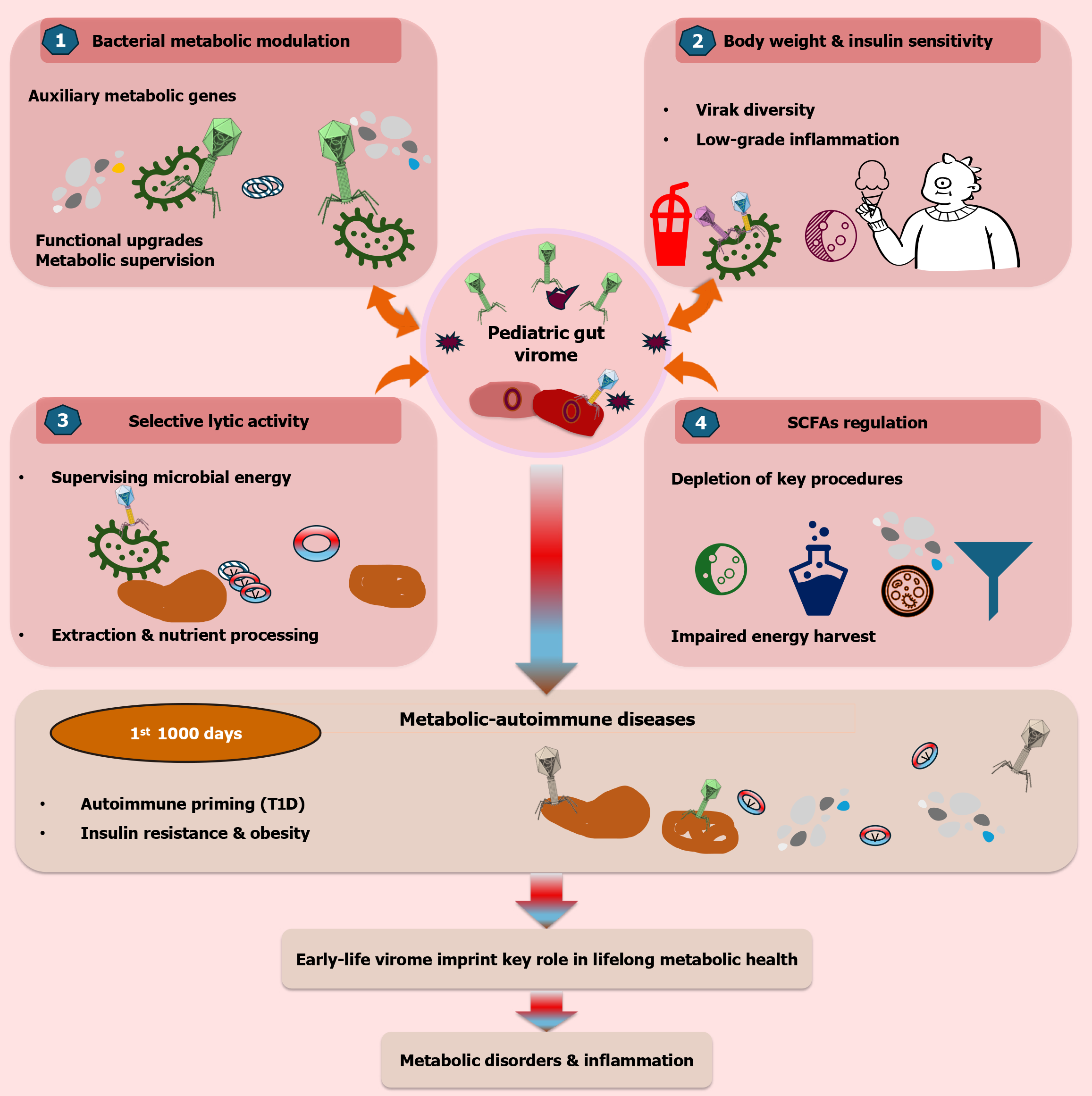
Figure 7 Virome-metabolism-endocrine axis in paediatric health and disease.
This schematic summarizes the central role of the paediatric gut virome in shaping host metabolic and endocrine outcomes across early life. The gut virome-comprising bacteriophages and eukaryotic viruses-acts as a regulatory hub that influences host physiology through multiple interconnected pathways. Bacteriophages modulate bacterial metabolic capacity via horizontal gene transfer of auxiliary metabolic genes and through selective lytic activity, thereby supervising microbial energy extraction and nutrient processing. These virome-driven shifts alter the production of key microbial metabolites, particularly short-chain fatty acids, which are critical for intestinal barrier integrity, immune regulation, and systemic energy homeostasis. Perturbations in early-life virome diversity and composition are associated with low-grade inflammation, altered insulin sensitivity, and changes in body weight regulation. During critical developmental windows-particularly the first 1000 days of life-these effects may contribute to long-term metabolic imprinting, increasing susceptibility to obesity, insulin resistance, and metabolic-autoimmune diseases such as type 1 diabetes. Collectively, the figure highlights the paediatric gut virome as a pivotal determinant linking microbial ecology to lifelong metabolic and endocrine health. T1D: Type 1 diabetes; SCFA: Short-chain fatty acids.
- Citation: Saeed NK, Elbeltagi YM, Al-Beltagi M. Unveiling the viral dimension: The paediatric gut virome as a key modulator of gastrointestinal metabolic, and neurodevelopmental health. World J Virol 2026; 15(1): 118362
- URL: https://www.wjgnet.com/2220-3249/full/v15/i1/118362.htm
- DOI: https://dx.doi.org/10.5501/wjv.v15.i1.118362