
















Copyright: ©Author(s) 2026.
World J Virol. Mar 25, 2026; 15(1): 118362
Published online Mar 25, 2026. doi: 10.5501/wjv.v15.i1.118362
Published online Mar 25, 2026. doi: 10.5501/wjv.v15.i1.118362
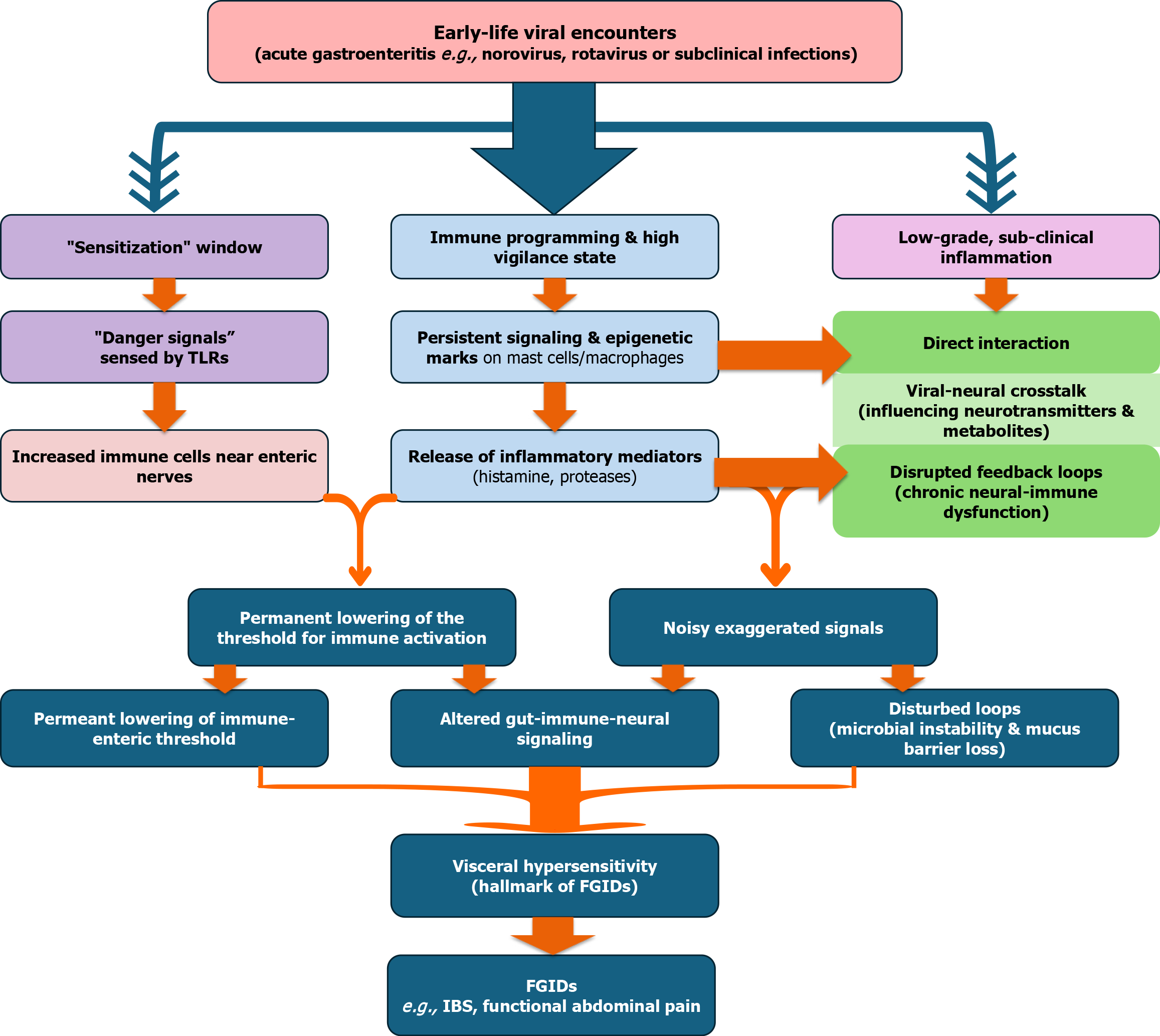
Figure 6 The developmental pathway of functional gastrointestinal disorders via virome-mediated mechanisms.
This flowchart illustrates how early-life viral encounters can lead to chronic functional gastrointestinal disorders (FGIDs) through three interconnected pathways. Immune programming: Viral infections create a “Sensitization” window, leading to persistent signaling via toll-like receptors and epigenetic changes in immune cells, permanently lowering the threshold for immune activation. Low-grade inflammation: Acute insults leave a “molecular hangover” of sub-clinical inflammation. Inflammatory mediators like histamine directly sensitize nociceptors, resulting in peripheral sensitization where the gut becomes hyper-reactive. Altered signaling: Virome disturbances disrupt the gut-immune-neural axis. This involves direct viral-neural crosstalk and disrupted feedback loops due to microbial instability, leading to “noisy” and exaggerated signaling. All three pathways converge to cause visceral hypersensitivity, the hallmark of FGIDs. In a subset of children, a failure to “reset” this axis after the initial infection results in a chronic functional pain disorder, such as post-infectious irritable bowel syndrome. FGID: Functional gastrointestinal disorders; IBS: Irritable bowel syndrome; TLR: Toll-like receptors.
- Citation: Saeed NK, Elbeltagi YM, Al-Beltagi M. Unveiling the viral dimension: The paediatric gut virome as a key modulator of gastrointestinal metabolic, and neurodevelopmental health. World J Virol 2026; 15(1): 118362
- URL: https://www.wjgnet.com/2220-3249/full/v15/i1/118362.htm
- DOI: https://dx.doi.org/10.5501/wjv.v15.i1.118362