
















Copyright: ©Author(s) 2026.
World J Virol. Mar 25, 2026; 15(1): 118362
Published online Mar 25, 2026. doi: 10.5501/wjv.v15.i1.118362
Published online Mar 25, 2026. doi: 10.5501/wjv.v15.i1.118362
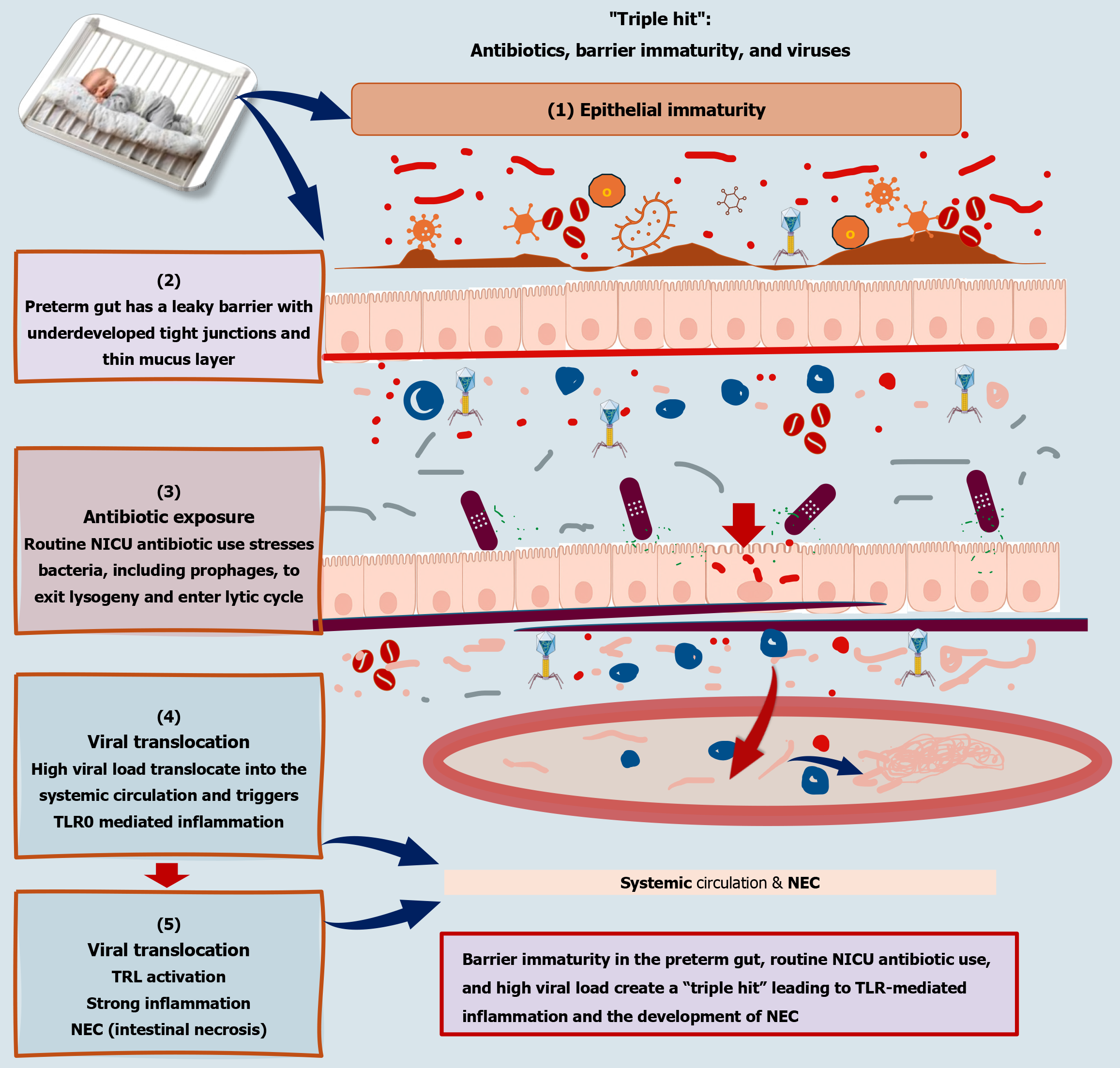
Figure 5 The “triple hit” model of virome-driven necrotizing enterocolitis in preterm infants.
This schematic illustrates the proposed “triple hit” model linking the paediatric gut virome to the pathogenesis of necrotizing enterocolitis (NEC) in preterm infants. The first hit is epithelial immaturity, characterized by an underdeveloped intestinal barrier with defective tight junctions and a thin mucus layer, predisposing the preterm gut to increased permeability. The second hit is antibiotic exposure, commonly encountered in the neonatal intensive care unit, which disrupts the bacterial microbiome and induces prophage activation through bacterial stress responses, leading to bacteriophage lytic cycles and viral blooms. The combination of barrier immaturity and elevated viral burden facilitates the third hit, viral translocation, whereby bacteriophages and viral nucleic acids cross the intestinal barrier into the lamina propria and systemic circulation. This translocation triggers Toll-like receptor-mediated inflammatory cascades, amplifying mucosal and systemic inflammation and ultimately contributing to intestinal injury and necrosis. Collectively, the figure highlights how converging developmental, microbial, and iatrogenic factors interact to drive exaggerated inflammatory responses in NEC. NEC: Necrotizing enterocolitis; NICU: Neonatal intensive care unit; TLR: Toll-like receptors.
- Citation: Saeed NK, Elbeltagi YM, Al-Beltagi M. Unveiling the viral dimension: The paediatric gut virome as a key modulator of gastrointestinal metabolic, and neurodevelopmental health. World J Virol 2026; 15(1): 118362
- URL: https://www.wjgnet.com/2220-3249/full/v15/i1/118362.htm
- DOI: https://dx.doi.org/10.5501/wjv.v15.i1.118362