
















Copyright: ©Author(s) 2026.
World J Virol. Mar 25, 2026; 15(1): 118362
Published online Mar 25, 2026. doi: 10.5501/wjv.v15.i1.118362
Published online Mar 25, 2026. doi: 10.5501/wjv.v15.i1.118362
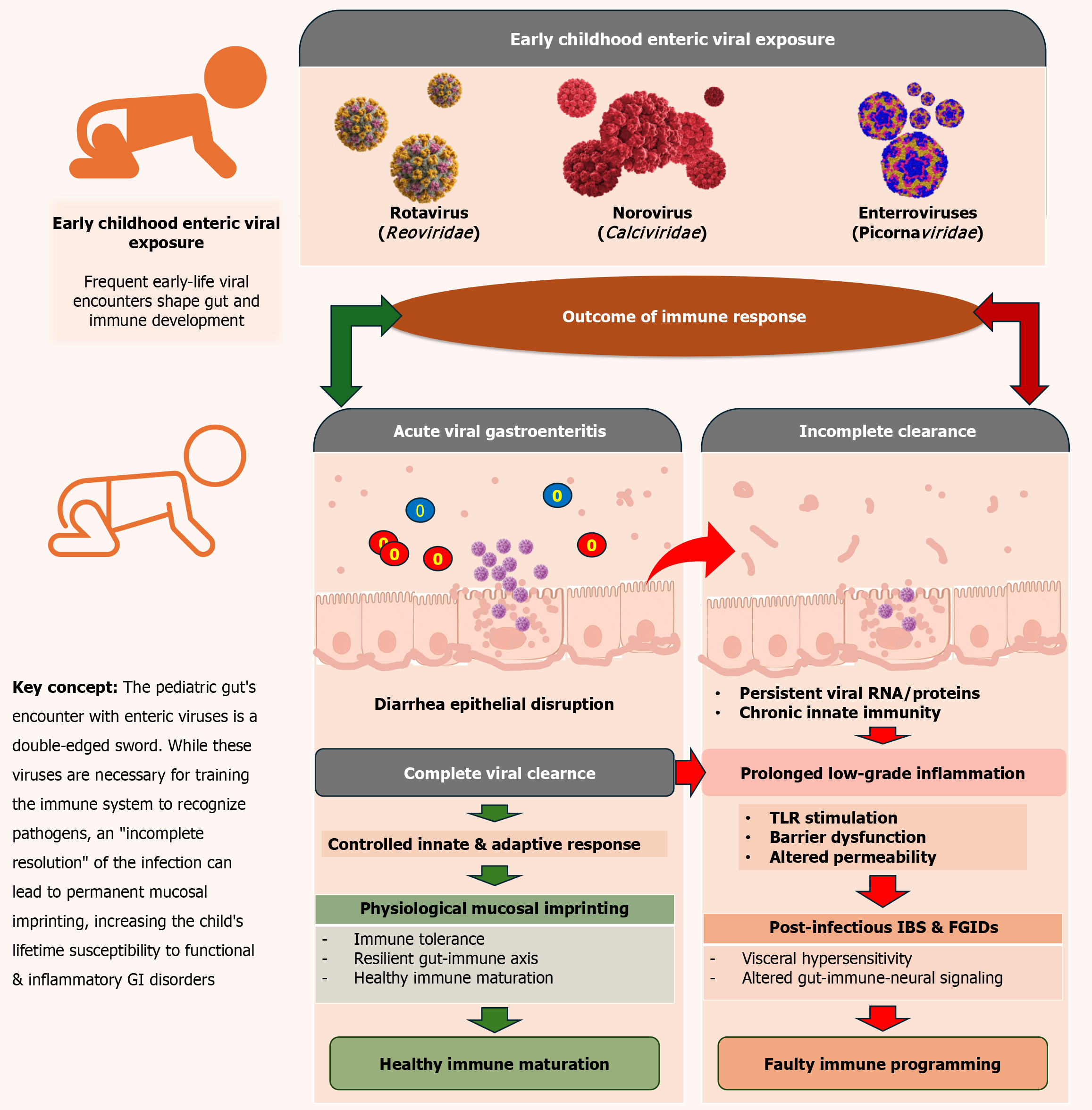
Figure 3 Infectious and post-infectious viral pathways in the paediatric gut.
This schematic illustrates the dual role of early-life enteric viral infections in shaping paediatric gut and immune development. Frequent exposure to common enteric viruses during infancy-such as rotavirus (Reoviridae), norovirus (Caliciviridae), and enteroviruses (Picornaviridae)-often results in acute viral gastroenteritis and transient epithelial disruption. Following infection, immune outcomes diverge depending on the efficiency of viral clearance. Effective immune resolution leads to restoration of epithelial integrity, controlled innate and adaptive immune responses, and physiological mucosal imprinting that supports immune tolerance and healthy immune maturation. In contrast, incomplete viral clearance may result in persistence of viral nucleic acids or proteins within the intestinal mucosa, driving prolonged low-grade inflammation through sustained innate immune activation, barrier dysfunction, and altered intestinal permeability. This maladaptive immune trajectory disrupts gut-immune-neural signaling and promotes visceral hypersensitivity, increasing susceptibility to post-infectious irritable bowel syndrome and other functional gastrointestinal disorders. Overall, the figure highlights the concept that early-life enteric viral infections represent a double-edged sword-essential for immune training, yet capable of inducing long-lasting mucosal imprinting when immune resolution is incomplete, with implications for lifelong gastrointestinal health. IBS: Irritable bowel syndrome; FGID: Functional gastrointestinal disorders; GI: Gastrointestinal.
- Citation: Saeed NK, Elbeltagi YM, Al-Beltagi M. Unveiling the viral dimension: The paediatric gut virome as a key modulator of gastrointestinal metabolic, and neurodevelopmental health. World J Virol 2026; 15(1): 118362
- URL: https://www.wjgnet.com/2220-3249/full/v15/i1/118362.htm
- DOI: https://dx.doi.org/10.5501/wjv.v15.i1.118362