
















Copyright: ©Author(s) 2026.
World J Transplant. Sep 18, 2026; 16(3): 124992
Published online Sep 18, 2026. doi: 10.5500/wjt.124992
Published online Sep 18, 2026. doi: 10.5500/wjt.124992
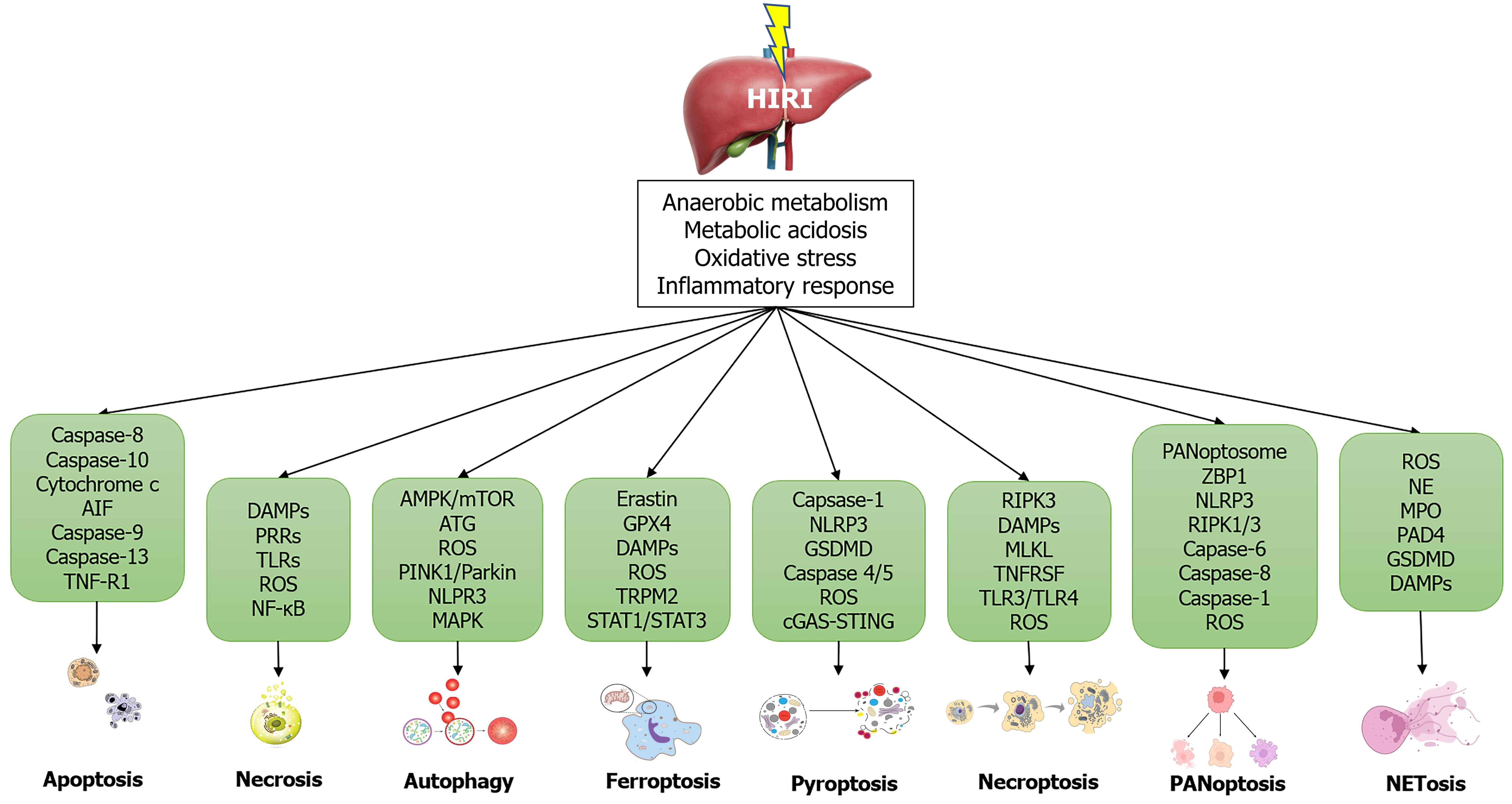
Figure 2 Cell death mechanisms involved in hepatic ischemia reperfusion injury and liver graft injury.
HIRI: Hepatic ischemia reperfusion injury; TNF-R1: TNF-α-receptor; DAMPs: Damage-associated molecular patterns; PRRs: Pattern recognition receptors; TLRs: Toll-like receptors; ROS: Reactive oxygen species; NF-κB: Nuclear factor Κβ; ATG: Autophagy-related proteins; NLRP3: NLR family pyrin domain containing 3; MAPK: Mitogen-activated protein kinase; GPX4: Glutathione peroxidase 4; TRPM2: Transient receptor potential melastatin 2; STAT1/STAT3: Signal transducer and activator of transcription; GSDMD: Gasdermin D; cGAS–STING: Cyclic GMP–AMP synthase; RIPK3: Receptor-interacting protein kinase 3; MLKL: Mixed lineage kinase domain-like protein; TNFRSF: Tumor necrosis factor receptor superfamily; ZBP1: Z-DNA-binding protein 1; NE: Neutrophilic elastase; MPO: Myeloperoxidase; PAD4: Peptidyl-arginine deaminase 4.
- Citation: Mouratidou C, Pavlidis ET, Katsanos G, Kofinas A, Marneri AG, Stavrati KE, Tsoulfas G, Pavlidis TE. Pathophysiological mechanisms of cell death affecting graft survival in liver transplantation. World J Transplant 2026; 16(3): 124992
- URL: https://www.wjgnet.com/2220-3230/full/v16/i3/124992.htm
- DOI: https://dx.doi.org/10.5500/wjt.124992