











©The Author(s) 2026.
World J Transplant. Mar 18, 2026; 16(1): 103656
Published online Mar 18, 2026. doi: 10.5500/wjt.v16.i1.103656
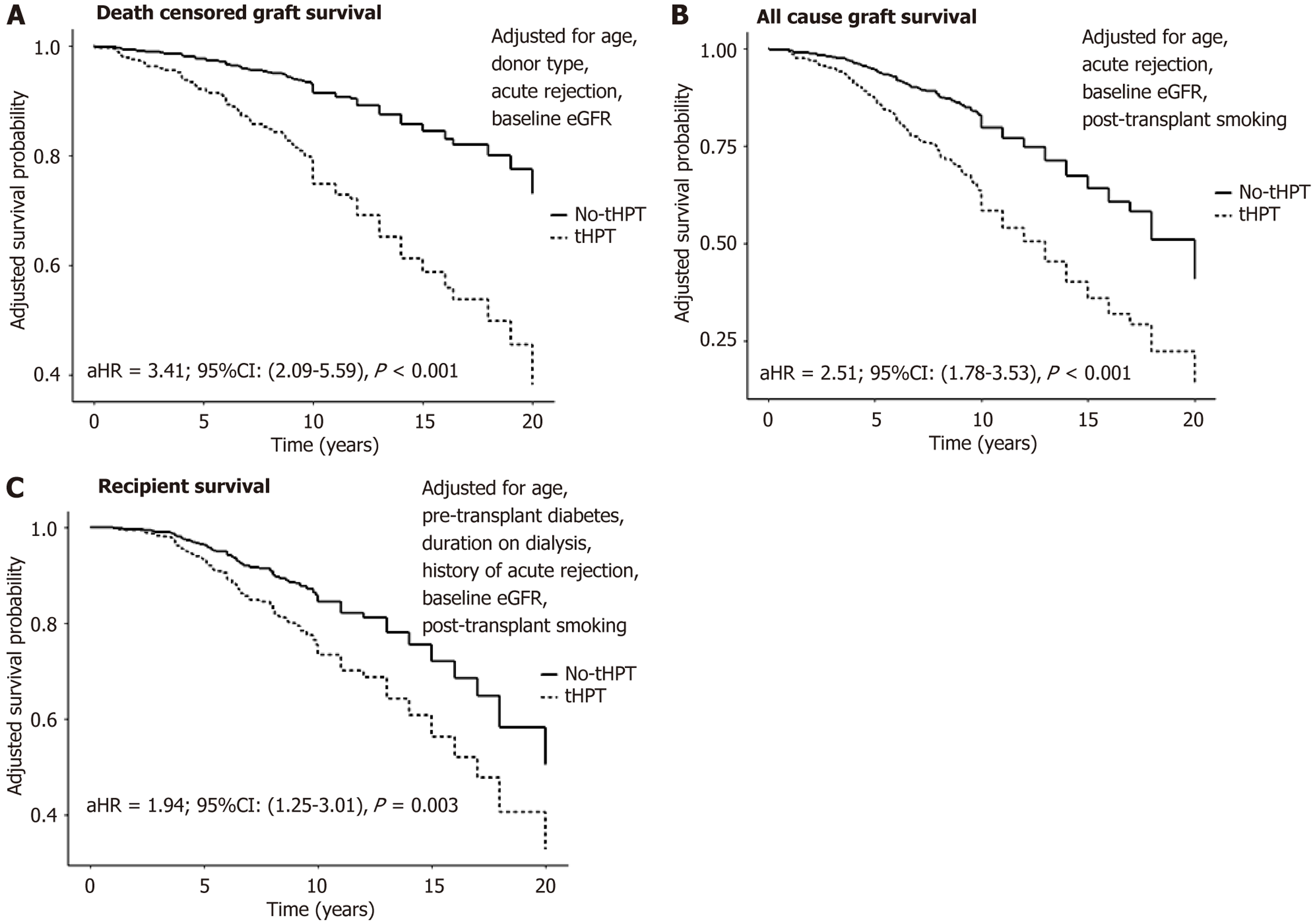
Figure 3 Adjusted survival analysis comparing outcomes in kidney transplant recipients with post-transplant tertiary hyperpara thyroidism vs those without tertiary hyperparathyroidism.
A: Death-censored graft survival was significantly lower in patients with tertiary hyper parathyroidism (tHPT) [adjusted hazard ratio (aHR) = 3.41, 95%CI: 2.09-5.59, P < 0.001], adjusted for age, donor type, acute rejection, and baseline estimated glomerular filtration rate (eGFR); B: All-cause graft survival was significantly reduced in the tHPT group (aHR = 2.51, 95%CI: 1.78-3.53, P < 0.001), adjusted for age, acute rejection, baseline eGFR, and post-transplant smoking; C: Recipient survival was also significantly lower in the tHPT group (aHR = 1.94, 95%CI: 1.25-3.01, P = 0.003), adjusted for age, pre-transplant diabetes, dialysis duration, history of acute rejection, baseline eGFR, and post-transplant smoking. aHR: Adjusted hazard ratio; eGFR: Estimated glomerular filtration rate; tHPT: Tertiary hyperparathyroidism.
- Citation: Hanson S, Menendez Lorenzo J, Chukwu CA, Rao A, Middleton R, Kalra PA. Incidence, risk factors and survival outcomes of post-transplant tertiary hyperparathyroidism in kidney recipients. World J Transplant 2026; 16(1): 103656
- URL: https://www.wjgnet.com/2220-3230/full/v16/i1/103656.htm
- DOI: https://dx.doi.org/10.5500/wjt.v16.i1.103656