
















Copyright: ©Author(s) 2026.
World J Psychiatry. Jul 19, 2026; 16(7): 120249
Published online Jul 19, 2026. doi: 10.5498/wjp.120249
Published online Jul 19, 2026. doi: 10.5498/wjp.120249
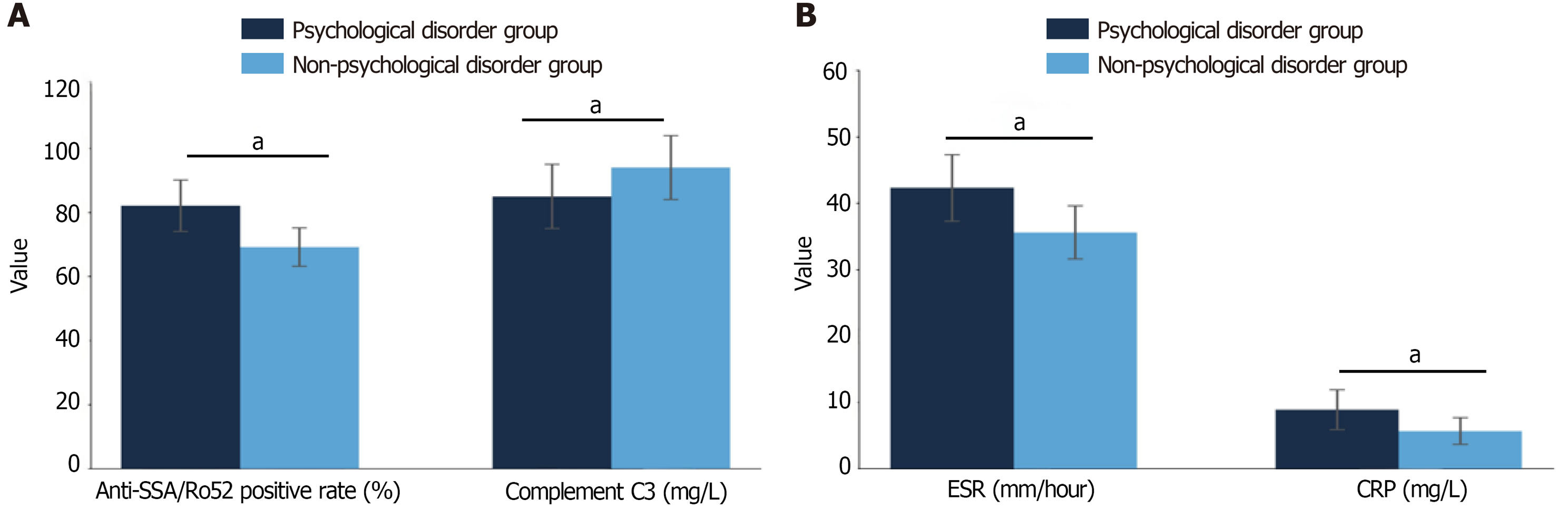
Figure 2 Comparison of autoimmune and inflammatory markers between psychological disorder and non-psychological disorder groups in Sjögren’s syndrome patients.
A: Anti-SSA/Ro52 antibody positivity rate and complement component 3 (C3) level; B: Erythrocyte sedimentation rate (ESR) and C-reactive protein (CRP) level. Patients with psychological disorders (PD) exhibited significantly more active autoimmune and inflammatory profiles, characterized by higher anti-SSA/Ro52 antibody positivity rates (82.1% vs 69.2%), lower complement C3 levels (85 ± 23 mg/L vs 94 ± 21 mg/L), and elevated inflammatory markers including ESR (42.3 ± 18.7 mm/hour vs 35.6 ± 16.2 mm/hour) and CRP (8.9 ± 12.4 mg/L vs 5.7 ± 8.3 mg/L). These laboratory findings suggest that PDs in Sjögren’s syndrome patients are associated with heightened systemic inflammation and more pronounced autoimmune activity, indicating a potential bidirectional relationship between immune dysfunction and mental health status. aP < 0.05. ESR: Erythrocyte sedimentation rate; CRP: C-reactive protein; C3: Complement component 3.
- Citation: He GQ, Yu CY, Xu BY, Dai LY, Li YJ, Liu CY, Diao JP. Incidence, risk factors, and correlation with organ involvement of psychological disorders in patients with Sjögren’s syndrome. World J Psychiatry 2026; 16(7): 120249
- URL: https://www.wjgnet.com/2220-3206/full/v16/i7/120249.htm
- DOI: https://dx.doi.org/10.5498/wjp.120249