
















Copyright: ©Author(s) 2026.
World J Psychiatry. Jul 19, 2026; 16(7): 117484
Published online Jul 19, 2026. doi: 10.5498/wjp.117484
Published online Jul 19, 2026. doi: 10.5498/wjp.117484
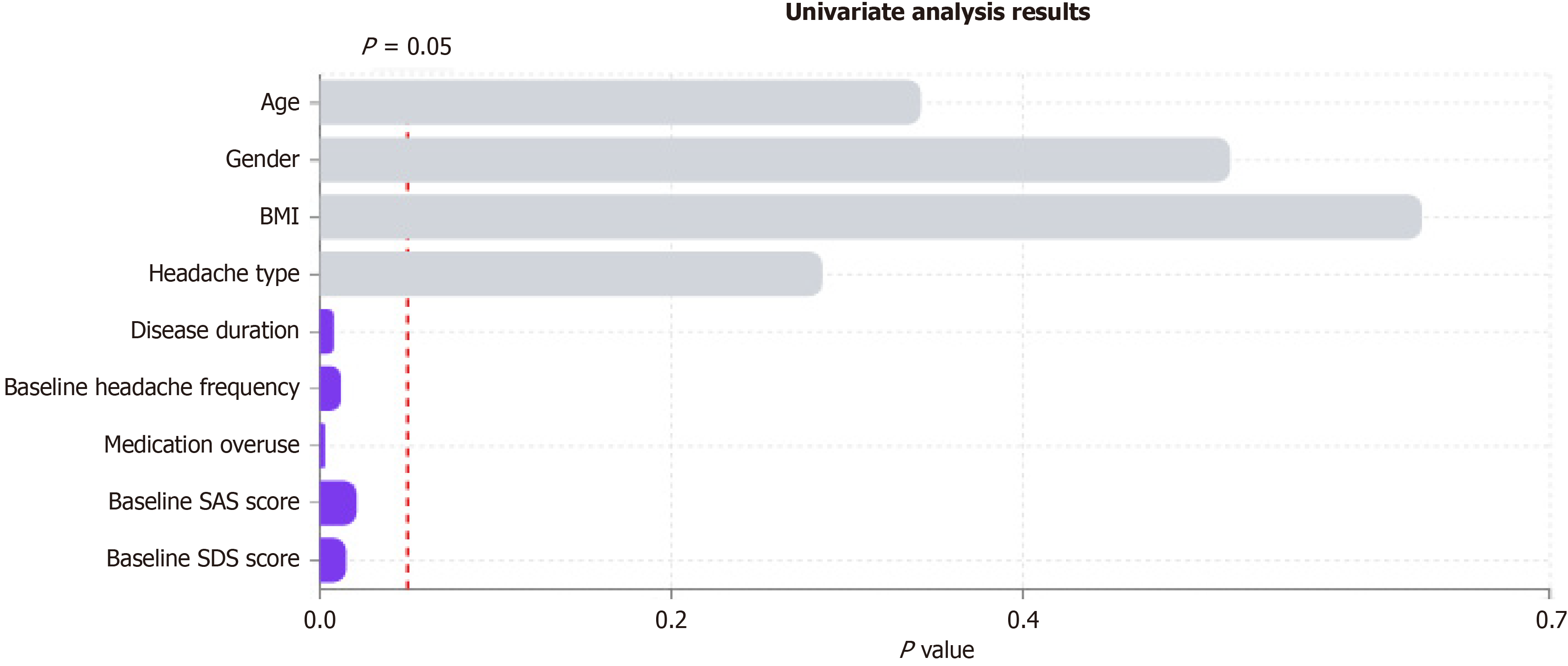
Figure 2 Univariate analysis of prognostic factors affecting stellate ganglion block treatment efficacy.
This figure presents univariate analysis results of potential prognostic factors associated with treatment efficacy. Treatment outcome at 3 months post-treatment (markedly effective and above vs effective and below) was used as the dependent variable. The red dashed line indicates the significance threshold at P = 0.05. Results show that age (P = 0.342), gender (P = 0.518), body mass index (P = 0.627), and headache type (P = 0.286) had no significant correlation with efficacy. However, disease duration (P = 0.008), baseline headache frequency (P = 0.012), medication overuse (P = 0.003), baseline Self-Rating Anxiety Scale score (P = 0.021), and baseline Self-Rating Depression Scale score (P = 0.015) were significantly correlated with efficacy. Variables with P < 0.10 were included in subsequent multivariate logistic regression analysis. Purple bars represent statistically significant factors (P < 0.05), while gray bars represent non-significant factors. BMI: Body mass index; SAS: Self-Rating Anxiety Scale; SDS: Self-Rating Depression Scale.
- Citation: Wang YM, Liu X, Sun XJ, Li N, Yang ZL, Feng TC. Continuous stellate ganglion block for neurovascular headache and associated anxiety and depression. World J Psychiatry 2026; 16(7): 117484
- URL: https://www.wjgnet.com/2220-3206/full/v16/i7/117484.htm
- DOI: https://dx.doi.org/10.5498/wjp.117484