
















Copyright: ©Author(s) 2026.
World J Psychiatry. Jul 19, 2026; 16(7): 117484
Published online Jul 19, 2026. doi: 10.5498/wjp.117484
Published online Jul 19, 2026. doi: 10.5498/wjp.117484
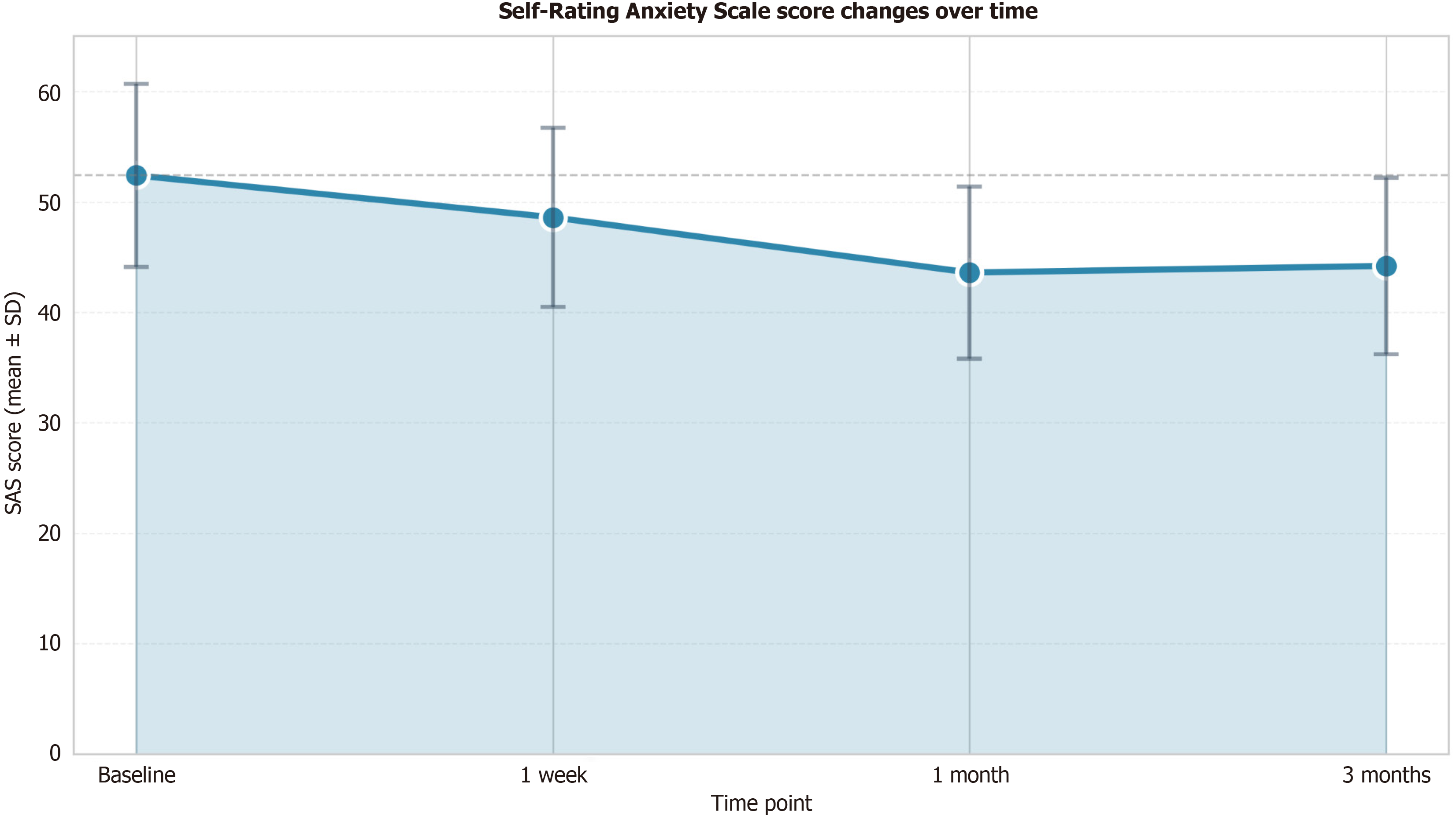
Figure 1 Self-Rating Anxiety Scale score changes over time following stellate ganglion block treatment.
The graph illustrates the dynamic changes in Self-Rating Anxiety Scale (SAS) scores from baseline through 3 months post-treatment (n = 126). The blue line represents mean SAS scores with standard deviations at each time point, while green bars indicate the percentage reduction from baseline. SAS scores significantly decreased from baseline 52.4 ± 8.3 to 1 week 48.6 ± 8.1 (7.3% reduction, t = 4.87, P < 0.001), with further improvement at 1 month 43.6 ± 7.8 (16.8% reduction, t = 11.24, P < 0.001). The optimal therapeutic effect was achieved at 1-month post-treatment and maintained stably through 3 months (44.2 ± 8.0, 15.6% reduction, t = 10.68, P < 0.001), with no significant difference between 1 month and 3 months (t = 0.64, P = 0.523). Data presented as mean ± SD. Statistical significance determined by paired t-tests. SAS: Self-Rating Anxiety Scale.
- Citation: Wang YM, Liu X, Sun XJ, Li N, Yang ZL, Feng TC. Continuous stellate ganglion block for neurovascular headache and associated anxiety and depression. World J Psychiatry 2026; 16(7): 117484
- URL: https://www.wjgnet.com/2220-3206/full/v16/i7/117484.htm
- DOI: https://dx.doi.org/10.5498/wjp.117484