
















Copyright: ©Author(s) 2026.
World J Psychiatry. Jul 19, 2026; 16(7): 117251
Published online Jul 19, 2026. doi: 10.5498/wjp.117251
Published online Jul 19, 2026. doi: 10.5498/wjp.117251
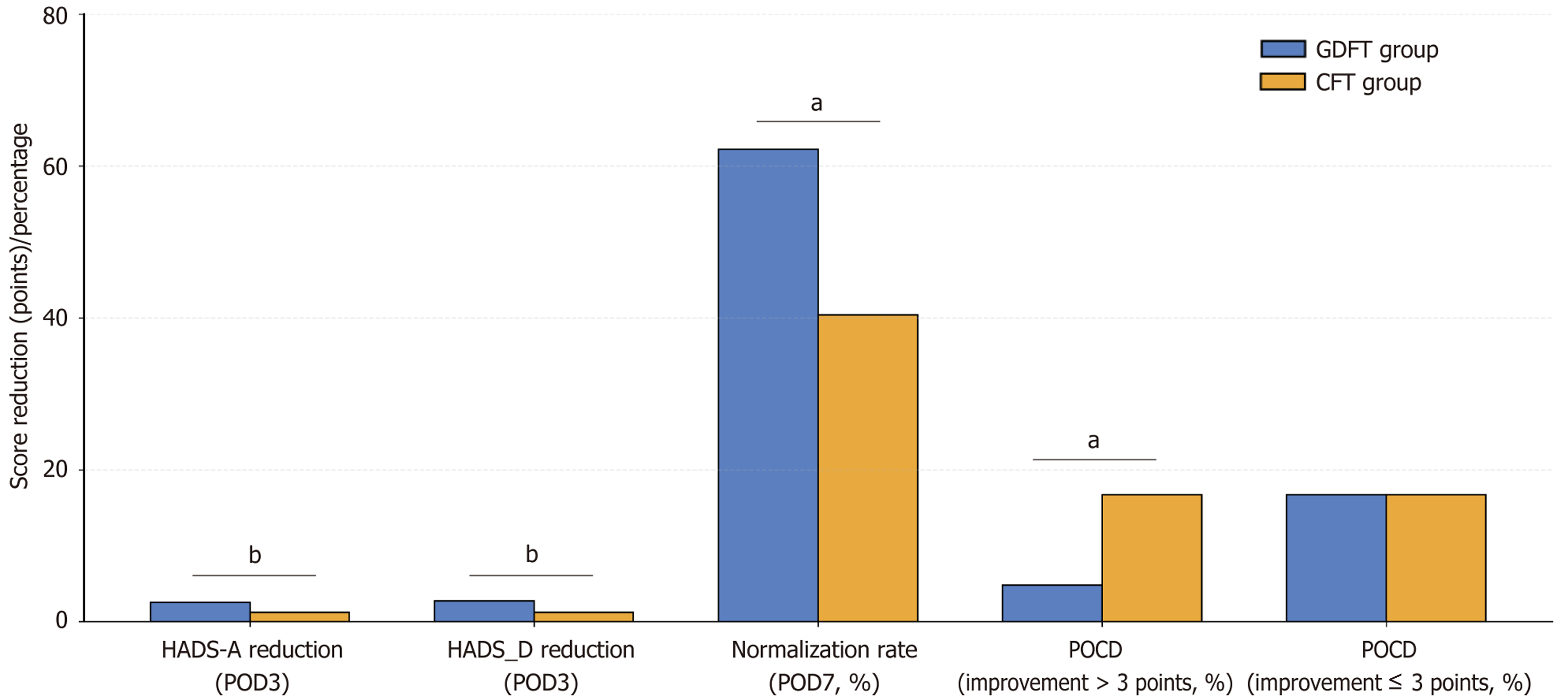
Figure 2 Effects of goal-directed fluid therapy on anxiety-depression status and cognitive improvement in elderly surgical patients.
Bar chart comparing goal-directed fluid therapy (GDFT) group (blue) and conventional fluid therapy group (yellow) across five outcome measures: (1) Hospital Anxiety and Depression Scale (HADS)-anxiety subscale score reduction at postoperative day (POD) 3; (2) HADS-depression subscale score reduction at POD3; (3) Normalization rate at POD7; and (4) Postoperative cognitive dysfunction improvement rates. GDFT group showed significantly greater reductions in both HADS-anxiety subscale (2.5 vs 1.2, P < 0.01) and HADS-depression subscale (2.7 vs 1.2, P < 0.01) scores. The GDFT group also demonstrated higher anxiety-depression normalization rate (62.2% vs 40.4%, P < 0.05) and lower postoperative cognitive dysfunction incidence with improvement > 3 points (4.8% vs 16.7%, P < 0.05). Error bars represent standard deviation. aP < 0.05, bP < 0.01. CFT: Conventional fluid therapy; GDFT: Goal-directed fluid therapy; HADS-A: Hospital Anxiety and Depression Scale-anxiety subscale; HADS-D: Hospital Anxiety and Depression Scale-depression subscale; POD: Postoperative day; POCD: Postoperative cognitive dysfunction.
- Citation: Li H, Teng JL, Yuan L, Han L. Goal-directed fluid therapy and cognitive outcomes in elderly surgical patients with anxiety and depression. World J Psychiatry 2026; 16(7): 117251
- URL: https://www.wjgnet.com/2220-3206/full/v16/i7/117251.htm
- DOI: https://dx.doi.org/10.5498/wjp.117251