















Copyright: ©Author(s) 2026.
World J Psychiatry. Jun 19, 2026; 16(6): 116013
Published online Jun 19, 2026. doi: 10.5498/wjp.v16.i6.116013
Published online Jun 19, 2026. doi: 10.5498/wjp.v16.i6.116013
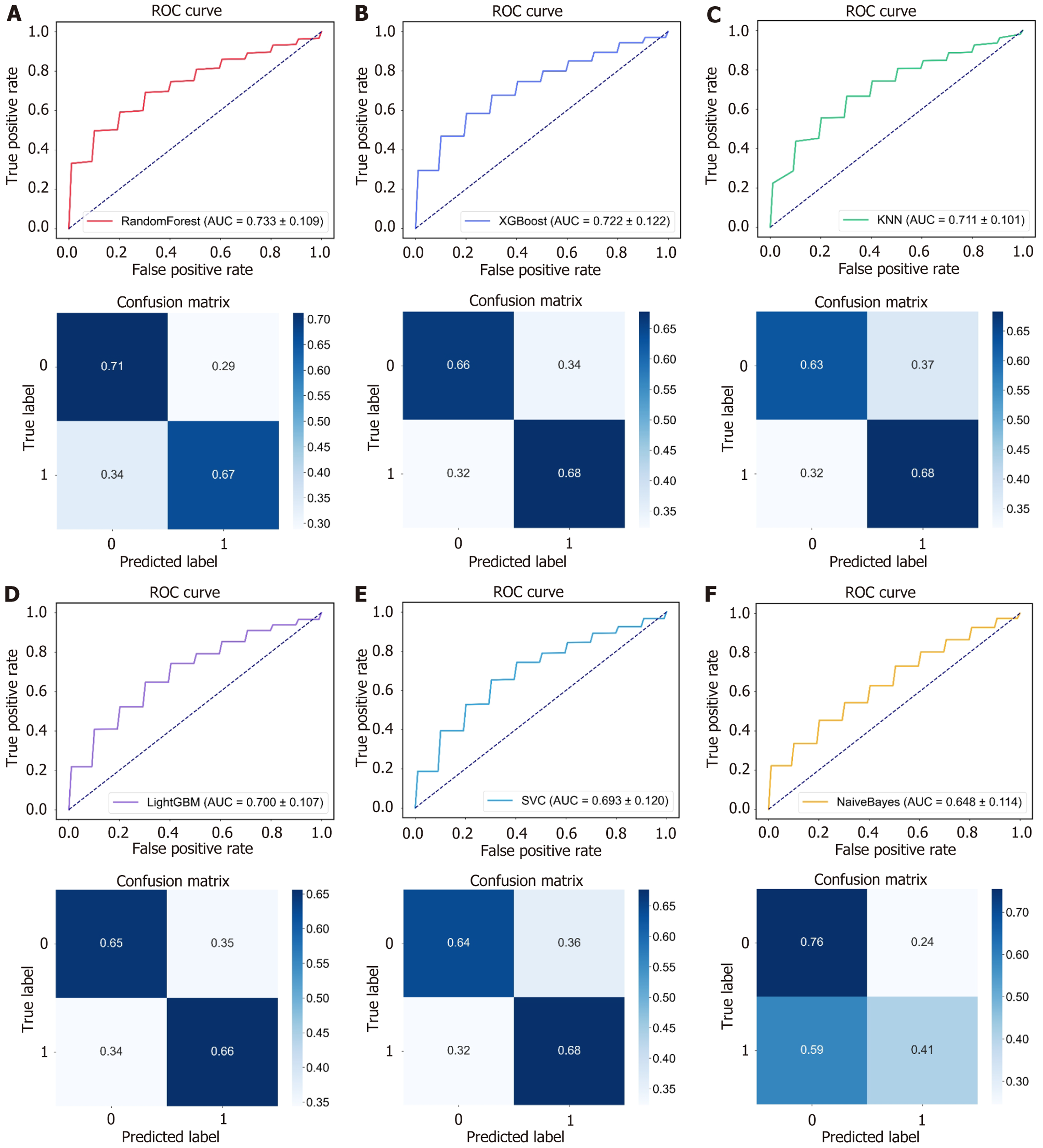
Figure 3 The performance of six machine learning algorithms.
Receiver operating characteristic curve (left) and confusion matrix (right). A: Random forest; B: EXtreme Gradient Boosting; C: K-Nearest Neighbors; D: Light Gradient Boosting Machine; E: Support Vector Machine; F: Naive Bayes. AUC: Area under the curve; ROC: Receiver operating characteristic; RF: Random forest; XGBoost: EXtreme Gradient Boosting; KNN: K-Nearest Neighbors; LightGBM: Light Gradient Boosting Machine; SVC: Support Vector Machine; NB: Naive Bayes.
- Citation: Wei YG, Yang LH, Qin SS, Chen YL, Yan JN, Liu RX, Ma YM, Wang C, Song ZJ, Wang F, Ji GJ. Mental stress recognition using interpretable machine learning models with heart rate variability among Chinese university students. World J Psychiatry 2026; 16(6): 116013
- URL: https://www.wjgnet.com/2220-3206/full/v16/i6/116013.htm
- DOI: https://dx.doi.org/10.5498/wjp.v16.i6.116013