
















Copyright: ©Author(s) 2026.
World J Psychiatry. Apr 19, 2026; 16(4): 115567
Published online Apr 19, 2026. doi: 10.5498/wjp.v16.i4.115567
Published online Apr 19, 2026. doi: 10.5498/wjp.v16.i4.115567
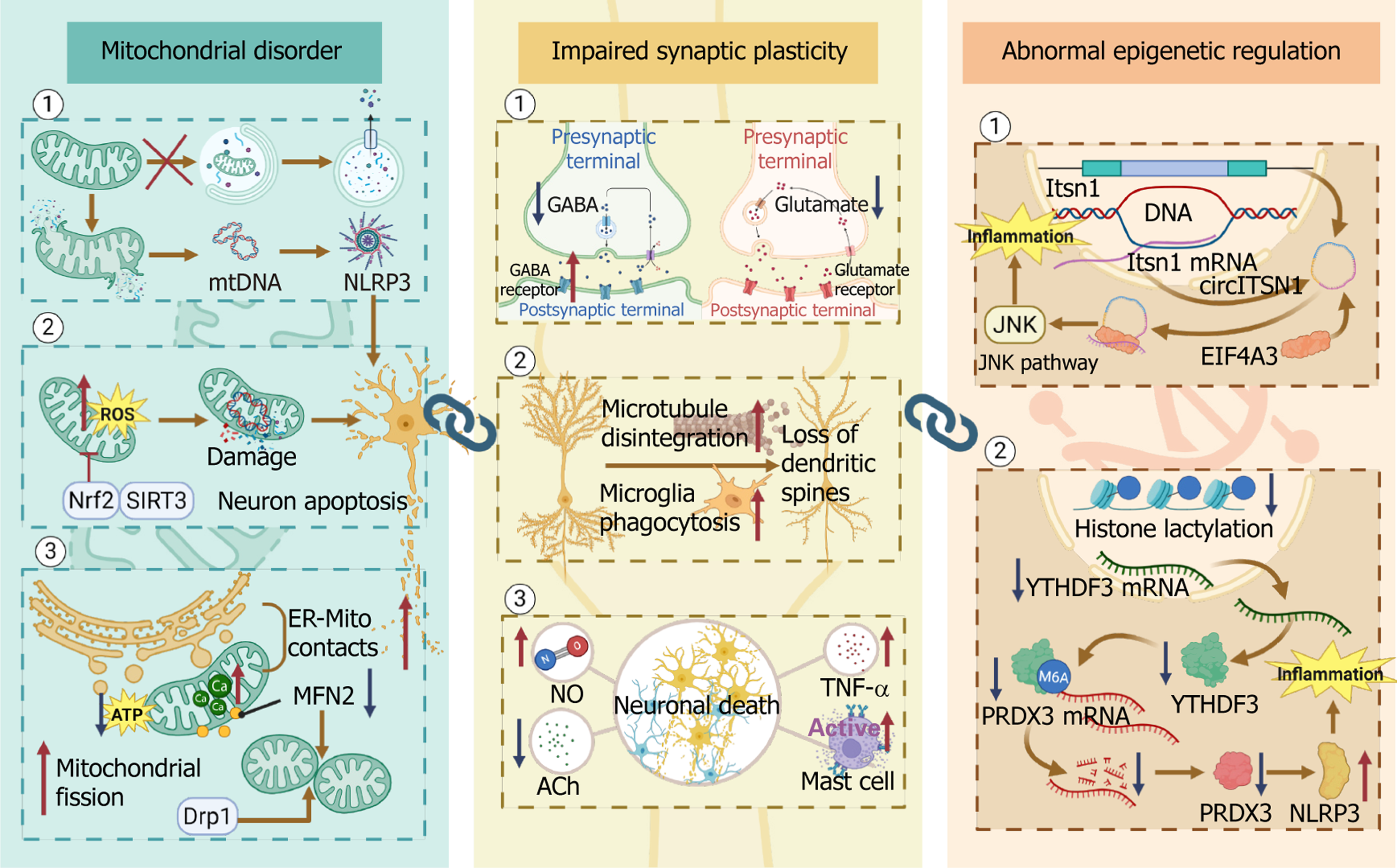
Figure 2 Three core pathological links of postoperative neurocognitive disorders: Mitochondrial dysfunction, impaired synaptic plasticity and abnormal epigenetic regulation.
(1) Mitochondrial dysfunction: Impaired mitophagy leads to the accumulation of dysfunctional mitochondria. Leakage of mitochondrial DNA activates the nucleotide-binding oligomerization domain, leucine-rich repeat and pyrin domain-containing protein 3 inflammasome, while dysregulation of antioxidant pathways, reduced ATP production, disrupted endoplasmic reticulum-mitochondria contacts, and excessive mitochondrial fission collectively promote neuronal apoptosis; (2) Impairment of synaptic plasticity: Imbalances in excitatory and inhibitory neurotransmission, loss of dendritic spines, neuronal death, and related mechanisms ultimately damage synaptic structure and function; and (3) Abnormal epigenetic regulation: The circular RNA circITSN1 modulates inflammatory signaling by sequestering eukaryotic initiation factor 4A-III, whereas histone lactylation regulates nucleotide-binding oligomerization domain, leucine-rich repeat and pyrin domain-containing protein 3 inflammasome activation through the YTH domain family member 3/peroxiredoxin-3 axis. These epigenetic mechanisms contribute to the long-term pathophysiological changes of postoperative neurocognitive disorders. Together, these three interconnected levels form a cascade of damage that extends from subcellular organelles to neural network function, constituting the molecular basis of cognitive impairment in postoperative neurocognitive disorders. MtDNA: Mitochondrial DNA; NLRP3: Nucleotide-binding oligomerization domain, leucine-rich repeat and pyrin domain-containing protein 3; Nrf2: Nuclear factor erythroid 2 related factor 2; SIRT3: Sirtuin 3; ROS: Reactive oxygen species; Mito: Mitochondria; ER: Endoplasmic reticulum; MFN2: Mitofusin 2; Drp1: Dynamin-related protein 1; GABA: γ-aminobutyric acid; NO: Nitric oxide; TNF-α: Tumor necrosis factor-α; Ach: Acetylcholine; JNK: C-Jun N-terminal kinase; YTHDF3: YTH domain family member 3; PRDX3: Peroxiredoxin-3.
- Citation: Jie Y, Lai ZW, Zhou W, Li YC, Zhong BL, Zeng XX, Jiang Q. Neuroimmune synapse and modulation by anesthetics: Inflammatory mechanisms and therapeutic perspectives for postoperative neurocognitive disorders. World J Psychiatry 2026; 16(4): 115567
- URL: https://www.wjgnet.com/2220-3206/full/v16/i4/115567.htm
- DOI: https://dx.doi.org/10.5498/wjp.v16.i4.115567