
















©Author(s) (or their employer(s)) 2026.
World J Psychiatry. Mar 19, 2026; 16(3): 115163
Published online Mar 19, 2026. doi: 10.5498/wjp.v16.i3.115163
Published online Mar 19, 2026. doi: 10.5498/wjp.v16.i3.115163
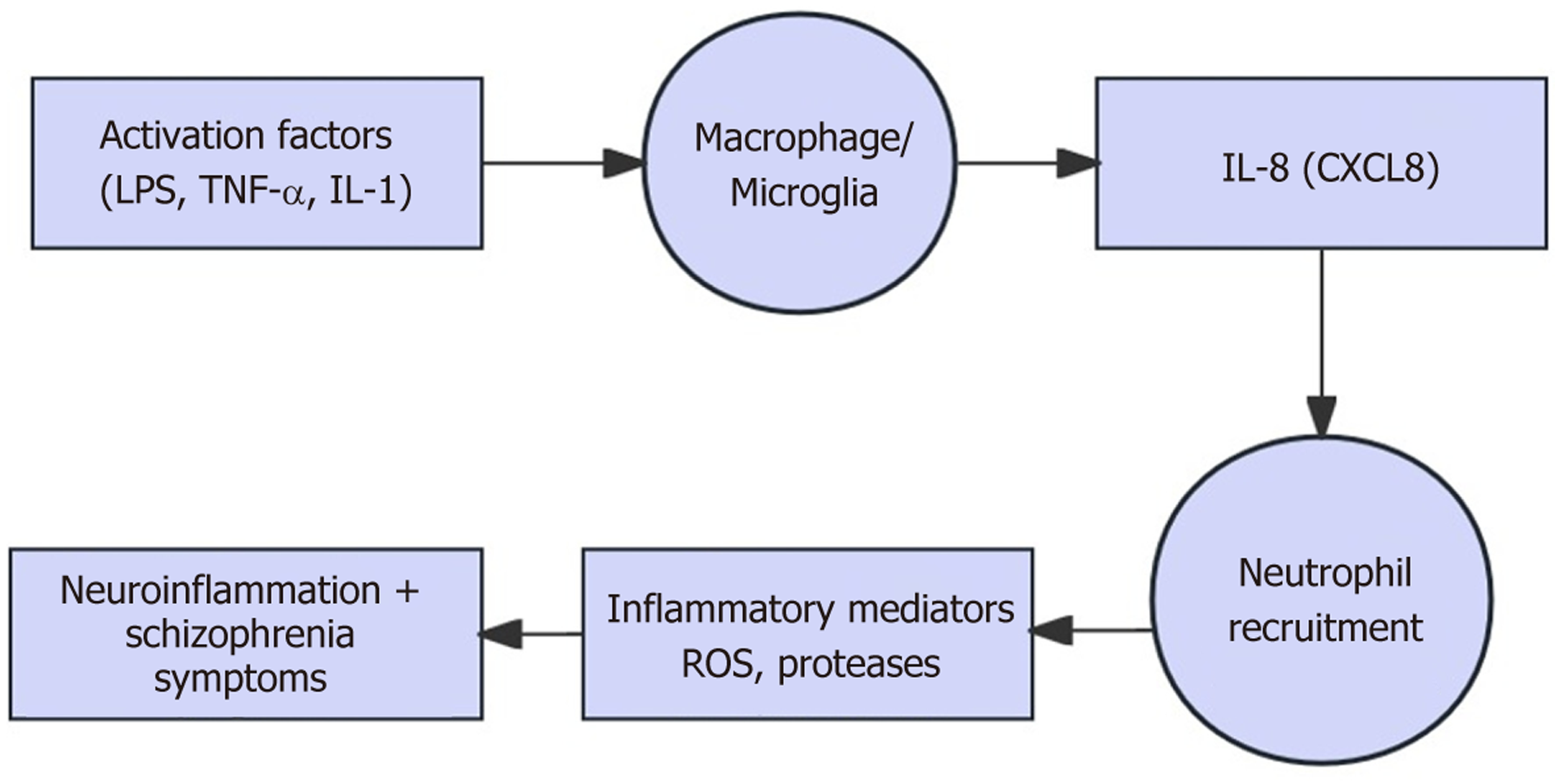
Figure 1 Interleukin-8 [chemokine (C-X-C motif) ligand 8] inflammatory pathway in schizophrenia.
This diagram illustrates the inflammatory mech
- Citation: Xu L, Zhang XB, Luan LS, Yang M, Zhang J, Yang HD, Tang XW. Electroconvulsive therapy alters serum cytokine levels and correlates with symptom improvement in patients with acute schizophrenia. World J Psychiatry 2026; 16(3): 115163
- URL: https://www.wjgnet.com/2220-3206/full/v16/i3/115163.htm
- DOI: https://dx.doi.org/10.5498/wjp.v16.i3.115163