
















©Author(s) (or their employer(s)) 2026.
World J Psychiatry. Mar 19, 2026; 16(3): 114301
Published online Mar 19, 2026. doi: 10.5498/wjp.v16.i3.114301
Published online Mar 19, 2026. doi: 10.5498/wjp.v16.i3.114301
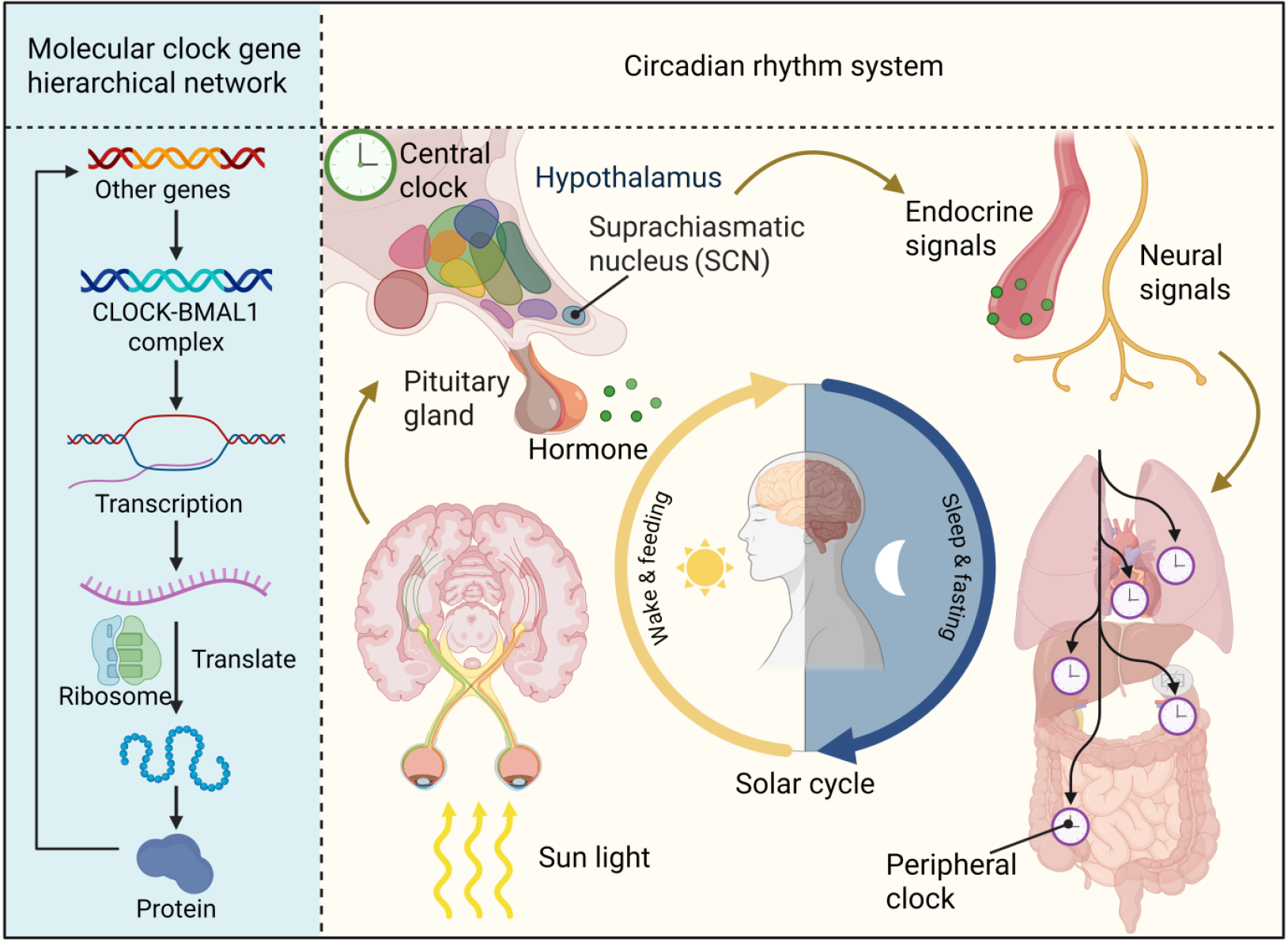
Figure 1 Molecular mechanisms and physiological regulation of the human circadian rhythm system.
The central clock, located in the supr
- Citation: Liu Y, Zhu LY, Xiao Q, Zeng HM, Zhan YX, Yang RH, Lin FZ, Liu DL, Zeng XX, Chen BF. Circadian rhythm disruption in bipolar disorder: Mechanisms, clinical significance, and rhythm-oriented interventions. World J Psychiatry 2026; 16(3): 114301
- URL: https://www.wjgnet.com/2220-3206/full/v16/i3/114301.htm
- DOI: https://dx.doi.org/10.5498/wjp.v16.i3.114301