
















©Author(s) (or their employer(s)) 2026.
World J Psychiatry. Mar 19, 2026; 16(3): 114153
Published online Mar 19, 2026. doi: 10.5498/wjp.v16.i3.114153
Published online Mar 19, 2026. doi: 10.5498/wjp.v16.i3.114153
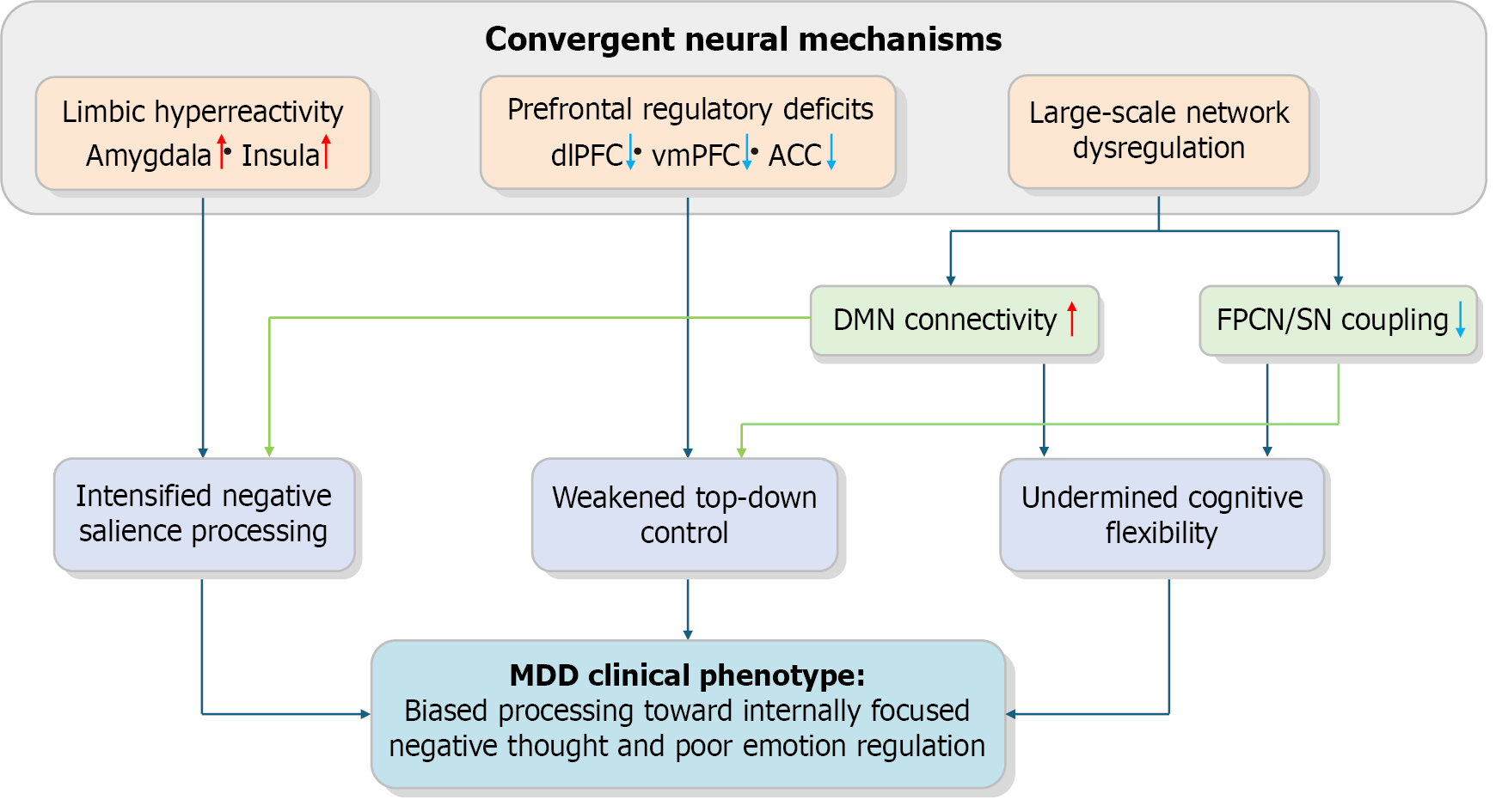
Figure 2 Neural circuit imbalance model of emotion-cognition dysfunction in major depressive disorder.
This model delineates three convergent neural disruptions and their integrative pathways leading to clinical dysfunction. The core disruptions are: (1) Limbic hyperreactivity (amygdala, insula), which intensifies the bottom-up processing of negative salience; (2) Prefrontal regulatory deficits (dorsolateral, ventromedial, and anterior cingulate cortices), which compromise top-down cognitive control; and (3) Large-scale network dysregulation, manifesting as default mode network hyperconnectivity and weakened coupling between the frontoparietal control network and salience network. vmPFC: Ventromedial prefrontal cortex; dlPFC: Dorsolateral prefrontal cortex; ACC: Anterior cingulate cortex; DMN: Default mode network; FPCN: Frontoparietal control network; SN: Salience network; MDD: Major depressive disorder.
- Citation: Gu Y, Wang YX, Xia WJ, Wang J. Emotion-cognition dysregulation in major depression: Multidimensional biases, neural circuit imbalance, and translational opportunities. World J Psychiatry 2026; 16(3): 114153
- URL: https://www.wjgnet.com/2220-3206/full/v16/i3/114153.htm
- DOI: https://dx.doi.org/10.5498/wjp.v16.i3.114153