
















©Author(s) (or their employer(s)) 2026.
World J Psychiatry. Mar 19, 2026; 16(3): 113125
Published online Mar 19, 2026. doi: 10.5498/wjp.v16.i3.113125
Published online Mar 19, 2026. doi: 10.5498/wjp.v16.i3.113125
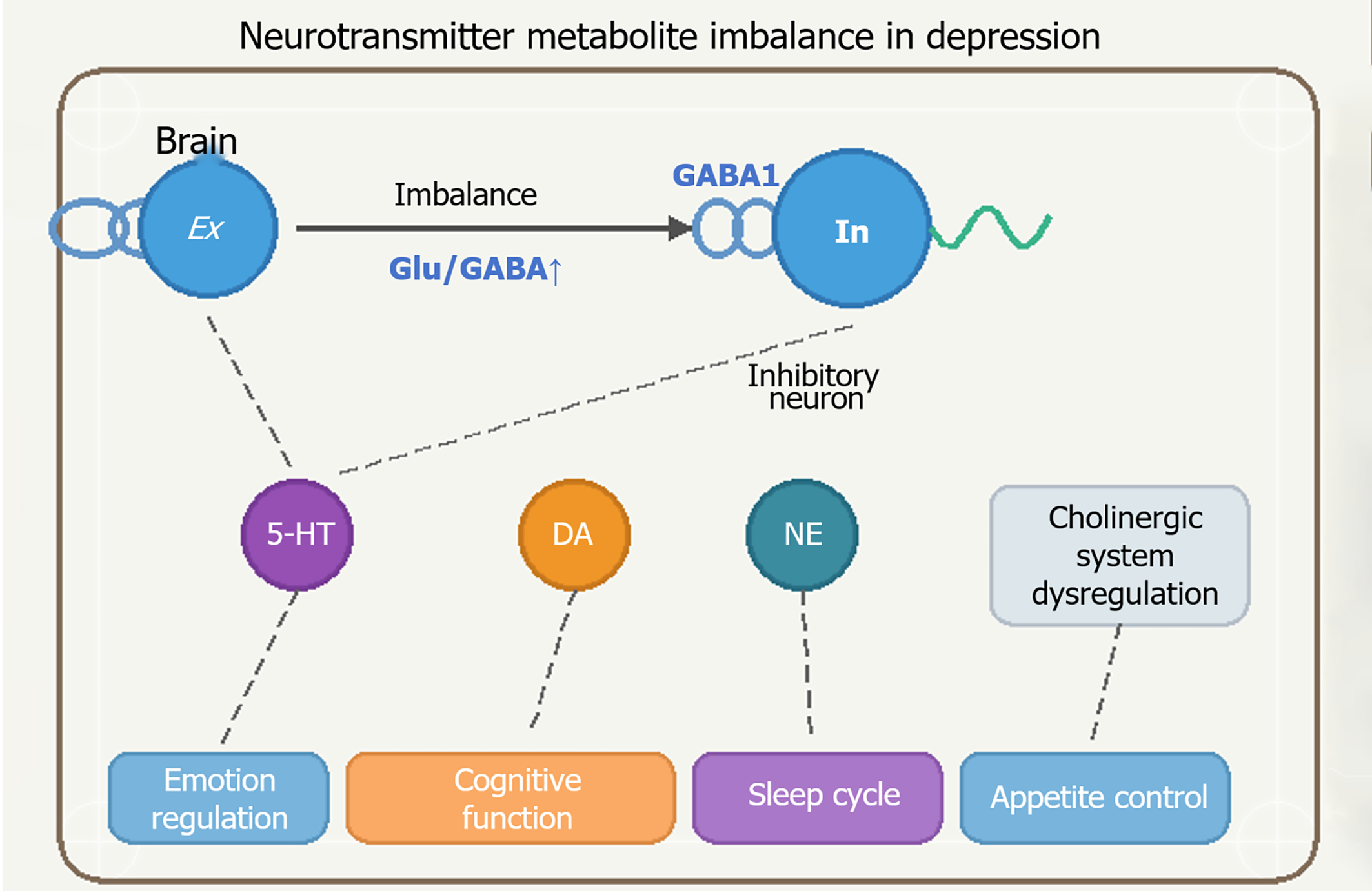
Figure 2 Neurotransmitter metabolite imbalance in depression: Excitatory/inhibitory dysregulation and monoamine deficiency model.
This diagram illustrates the neurotransmitter imbalance characteristic of depression, showing elevated glutamate and decreased GABA resulting in disrupted excitatory/inhibitory balance, alongside reduced monoamines (5-hydroxy tryptamine, dopamine, norepinephrine) with increased metabolites. These neurotransmitter dysregulations create a multidimensional dysfunction affecting emotion regulation, cognitive function, sleep cycles, and appetite control, demonstrating the complex neurobiological mechanisms underlying depression. DA: Dopamine; Glu: Glutamate; NE: Norepinephrine; 5-HT: 5-hydroxy tryptamine.
- Citation: Ma YL, Fu X, Chen Y, Zeng SX. Contemporary adolescent depression: Multidimensional analysis from neurobiological, psychological, and social integrative perspectives. World J Psychiatry 2026; 16(3): 113125
- URL: https://www.wjgnet.com/2220-3206/full/v16/i3/113125.htm
- DOI: https://dx.doi.org/10.5498/wjp.v16.i3.113125