
















©The Author(s) 2026.
World J Psychiatry. Feb 19, 2026; 16(2): 112819
Published online Feb 19, 2026. doi: 10.5498/wjp.v16.i2.112819
Published online Feb 19, 2026. doi: 10.5498/wjp.v16.i2.112819
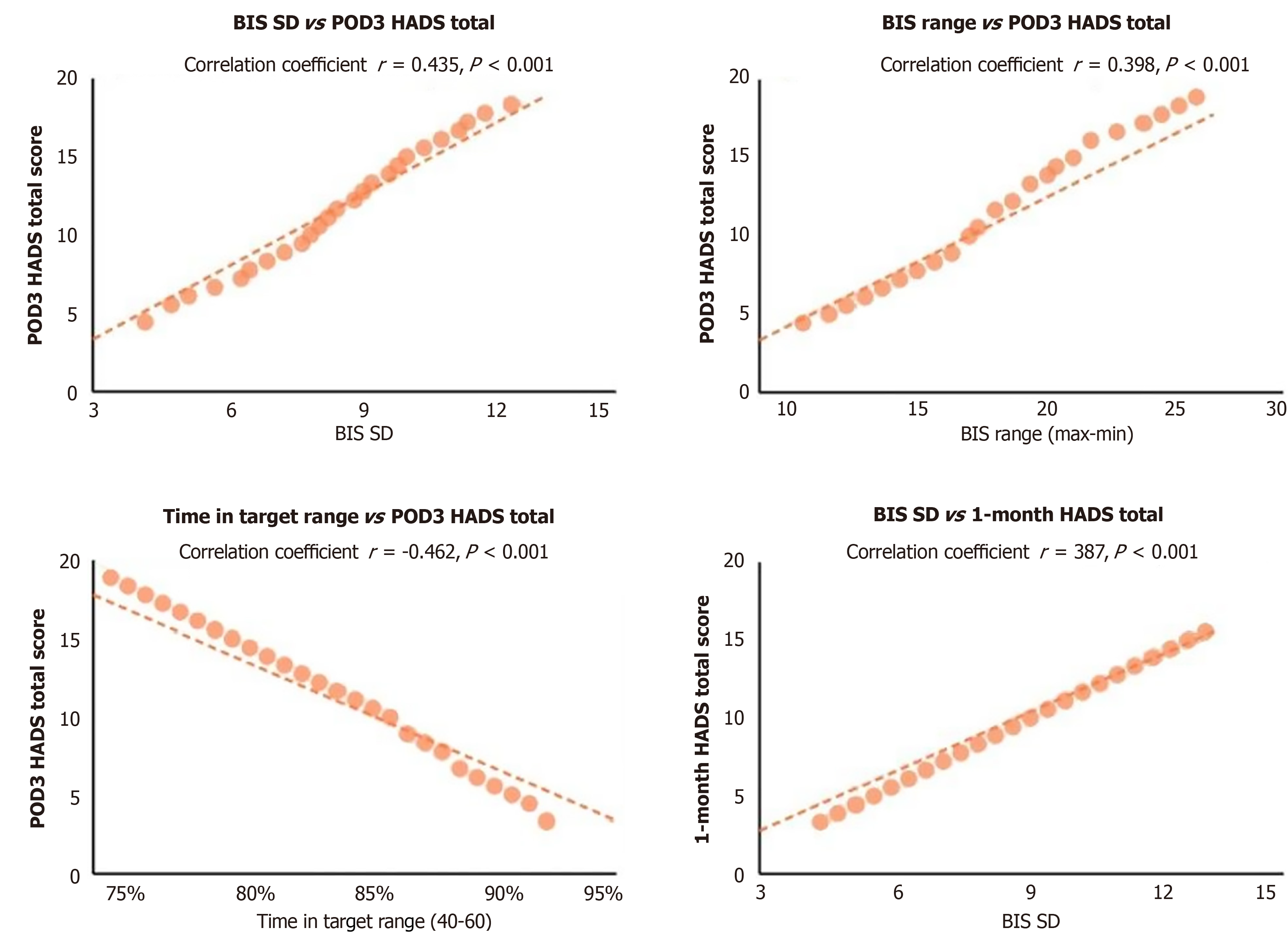
Figure 2 Correlations between intraoperative Bispectral Index stability metrics and postoperative anxiety and depression scores in elderly gastric cancer patients.
The scatter plots demonstrate significant correlations between Bispectral Index (BIS) stability parameters and postoperative psychiatric outcomes, with BIS variability measures (standard deviation and range) showing strong positive correlations with anxiety and depression scores, while time spent in the target range (40-60) demonstrates a strong negative correlation. These findings suggest that the stability of anesthesia depth during surgery, rather than absolute BIS values, is a critical factor influencing postoperative mental health outcomes in elderly gastric cancer patients with preoperative sleep disorders, with greater BIS stability associated with fewer psychiatric symptoms both at postoperative day 3 and at one month follow-up. BIS: Bispectral Index; HADS: Hospital Anxiety and Depression Scale; POD3: Postoperative day 3.
- Citation: Zhang XM, Yuan L, Chen YL, Shuai SC, Ye XM, Zhao JB. Electroencephalogram-guided anesthesia and postoperative anxiety and depression in elderly gastric cancer patients with sleep disorders. World J Psychiatry 2026; 16(2): 112819
- URL: https://www.wjgnet.com/2220-3206/full/v16/i2/112819.htm
- DOI: https://dx.doi.org/10.5498/wjp.v16.i2.112819