
















Copyright: ©Author(s) 2026.
World J Psychiatry. Dec 19, 2026; 16(12): 120307
Published online Dec 19, 2026. doi: 10.5498/wjp.120307
Published online Dec 19, 2026. doi: 10.5498/wjp.120307
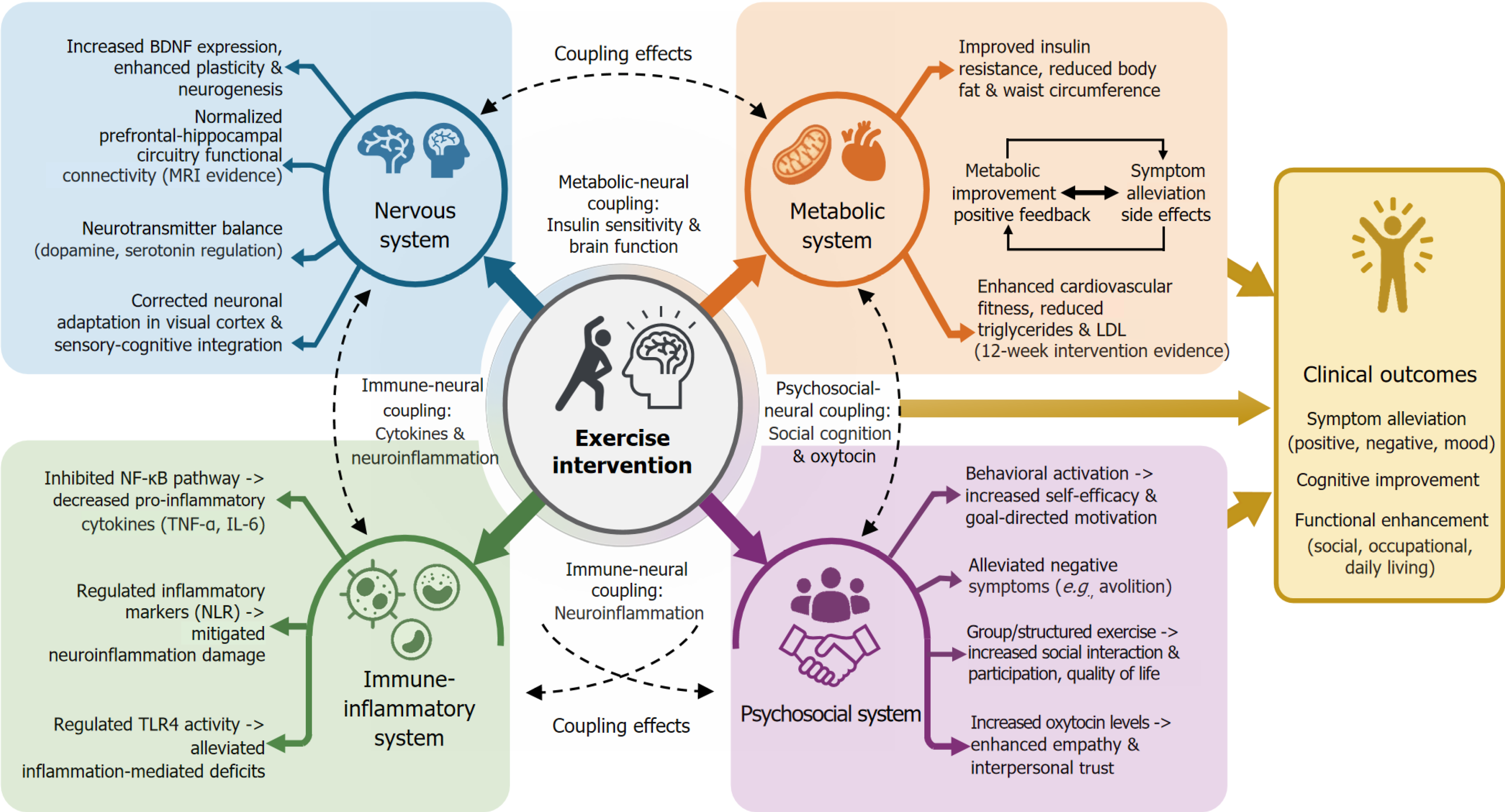
Figure 1 Model of the multi-system synergistic mechanisms of exercise intervention in schizophrenia.
This figure illustrates that the therapeutic efficacy of exercise is not driven by a single pathway but emerges from the “coupling effects” among four major systems. Nervous system: Exercise upregulates brain-derived neurotrophic factor expression, thereby enhancing plasticity and neurogenesis; exercise also promotes neurotransmitter balance and repairs sensory-cognitive integration. Metabolic system: Interventions reduce insulin resistance and body fat, establishing a positive feedback loop between metabolic improvement and symptom alleviation. Immune-inflammatory system: Physical activity inhibits the nuclear factor kappa B pathway, attenuating pro-inflammatory cytokines release, and regulates inflammatory indices to mitigate neuroinflammatory damage. Psychosocial system: Group-based exercise increases oxytocin levels, enhances empathy, self-efficacy, and goal-directed motivation, thereby alleviating negative symptoms such as avolition. BDNF: Brain-derived neurotrophic factor; MRI: Magnetic resonance imaging; LDL: Low-density lipoprotein; NF-κB: Nuclear factor-kappa B; TNF-α: Tumor necrosis factor-α; IL: Interleukin; NLR: Neutrophil-to-lymphocyte ratio.
- Citation: Zhou XC, Qu JC. Moving beyond efficacy: Why, how and for whom exercise works in schizophrenia. World J Psychiatry 2026; 16(12): 120307
- URL: https://www.wjgnet.com/2220-3206/full/v16/i12/120307.htm
- DOI: https://dx.doi.org/10.5498/wjp.120307