
















Copyright: ©Author(s) 2026.
World J Psychiatry. Nov 19, 2026; 16(11): 124324
Published online Nov 19, 2026. doi: 10.5498/wjp.124324
Published online Nov 19, 2026. doi: 10.5498/wjp.124324
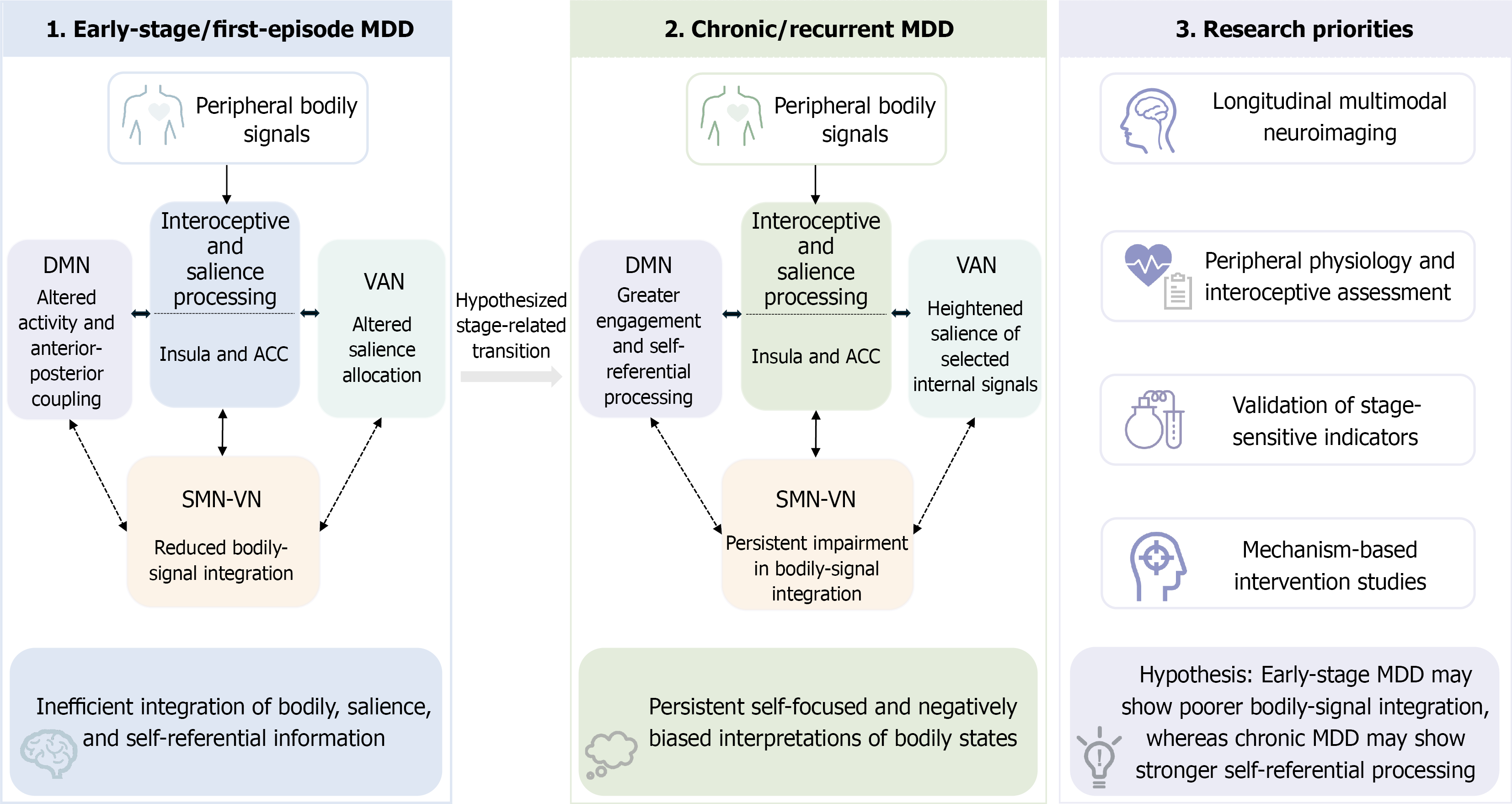
Figure 3 Proposed stage-related model of interoception-related network dysfunction in major depressive disorder.
This schematic summarizes a hypothesized dynamic pattern of interoception-related network alterations across clinical stages. Early-stage or first-episode major depressive disorder (MDD) may involve inefficient integration of bodily signals and altered salience processing, whereas chronic or recurrent MDD may be characterized by greater self-referential processing, disrupted network coordination, and persistent negative interpretations of bodily states. The model generates testable hypotheses for longitudinal and mechanistic studies. MDD: Major depressive disorder; ACC: Anterior cingulate cortex; DMN: Default mode network; SMN-VN: Somatomotor-visual networks; VAN: Ventral attention network.
- Citation: Deng H, Wang YQ, Sun YF, Zhou HL, Zhou ZH. Interoceptive aberrations in major depressive disorder: Neural mechanisms, clinical correlates, and targeted interventions. World J Psychiatry 2026; 16(11): 124324
- URL: https://www.wjgnet.com/2220-3206/full/v16/i11/124324.htm
- DOI: https://dx.doi.org/10.5498/wjp.124324