
















Copyright: ©Author(s) 2026.
World J Psychiatry. Nov 19, 2026; 16(11): 122026
Published online Nov 19, 2026. doi: 10.5498/wjp.122026
Published online Nov 19, 2026. doi: 10.5498/wjp.122026
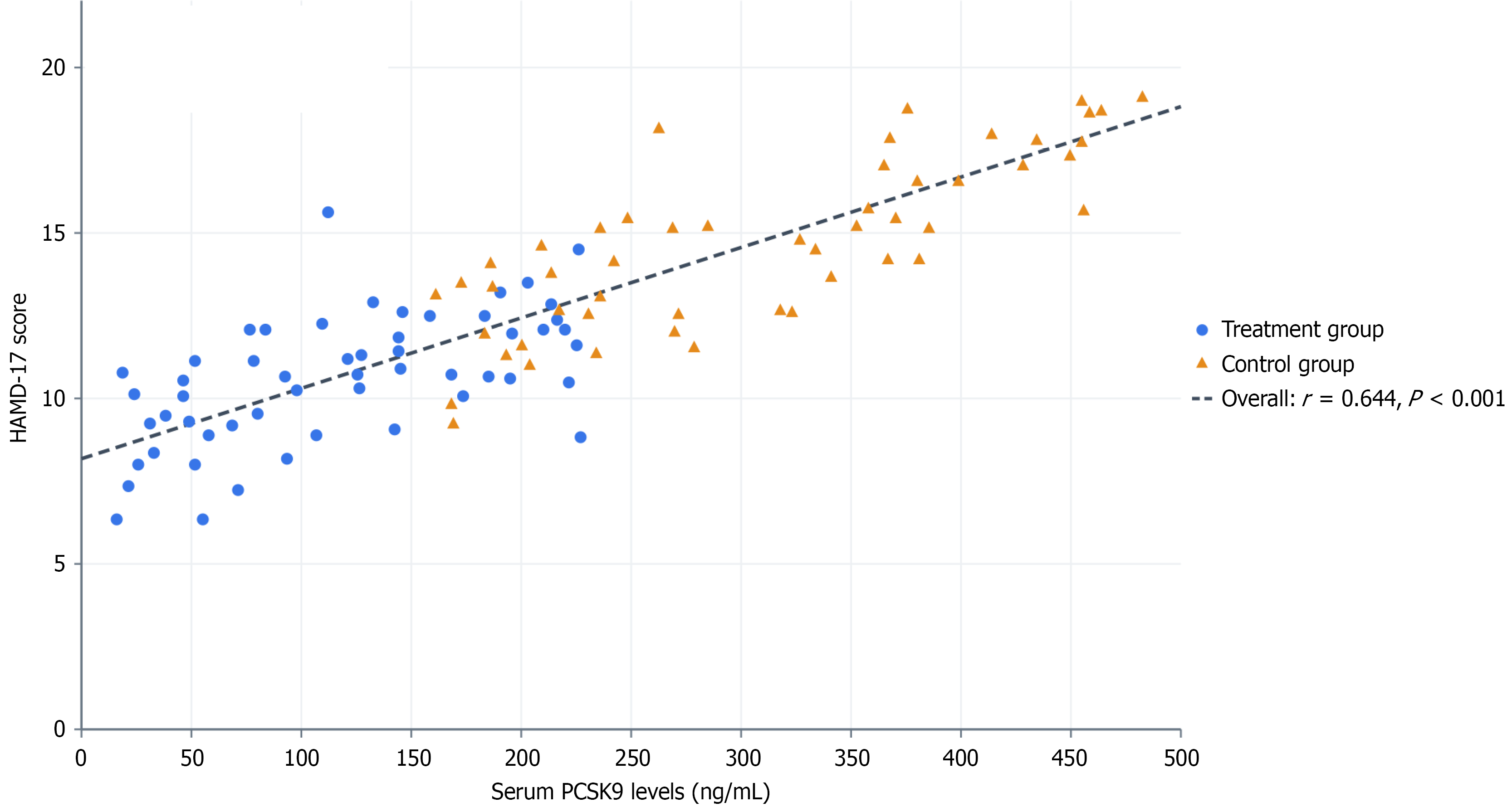
Figure 1 Correlation between serum proprotein convertase subtilisin/kexin type 9 concentrations and 17-item Hamilton Depression Rating Scale scores at 12 weeks.
The scatterplot depicts the association between serum proprotein convertase subtilisin/kexin type 9 (PCSK9) concentrations and 17-item Hamilton Depression Rating Scale (HAMD-17) scores at week 12 (reported r = 0.652, P < 0.001). Blue circles indicate the combination-therapy group (evolocumab plus atorvastatin), and orange triangles indicate the control group (atorvastatin alone). The fitted regression line illustrates the positive association between PCSK9 concentration and depression severity. Within-group correlations were r = 0.721 (P < 0.001) in the combination-therapy group and r = 0.556 (P < 0.001) in the control group; these exploratory subgroup analyses were not adjusted for multiple comparisons. PCSK9: Proprotein convertase subtilisin/kexin type 9; HAMD-17: 17-item Hamilton Depression Rating Scale.
- Citation: Song HY, Yang Y, Sun XY, Zhang MJ, Wang SG. Serum proprotein convertase subtilisin/kexin type 9 levels correlate with depression severity in post-stroke patients. World J Psychiatry 2026; 16(11): 122026
- URL: https://www.wjgnet.com/2220-3206/full/v16/i11/122026.htm
- DOI: https://dx.doi.org/10.5498/wjp.122026