
















Copyright: ©Author(s) 2026.
World J Psychiatry. Oct 19, 2026; 16(10): 123438
Published online Oct 19, 2026. doi: 10.5498/wjp.123438
Published online Oct 19, 2026. doi: 10.5498/wjp.123438
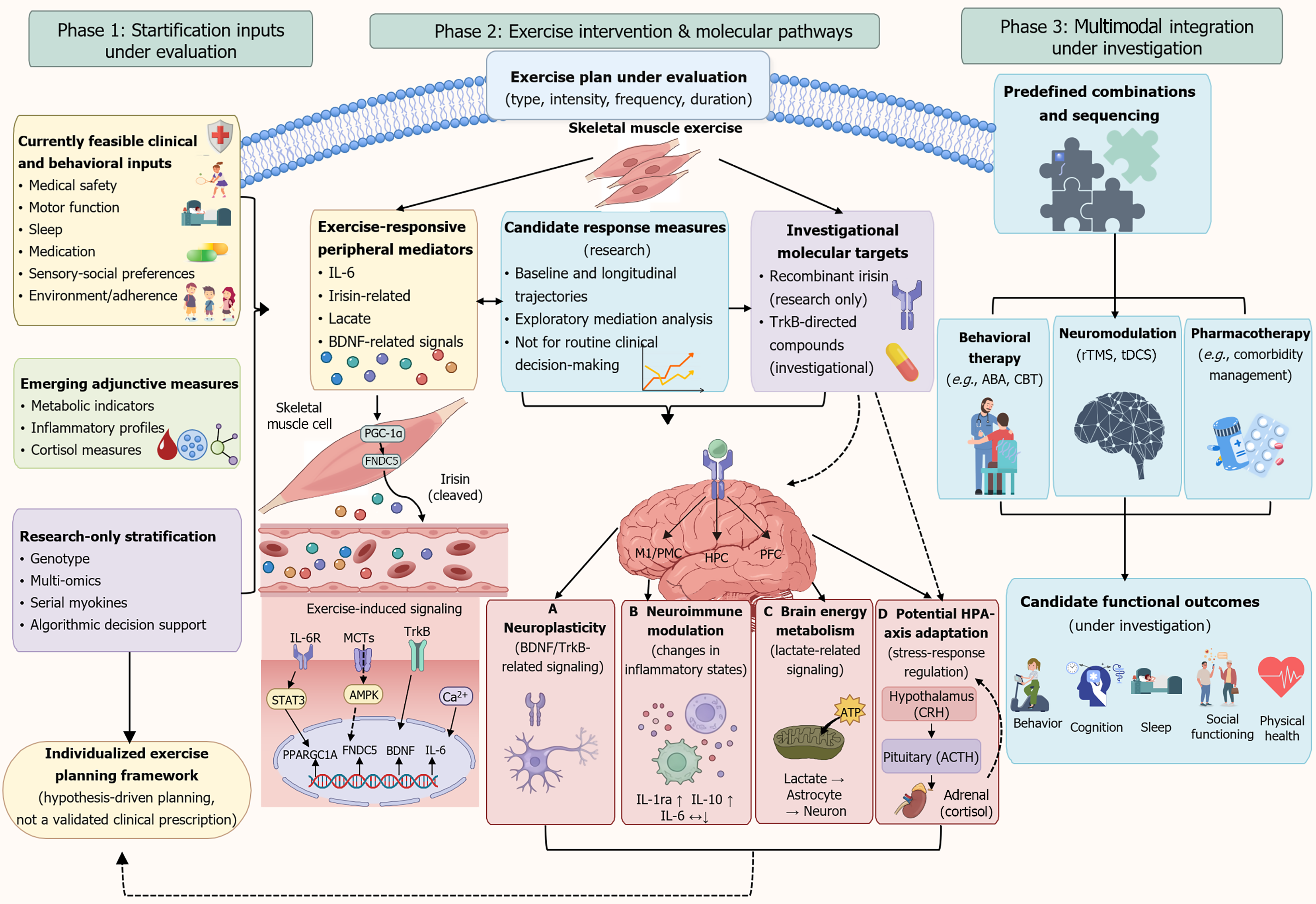
Figure 2 Hypothesis-generating translational framework for staged exercise research in autism spectrum disorder.
Phase 1 distinguishes currently feasible clinical and behavioral inputs from emerging or research-only stratification measures. Phase 2 depicts proposed exercise-responsive muscle and systemic pathways, with biomarkers labeled as candidate research measures and recombinant or small-molecule approaches as investigational targets. Phase 3 shows potential combinations with behavioral therapy, neuromodulation, and pharmacotherapy; direct synergistic efficacy remains to be established. IL: Interleukin; BDNF: Brain-derived neurotrophic factor; TrkB: Tropomyosin receptor kinase B; PGC-1α: Peroxisome proliferator-activated receptor γ coactivator-1α; HPA: Hypothalamic-pituitary-adrenal; ABA: Applied behavior analysis; CBT: Cognitive behavioral therapy; PMC: Premotor cortex; HPC: Hippocampus; PFC: Prefrontal cortex; FNDC5: Fibronectin type III domain-containing protein 5; STAT3: Signal transducer and activator of transcription 3; AMPK: AMP-activated protein kinase; MCTs: Monocarboxylate transporters; Akt: Protein kinase B; IGF-1: Insulin-like growth factor 1; PI3K: Phosphoinositide 3-kinase; CRH: Corticotropin-releasing hormone; ACTH: Adrenocorticotropic hormone; rTMS: Repetitive transcranial magnetic stimulation; tDCS: Transcranial direct current stimulation.
- Citation: Guo RY, Geng WC. Muscle-brain endocrine axis in autism spectrum disorder: Mechanisms, evidence, and research priorities. World J Psychiatry 2026; 16(10): 123438
- URL: https://www.wjgnet.com/2220-3206/full/v16/i10/123438.htm
- DOI: https://dx.doi.org/10.5498/wjp.123438