
















Copyright: ©Author(s) 2026.
World J Psychiatry. Oct 19, 2026; 16(10): 116515
Published online Oct 19, 2026. doi: 10.5498/wjp.116515
Published online Oct 19, 2026. doi: 10.5498/wjp.116515
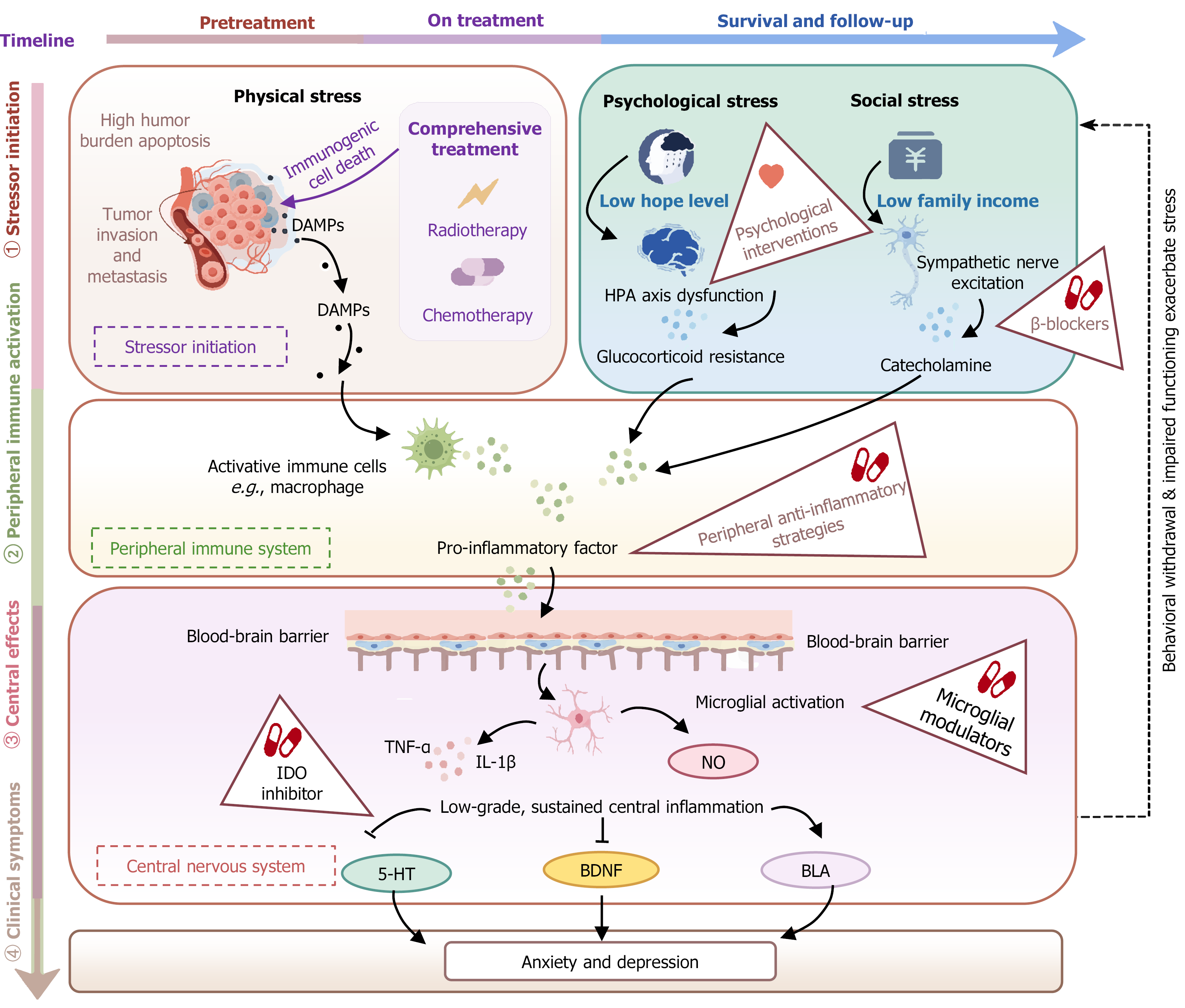
Figure 1 A psycho-neuro-immune axis framework linking diverse stressors to anxiety and depression in cervical cancer.
The figure illustrates the hypothesized mechanistic pathways by which the four key risk factors (advanced tumor stage, comprehensive treatment, low hope, and low income) identified in the predictive model converge to promote anxiety and depression. (1) Core convergent pathway: Diverse physical, psychological, and social stressors initiate distinct peripheral pathways (e.g., damage-associated molecular patterns release, hypothalamic-pituitary-adrenal axis dysfunction, sympathetic activation), which collectively elevate peripheral pro-inflammatory cytokines. These inflammatory signals are posited to access the brain, activate microglia, and disrupt central neurobiological processes (e.g., monoamine metabolism, neurotrophic signaling, amygdala activity), ultimately leading to clinical mood symptoms; (2) Dynamic clinical context: The model is superimposed on a clinical timeline (brown to blue text), showing how dominant stressors shift from tumor burden pre-treatment, to combined physical/psychosocial stress during active therapy, to persistent psychosocial stress and symptom feedback during survivorship; (3) Systemic interactions: A dashed feedback loop indicates how resulting anxiety and depression can exacerbate initial psychosocial stress, potentially sustaining the PNI axis dysregulation; and (4) Intervention implications: Capsule icons highlight potential therapeutic targets (e.g., β-blockers, psychosocial interventions, anti-inflammatory agents, microglial modulators, indoleamine 2,3-dioxygenase inhibitors) corresponding to key nodes in the proposed pathway. Solid arrows (→) indicate activation or promotion; T-bar arrows (⊣) represent inhibition. Created by Figdraw (permission license code: No. AUSUI1c714) (Copyright permission see Supplementary material). HPA: Hypothalamic-pituitary-adrenal; DAMPs: Damage-associated molecular patterns; TNF-α: Tumor necrosis factor alpha; IL-1β: Interleukin-1beta; IDO: Indolea
- Citation: Fan HF, Yuan J, Li DH. Toward a psychoneuroimmune interpretation of anxiety and depression risk in cervical cancer. World J Psychiatry 2026; 16(10): 116515
- URL: https://www.wjgnet.com/2220-3206/full/v16/i10/116515.htm
- DOI: https://dx.doi.org/10.5498/wjp.116515